Optimizing Three-Phase Asynchronous Motor Reliability in Pump Systems: A Technical Guide
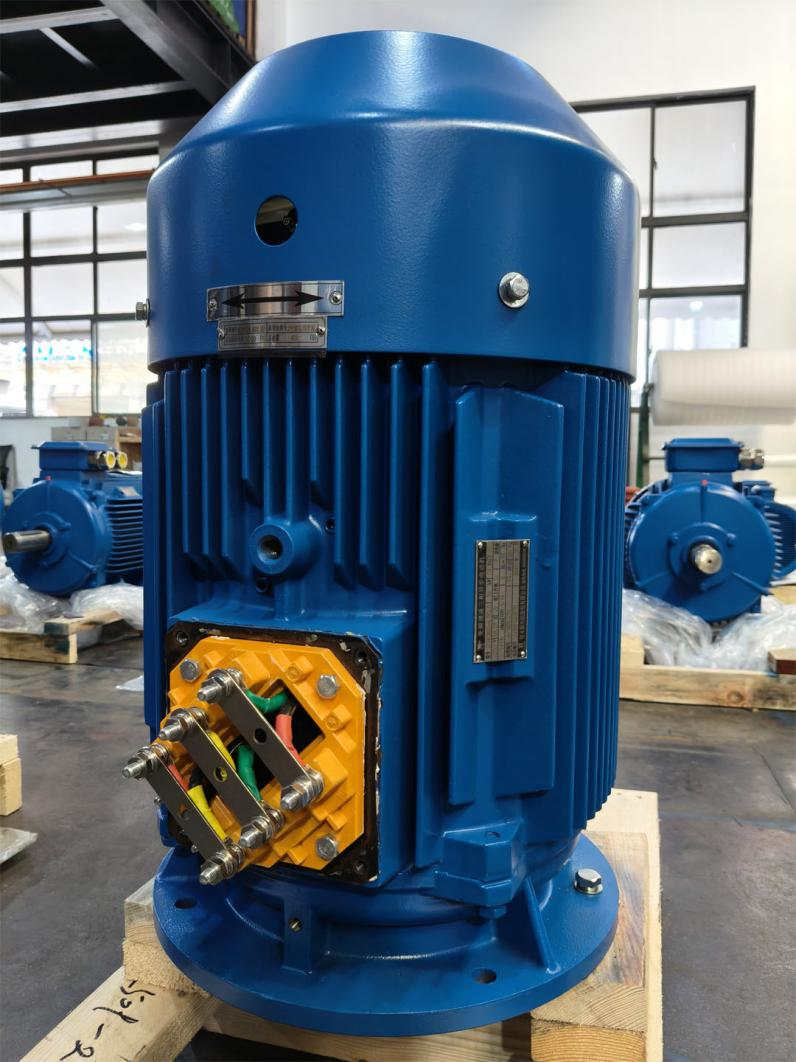
When managing critical water infrastructure—from municipal waterworks to industrial wastewater treatment—the Three-Phase Asynchronous Motor is the workhorse of the entire system. It’s the component that converts electrical energy into mechanical power, driving your pumps. Our experience at Shanghai Yimai shows that motor failure is rarely a product defect; it’s almost always the result of avoidable operational or maintenance errors. We focus on providing the technical clarity required to keep your systems running efficiently and reliably.
The Real Cost of Poor Power Quality on Three-Phase Asynchronous Motor Lifespan
One of the most common, yet overlooked, culprits in motor premature failure is poor power quality. We’re talking about voltage imbalance, harmonic distortion, and transient voltage spikes. These issues do not just affect your utility bill; they directly impact the three-phase electric motor‘s operating temperature and torque output.
A voltage imbalance of just 1% can increase a motor’s winding temperature by 6% to 10%. This significantly shortens the lifespan of the motor’s insulation class. You must regularly check the line-to-line voltages and ensure the variance is less than 0.5%. Severe imbalance leads to single-phasing conditions, which can quickly cause catastrophic thermal overload. For systems connected to variable frequency speed regulating three-phase electric motor, we install input line reactors or filters to mitigate incoming harmonic distortion and protect the drive and motor from reflected waves.

Critical Inspection of Three-Phase Asynchronous Motor Bearings and Lubrication Intervals
Bearings are mechanical components, and like any mechanical component, they wear out. Bearing failure accounts for over 50% of all asynchronous motor failure in continuous operation pump systems. Water pump systems often run for extended periods, putting constant stress on the bearings, particularly in high-load applications like driving a Split Casing Double Suction Pump.
We recommend adhering strictly to the manufacturer’s suggested lubrication schedule. This schedule is based on the motor’s speed, load, and ambient temperature. Using the wrong grease type or volume—over-greasing or under-greasing—can be as damaging as neglecting lubrication altogether, leading to excessive friction, heat, and eventual mechanical seizure. During scheduled shutdowns, we use vibration analysis and temperature monitoring to predict potential issues before they escalate. Another critical step is ensuring proper shaft alignment. Even a slight misalignment introduces undue stress on the bearings, leading to premature wear and increased vibration.
VFD Integration Best Practices for Three-Phase Asynchronous Motor Efficiency
For applications requiring precise flow control or facing widely varying demand, such as VFD controlled booster system or Intelligent digital drived VFD booster system, VFD is essential. However, simply installing a VFD is not enough. The motor must be suitable for variable frequency speed regulating three-phase electric motor operation, which our motors are, notably the YPT3 series.
The VFD allows you to match the motor’s speed exactly to the hydraulic demand, saving significant energy and reducing mechanical stress. However, VFD operation introduces high-frequency voltage pulses that can degrade standard motor insulation and induce damaging currents in the motor shaft. Therefore, we specify:
- Inverter-Duty Insulation:Our motors feature a high-grade insulation class F system designed to withstand the rapid voltage changes (dv/dt) from the VFD output.
- Bearing Protection:For motors operating with long cable runs or larger frame sizes, we integrate insulated bearings or shaft grounding rings to divert damaging common-mode currents away from the bearing race.
- Correct Parameter Setting:The VFD must be precisely programmed with the motor’s nameplate data (voltage, current, frequency, and speed). An auto-tune function should always be performed during commissioning to optimize the V/Hz ratio, ensuring maximum torque output without undue current draw, especially at low speeds.
Addressing Common Three-Phase Asynchronous Motor Faults: Overheating and Winding Failure
Thermal overload is the silent killer of Three-Phase Asynchronous Motors. The winding insulation degrades exponentially with temperature increase. For a Class F insulation system, exceeding the temperature limit by just 10℃ can halve the motor’s operational life.
Winding failures are typically classified as turn-to-turn shorts, phase-to-phase shorts, or grounds. Causes include:
- Sustained Overcurrent:Due to high pump load or mechanical binding.
- Inadequate Ventilation:Blocked cooling fins or insufficient airflow in the pump house.
- Contamination:Moisture, dust, or chemicals compromising the winding insulation.
- Voltage Imbalance:Causes excessive heat in the highest-current phase.
We recommend installing a winding temperature sensor (RTD or thermistor) that is connected to the control system. This smart monitoring allows the system to trip the motor before it reaches a critical temperature, preventing a burnout and minimizing system downtime, which is crucial for sewage water elevating systems.
Environmental Protection: The Role of IP55 and Cooling Method (IC411)
The operating environment of End suction pump or Submersible Sewage Pump demands a high degree of protection. Our IE3 three-phase asynchronous motor and IE4 three-phase asynchronous motor are built with IP55 protection grade. This rating confirms the motor is protected against dust ingress sufficient to prevent interference with the motor’s operation and is protected against low-pressure water jets from any direction.
Coupled with this, our standard cooling method is IC411, meaning the motor is totally enclosed, fan-cooled (TEFC). This fan-driven cooling system is critical for dissipating heat, especially in enclosed pump rooms or challenging industrial settings. Regular checks must confirm the cooling fan and its cowl are intact and free of debris, ensuring maximum airflow across the finned casing. Maintaining this IP55 protection is vital; inspect all cable glands and conduit entries regularly for signs of degradation or moisture ingress.
System Integration: Matching Three-Phase Asynchronous Motor Performance to Centrifugal Pump Loads
The motor and the pump are a single, integrated unit. Selecting the motor requires considering the specific hydraulic requirements of the End suction pump or Vertical Multistage Pump it will drive. You must match the motor’s rated power to the required pump power at the duty point, factoring in a necessary service margin.
Oversizing the motor wastes energy and money. Undersizing it leads to continuous thermal overload and frequent trips. We specialize in providing a complete one-stop solution, ensuring that the motor’s speed (2-Pole, 4-Pole, etc.), mounting type (IMB3, IMB5), and power output are perfectly matched to the pump’s curve and the system’s needs, whether it’s for municipal supply or industrial fluid transfer. For systems like the Integrated Prefabricated Pumping Station, our integrated approach guarantees optimal efficiency from day one.
The Shift to Ultra-Premium Efficiency Motors (IE5/PMSM)
While the IE4 three-phase electric motor offers a robust and globally recognized standard for super-premium efficiency (IE4), the industry is actively moving toward the next level of energy conservation: the Ultra-Premium Efficiency class (IE5). This shift is driven by the need for greater sustainability and significant reductions in operating costs.
The most promising technology surpassing both the IE4 and proposed IE5 limits is the Permanent Magnet Synchronous Motor (PMSM). PMSM technology achieves efficiencies beyond the best induction motors, particularly at partial loads, which are common in VFD controlled booster system. By eliminating rotor losses entirely, PMSM can offer up to 20% lower losses compared to IE4 motors. For instance, an upgrade to a Permanent magnetic electric motor—while maintaining the environmental protection of our standard designs, such as IP55 protection and IC411 cooling—can generate energy savings that pay back the cost difference in a significantly short period, often within 1-2 years, providing superior long-term value compared to standard asynchronous designs.
Next Steps: Technical Consultation
Still facing issues with your water system or considering a major efficiency upgrade? Schedule a free consultation with our Yimai technical support team to assess your current motor fleet and identify the best path to IE5-level efficiency.
As experienced industrial motor exporters, Shanghai Yimai understands the critical requirements of international markets. We specialize in delivering custom electric motors that are precisely configured to meet diverse global standards and application-specific challenges. Our expertise ensures that your imported motors from China are seamlessly integrated, driving efficiency and productivity in your operations.
Frequently Asked Questions (FAQs)
What is the number one cause of bearing failure in a Three-Phase Asynchronous Motor?
The number one cause is usually improper lubrication, which includes using the wrong type of grease, over-greasing, or under-greasing. Additionally, for variable frequency speed regulating three-phase electric motors, unmitigated shaft currents can erode the bearing surfaces (electrical discharge machining), leading to rapid mechanical failure and requiring bearing protection methods.
How does a VFD impact the thermal overload rating of an Asynchronous Motor?
A VFD can reduce a motor’s ability to withstand thermal overload at low speeds. When running at frequencies below 20 for extended periods, the motor’s integrated cooling fan (IC411 cooling method) moves less air, reducing the heat dissipation capacity. This is why it is critical to use inverter-duty motors with a high insulation class and sometimes a separate auxiliary cooling fan for continuous low-speed operation.
Can a standard three-phase motor be used with a VFD for a Centrifugal Pump?
While a standard Three-Phase Asynchronous Motor can run on a VFD, it is not best practice. Standard motors lack the reinforced winding insulation class necessary to resist the high-frequency voltage spikes generated by the VFD. Using a motor explicitly rated for inverter duty, such as the variable frequency speed regulating three-phase motor, prevents premature winding degradation and ensures reliable, long-term operation.
Keywords
Preventing Three-Phase Motor Failure, Asynchronous Motor Maintenance Checklist, VFD Integration Best Practices, Motor Efficiency for Centrifugal Pumps