Optimizing Your Sewage Elevating System for Peak Performance
Properly sizing a sewage elevating system is a critical step in ensuring efficient and reliable wastewater management. An undersized system risks frequent overloads, premature equipment failure, and potential environmental hazards, while an oversized system leads to unnecessary capital expenditure and inefficient operation. At Shanghai Yimai Industrial Co., Ltd., we understand the complexities involved in designing these essential systems. Our expertise lies in providing robust solutions that meet specific project demands, whether for residential, commercial, or industrial applications. This guide provides a comprehensive approach to determining the optimal size for your sewage elevating system, focusing on key parameters and practical considerations.
Understanding Sewage Elevating Systems
A sewage elevating system, often referred to as a sewage pump station or lift station, is designed to transfer wastewater from a lower elevation to a higher one when gravity flow is not feasible. These systems are integral in various settings, including basements, underground parking lots, and areas with challenging topography. They typically comprise a collection tank (wet well), one or more pumps, a control panel, and associated piping and valves. The primary function is to collect sewage and then pump it to a municipal sewer line or treatment facility. Our range of sewage elevating systems, including the YMWM, YMWP, and YMWB models, are engineered for reliability and efficiency in diverse environments, offering max flow rates up to 130 m³/h and max heads of 60 m.
Key Factors for Accurate System Sizing
Accurate sizing of a sewage elevating system requires a meticulous evaluation of several interconnected factors. These elements dictate the necessary pump capacity, wet well volume, and overall system configuration. Overlooking any of these can compromise the system’s performance and longevity. We base our recommendations on a holistic assessment, ensuring that every component works in harmony to achieve optimal wastewater transfer.
Determining Inflow Rates
The most fundamental step in sizing a sewage elevating system is accurately calculating the inflow rate of wastewater. This refers to the volume of sewage entering the wet well over a specific period. Inflow rates vary significantly based on the application type. For residential properties, this might involve estimating water usage per person. For commercial or industrial facilities, it requires analyzing water consumption records, fixture counts, and process wastewater generation. Peak flow rates, which occur during periods of high demand, are particularly important. For instance, a commercial building might experience peak flows during lunch hours or shift changes.
For example, in a large residential complex, we typically estimate inflow based on the number of dwelling units and an average daily water consumption per person. We then apply a peaking factor to account for simultaneous usage. For a commercial kitchen, the inflow calculation would consider the number of sinks, dishwashers, and food waste disposers, along with their operational cycles. Understanding these variations is crucial to prevent the system from being overwhelmed.
Calculating Total Dynamic Head
Total Dynamic Head (TDH) represents the total resistance the pump must overcome to move the sewage from the wet well to the discharge point. It is a sum of several components: static head, friction loss, and pressure head. Static head is the vertical distance between the lowest sewage level in the wet well and the highest point in the discharge piping. Friction loss accounts for the energy lost due to friction as sewage flows through pipes, valves, and fittings. Pressure head is the pressure required at the discharge point, if any, such as entering a pressurized sewer main.
To accurately calculate TDH, we consider the pipe material, diameter, length, and the number and type of fittings. Different pipe materials, such as PVC or ductile iron, have varying friction coefficients. A smaller pipe diameter or a longer pipe run will result in higher friction losses. Our engineers use industry-standard formulas and software to precisely calculate TDH, ensuring the selected pump can effectively overcome these resistances.
Selecting the Right Pump Type and Capacity
Once inflow rates and TDH are established, the next step is to select the appropriate pump type and capacity. Submersible centrifugal pumps are commonly used in sewage elevating systems due to their ability to handle solids and their compact design. The pump’s capacity is typically expressed in terms of flow rate (e.g., liters per second or cubic meters per hour) and head (e.g., meters or feet). A pump’s performance curve, provided by the manufacturer, illustrates its flow and head capabilities.
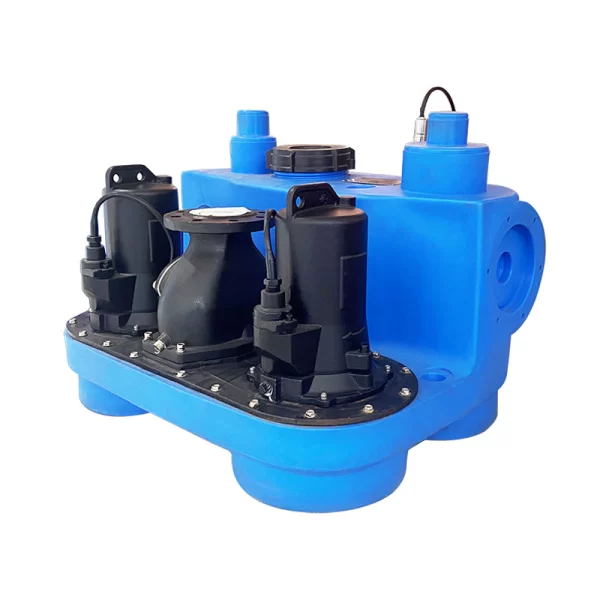
We often recommend using Sewage Water Elevating System for applications where gravity drainage is impossible. The YMWM/YMWP/YMWB models, for instance, are designed to handle varying flow rates and heads, making them versatile for different project scales. The choice between a single pump or duplex (two pumps) system depends on the required reliability and peak flow demands. Duplex systems offer redundancy, ensuring continuous operation even if one pump fails, and can alternate operation to extend pump lifespan.
Designing the Wet Well Volume
The wet well is the collection tank where sewage accumulates before being pumped out. Its volume directly impacts the pump’s cycling frequency and overall system efficiency. An optimally sized wet well prevents short cycling, where the pump turns on and off too frequently, which can lead to premature wear and increased energy consumption. Conversely, an excessively large wet well can lead to sewage septicity, causing odor issues and corrosive conditions.
The wet well volume is determined by the pump’s on-off cycle time, the inflow rate, and the minimum and maximum operating levels. A typical cycle time for a sewage pump ranges from 5 to 15 minutes. We aim for a volume that allows for sufficient retention time to prevent septicity but not so large that it causes excessive pump starts. The minimum operating level ensures the pump remains submerged for cooling, while the maximum level prevents overflows.
Power Requirements and Electrical Considerations
The power required for the sewage elevating system is primarily determined by the pump motor’s horsepower and voltage. This must be carefully matched with the available electrical supply. Factors such as starting current, motor efficiency, and control panel specifications are crucial. Our systems operate at a rated voltage of 380V – 50Hz / 60Hz, ensuring compatibility with standard industrial power grids.
The control panel plays a vital role in automating the system’s operation. It houses components such as motor starters, circuit breakers, and level control floats or transducers. Advanced control panels can offer features like pump alternation, alarm systems for high water levels or pump failures, and even remote monitoring capabilities. These intelligent controls enhance the system’s reliability and ease of maintenance.
Practical Considerations for Installation and Maintenance
Beyond the core sizing calculations, several practical aspects influence the long-term performance and cost-effectiveness of a sewage elevating system. These considerations are often overlooked during the initial design phase but are critical for successful implementation.
Material Selection for Durability
The materials used in the construction of the wet well, pumps, and piping must be resistant to corrosion and abrasion from wastewater. Sewage contains various corrosive chemicals and abrasive solids that can degrade standard materials over time. Fiberglass, concrete, and high-density polyethylene (HDPE) are common choices for wet wells, offering excellent chemical resistance. For pumps, materials like cast iron, stainless steel, and specialized alloys are selected based on the specific characteristics of the wastewater.
Our Prefabricated pump station models, for instance, utilize fiberglass-reinforced plastic construction, which eliminates leakage risks and ensures long-term durability. This focus on robust materials translates into reduced maintenance and extended operational life for the entire system.
Ensuring Accessibility and Safety
Easy access for inspection, maintenance, and repairs is paramount. The wet well should have a secure, easily removable cover. The pump lifting mechanism should allow for safe and convenient retrieval of pumps without requiring personnel to enter the wet well, especially important for Submersible-sewage-pump. Safety features, such as confined space entry protocols, fall protection, and gas detection systems, are essential for personnel working on or around sewage elevating systems. Proper ventilation of the wet well also helps mitigate the accumulation of hazardous gases.
Integration with Overall Wastewater Infrastructure
A sewage elevating system does not operate in isolation. It must seamlessly integrate with the broader wastewater collection and treatment infrastructure. This involves coordinating discharge points with existing sewer lines, ensuring proper pipe connections, and adhering to local regulations and environmental standards. The system’s design should also account for future expansion or changes in wastewater generation.
We emphasize a holistic approach to system design, considering how our sewage elevating systems fit into the larger context of a facility’s water management plan. This ensures not only efficient operation but also compliance with all relevant codes and regulations. For instance, in urban development projects, we work closely with civil engineers to ensure the system’s capacity aligns with projected population growth and infrastructure demands.
Real-World Application: Sizing for a Commercial Building
Consider a new commercial building requiring a sewage elevating system for its basement facilities, including restrooms and a small cafeteria.
Step 1: Inflow Rate Calculation
After analyzing the building’s occupancy and fixture count, our engineers determine an average daily flow of 5 m³/day and a peak hourly flow of 1.5 m³/h. This peak flow is critical for preventing backups during busy periods.
Step 2: Total Dynamic Head Assessment
The static head from the basement floor to the municipal sewer connection is 10 meters. The discharge pipe is 50 meters long with several elbows and valves. Using specialized software, we calculate the friction loss to be 5 meters. Thus, the TDH is 10m (static) + 5m (friction) = 15 meters.
Step 3: Pump Selection
Based on a peak flow of 1.5 m³/h and a TDH of 15 meters, we select a duplex system with two pumps, each capable of handling 1.0 m³/h at 15 meters head. This provides redundancy and allows for alternating operation. The selected pumps are from our Sewage Water Elevating System series, model YMWP, known for its robust performance in similar applications.
Step 4: Wet Well Sizing
To ensure a pump cycle time of approximately 10 minutes at peak flow, the effective wet well volume between pump start and stop levels is calculated to be 0.25 m³. This prevents short cycling and ensures proper pump cooling.
This structured approach ensures that the system is not only functional but also optimized for efficiency and longevity.
Expert Insight: The Future of Sewage Elevating Systems
The trend in wastewater management is moving towards greater intelligence, efficiency, and sustainability. We observe a growing demand for integrated solutions that offer remote monitoring, predictive maintenance, and energy optimization. For example, our Intelligent Digital Driven VFD Booster System with a protection grade of IP65 and communication methods like internal CAN and external RS485, exemplifies this shift towards smart infrastructure. Such systems allow for real-time adjustments based on inflow variations, significantly reducing energy consumption and extending equipment life.
The integration of advanced sensors and control logic in sewage elevating systems will become standard, providing operators with unprecedented control and insight into their wastewater networks. This not only improves operational efficiency but also enhances environmental protection by minimizing the risk of overflows and ensuring consistent treatment. We are committed to developing and implementing these cutting-edge technologies to meet the evolving needs of the industry.
About the Author
Shanghai Yimai Industrial Co., Ltd. is a professional manufacturer specializing in electrical motors, water pumps, booster water systems, integrated pre-casting pump stations, modular intelligent integrated water plants, sewage lifting systems, oil-water separation systems, solid-garbage waste treatment systems, double screw continuous presser machines, double-shaft shredder machines, and sewage water treatment systems. Our team of experienced engineers and industry experts is dedicated to providing high-quality, reliable, and efficient solutions for various industrial and municipal applications. We leverage decades of expertise to deliver products and services that meet the highest standards of performance and sustainability.
Contact Our Specialists
Selecting the right sewage elevating system is a critical investment. We invite you to contact our specialists to explore tailored solutions that precisely match your project’s unique requirements. Our team is ready to provide detailed consultations, technical specifications, and customized proposals to ensure your wastewater management system is both efficient and reliable.
FAQs
Q1: What are the main components of a sewage elevating system?
A1: A typical system includes a wet well (collection tank), one or more submersible pumps, a control panel for automated operation, and various pipes, valves, and fittings for discharge. These components work together to collect and transfer wastewater.
Q2: Why is it important to accurately size a sewage elevating system?
A2: Accurate sizing prevents operational issues such as frequent pump cycling, which leads to premature wear and higher energy costs, and system overloads, which can cause backups and environmental contamination. Correct sizing ensures efficient and reliable long-term performance.
Q3: What is the difference between static head and friction loss?
A3: Static head is the vertical distance the pump must lift the fluid. Friction loss is the energy lost due to resistance as the fluid flows through pipes and fittings. Both contribute to the total dynamic head that the pump must overcome.
Q4: Can a sewage elevating system be monitored remotely?
A4: Yes, modern sewage elevating systems often come with advanced control panels that support remote monitoring and management. This allows operators to track performance, receive alerts, and make adjustments from a centralized location, enhancing operational efficiency.
Q5: What maintenance is required for a sewage elevating system?
A5: Regular maintenance includes inspecting pumps for wear, checking electrical connections, cleaning the wet well to prevent sediment buildup, and verifying the proper operation of level controls and alarms. Scheduled maintenance helps ensure the longevity and reliability of the sewage elevating system.
Keyword: How to Size Your Sewage Elevating System, sewage pump station sizing, wastewater lift station design, pump capacity calculation, wet well volume determination