
Self-Priming vs Centrifugal Pumps Explained: A Comprehensive Guide
Understanding the fundamental differences between self-priming and centrifugal pumps is crucial for selecting the optimal solution for various industrial and commercial applications. Both pump types serve to move liquids, yet their operational principles, capabilities, and ideal use cases diverge significantly. This guide meticulously explains these distinctions, providing a clear framework for informed decision-making. We aim to equip our readers with the knowledge necessary to identify the most efficient and reliable pumping technology for their specific needs.
Understanding Centrifugal Pump Operation
Centrifugal pumps are perhaps the most common type of pump used across diverse industries. They operate on a simple yet effective principle: converting rotational kinetic energy into the hydrodynamic energy of fluid flow. An impeller, a rotating component with a series of vanes, is central to this process. When the impeller spins, it draws fluid into its center (eye) and then, through centrifugal force, accelerates the fluid outwards into a diffuser or volute casing. This action increases the fluid’s velocity and pressure before it exits the pump.
A key characteristic of a standard centrifugal pump is its inability to handle air effectively. For a centrifugal pump to operate, its casing and suction line must be completely filled with liquid. This process, known as priming, removes any air pockets that would otherwise prevent the pump from creating the necessary vacuum to draw fluid. If air is present, the impeller merely churns it, failing to generate sufficient pressure to lift the liquid. This limitation often necessitates external priming mechanisms or manual intervention, particularly when the pump is installed above the liquid source.
Exploring Self-Priming Pump Mechanisms
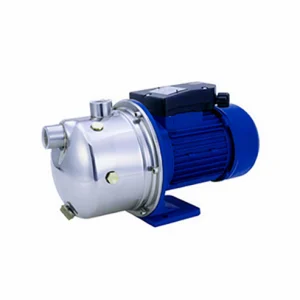
Self-priming pumps are a specialized category of centrifugal pumps designed to overcome the inherent priming limitation. They incorporate an internal design that allows them to evacuate air from the suction line and casing without external assistance, provided the casing is initially filled with liquid. This capability is achieved through various mechanisms. One common method involves a re-circulation chamber within the pump. When the pump starts, the impeller mixes the air in the suction line with the liquid retained in the casing. This air-liquid mixture is then discharged into the re-circulation chamber, where the air separates and escapes through the discharge port, while the liquid recirculates. This continuous process eventually evacuates all air from the suction line, allowing atmospheric pressure to push the liquid into the pump.
Another self-priming design utilizes an air-water separator. The pump draws in a mixture of air and water, which then enters a separation chamber. Here, the air rises and is expelled, while the water falls back into the impeller, ready to mix with more air. This cycle continues until the entire suction line is filled with water, and the pump begins to operate as a conventional centrifugal pump. This unique ability makes self-priming pumps highly advantageous in applications where the pump is frequently started and stopped, or where the liquid level fluctuates. We offer robust Self-priming pump solutions designed for reliability and efficiency in such demanding environments.
Key Differences in Operation and Application
The primary distinction between self-priming and centrifugal pumps lies in their priming requirements. Standard centrifugal pumps require manual or external priming, making them less suitable for applications where the suction lift is significant or intermittent. Conversely, self-priming pumps eliminate this need, offering greater convenience and operational flexibility. This difference profoundly impacts their application suitability.
Centrifugal pumps excel in continuous flow applications where the pump is installed below the liquid level, ensuring a flooded suction. They are known for their high efficiency and ability to handle large volumes of fluid at moderate pressures. Examples include water supply systems, HVAC circulation, and industrial process water. For instance, our Single stage end suction volute pump boasts a max flow rate of 4000 m³/h and a max head of 150 m, making it ideal for large-scale water transfer.
Self-priming pumps, on the other hand, are invaluable in situations requiring intermittent operation or where the pump cannot be positioned below the liquid source. They are commonly used in dewatering applications, sewage handling, and agricultural irrigation. Their ability to re-prime automatically after a loss of suction is a significant operational advantage. Consider our Sewage water elevating system with a max flow rate of 130 m³/h and max head of 60 m, which is perfect for locations without gravity drainage.
| Feature | Centrifugal Pumps | Self-Priming Pumps |
|---|---|---|
| Priming Requirement | Requires external priming or flooded suction | Self-primes after initial fill |
| Air Handling Capability | Poor | Excellent, removes air from suction line |
| Installation Location | Typically below liquid level (flooded suction) | Can be installed above liquid level |
| Ideal Applications | Continuous flow, high volume, constant liquid level | Intermittent flow, dewatering, fluctuating liquid levels |
| Efficiency | Generally higher in continuous operation | Slightly lower due to re-circulation (some models) |
| Complexity | Simpler design | More complex internal design |
Advantages of Self-Priming Pumps
The inherent design of self-priming pumps offers several distinct advantages, particularly in challenging operational environments. Their ability to automatically evacuate air from the suction line simplifies installation and reduces downtime. This feature is especially beneficial in applications where the pump may lose prime due to air ingress or fluctuating liquid levels. For example, in construction sites, a self-priming pump can be quickly deployed for dewatering tasks without the need for constant manual priming.
Furthermore, self-priming pumps enhance operational safety by minimizing human interaction with potentially hazardous liquids or confined spaces during priming. They are often more robust, designed to handle liquids containing some solids or entrained air, making them suitable for wastewater and slurry applications. This versatility translates into lower operational costs and increased productivity for many industrial processes. Our Prefabricated pump station are designed with intelligent, high-efficiency operation and easy maintenance, further enhancing these benefits.
Benefits of Centrifugal Pumps
Centrifugal pumps offer their own set of compelling advantages, making them the preferred choice for numerous applications. When operating with a flooded suction, they are highly efficient, converting a significant portion of input power into fluid movement. Their simpler design often translates to lower initial costs and easier maintenance compared to more complex self-priming counterparts.
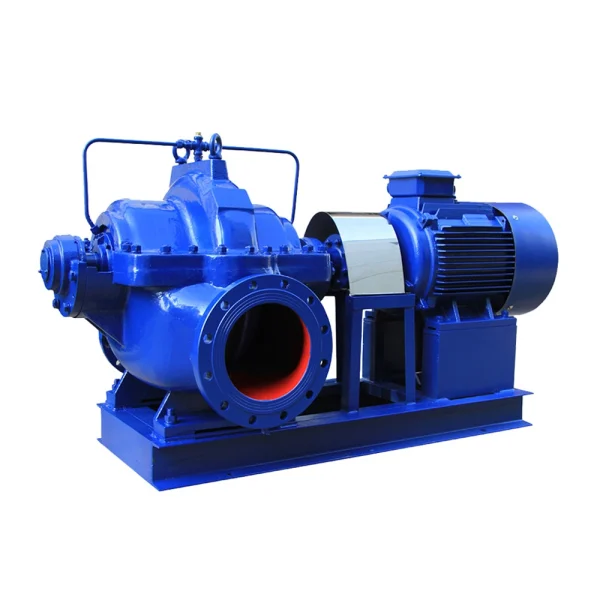
Centrifugal pumps are also capable of handling a wide range of flow rates and heads, from small domestic units to large industrial installations. They are particularly well-suited for transferring clean, low-viscosity liquids without solid particles, such as in water treatment plants or chemical processing. The reliability and consistent performance of centrifugal pumps in stable operating conditions are highly valued across industries. Our Centrifugal Pump range includes models like the Split casing double suction pump, which delivers up to 3975 m³/h flow and 230 m head, demonstrating their capability for large-scale fluid transfer.
From Our Field Engineers: Practical Considerations
Our field engineers frequently encounter scenarios where the choice between self-priming and centrifugal pumps directly impacts project success. A common mistake is underestimating the importance of priming for standard centrifugal pumps. We once had a client who installed a large Horizontal Pump for an irrigation project, but failed to account for the significant suction lift from a fluctuating river level. The pump constantly lost prime, leading to frequent shutdowns and manual re-priming, which severely hampered operations.
After assessing the situation, we recommended replacing it with a self-priming unit. The new pump, despite a slightly higher initial cost, completely resolved the priming issues, ensuring continuous and reliable water supply. This experience underscores that while centrifugal pumps offer high efficiency under ideal conditions, the practicalities of installation and operation, especially concerning suction lift and air handling, often make self-priming pumps the more cost-effective and reliable choice in less-than-ideal scenarios. This practical insight is crucial for long-term operational efficiency.
Choosing the Right Pump for Your Needs
Selecting between a self-priming and a centrifugal pump requires a thorough evaluation of your specific application requirements. Factors such as the nature of the liquid, the required flow rate and head, the suction lift conditions, and the frequency of operation all play a critical role. For applications involving clean liquids, continuous operation, and a flooded suction, a centrifugal pump typically offers higher efficiency and lower capital expenditure.
However, if your application involves intermittent operation, significant suction lift, or liquids with entrained air or solids, the added functionality of a self-priming pump often outweighs its potentially higher cost. The convenience of automatic priming and reduced maintenance can lead to substantial long-term savings and improved operational reliability. We encourage you to consider the total cost of ownership, including installation, energy consumption, and maintenance, when making your decision. Our team can assist in performing a detailed analysis to recommend the best solution.
If you’re interested in this topic, check out our article 《Optimizing Industrial Heating: A Deep Dive into the Heat Conduction Oil Pump》.
Expert Insight: The Future of Pumping Solutions
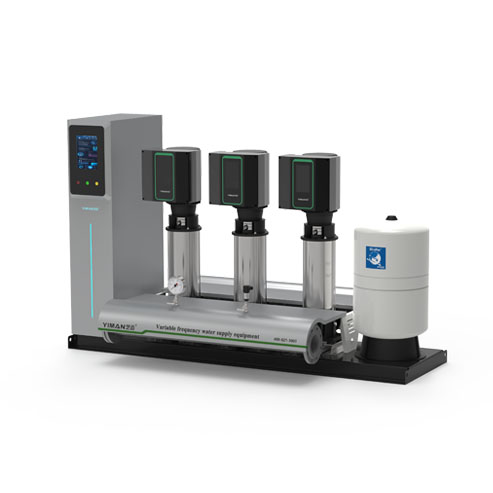
The pump industry continuously evolves, driven by demands for greater efficiency, reliability, and automation. We observe a growing trend towards integrating intelligent controls and variable frequency drives (VFDs) into both self-priming and centrifugal pump systems. This integration enhances performance, reduces energy consumption, and enables proactive maintenance. For example, our Intelligent Digital Driven VFD Booster System offers a flow range of 5 to 900+ m³/h and a head of 15 to 200 m, with a protection grade of IP65, showcasing the advancements in smart pumping solutions.
The development of more robust materials and advanced hydraulic designs also contributes to improved pump longevity and efficiency. We anticipate a future where pumps are not merely components but integrated, smart systems that communicate and adapt to changing operational demands, further blurring the lines between traditional pump categories. This evolution will lead to even more specialized and efficient solutions for diverse industrial challenges.
Navigating Pump Selection
Choosing the appropriate pump type is a critical decision that impacts system performance, operational costs, and overall reliability. While self-priming pumps offer unparalleled convenience in challenging suction conditions, centrifugal pumps remain the workhorse for many continuous, high-volume applications. Understanding their distinct operational principles and matching them to your specific needs is paramount. Our extensive range of pumps, including specialized Centrifugal Pump and Self-priming pump, ensures we can provide a tailored solution for virtually any fluid transfer requirement.
We are committed to providing high-quality, efficient, and reliable pumping solutions. Our expertise spans various industries, from water treatment and industrial processing to specialized applications requiring robust and intelligent systems. We invite you to leverage our experience and product portfolio to optimize your operations.
About the Author
The Shanghai Yimai Industrial Co., Ltd. content team comprises seasoned engineers and industry specialists with decades of collective experience in fluid dynamics, pump design, and industrial applications. Our insights are rooted in practical field knowledge and a deep understanding of engineering principles, ensuring accuracy and relevance for our global clientele. We are dedicated to sharing our expertise to help businesses make informed decisions regarding their industrial equipment needs.
Contact Our Experts
Selecting the right pump can be complex. We understand the nuances of various applications and are ready to assist you. Contact our specialists to explore tailored solutions and receive expert guidance on choosing between self-priming and centrifugal pumps, or any other pumping technology.
FAQs
Q1: What is the main difference between a self-priming pump and a standard centrifugal pump?
A1: The main difference lies in their ability to handle air. A self-priming pump can automatically remove air from its suction line and casing to begin pumping liquid, whereas a standard centrifugal pump requires its casing and suction line to be completely filled with liquid before it can operate.
Q2: When should I choose a self-priming pump over a centrifugal pump?
A2: You should choose a self-priming pump when the pump is installed above the liquid level, when the liquid level fluctuates, or when intermittent operation is required. These conditions often lead to air ingress, which a self-priming pump can manage automatically.
Q3: Are centrifugal pumps more efficient than self-priming pumps?
A3: In continuous operation with a flooded suction, standard centrifugal pumps generally exhibit higher efficiency due to their simpler hydraulic design. Self-priming pumps may have slightly lower efficiency due to internal recirculation mechanisms used for priming.
Q4: What types of liquids can these pumps handle?
A4: Centrifugal pumps are typically used for clean, low-viscosity liquids. Self-priming pumps are often designed to handle liquids with some solids or entrained air, making them suitable for applications like wastewater or slurry transfer.
Q5: How does Shanghai Yimai Industrial Co., Ltd. ensure the quality of its pumps?
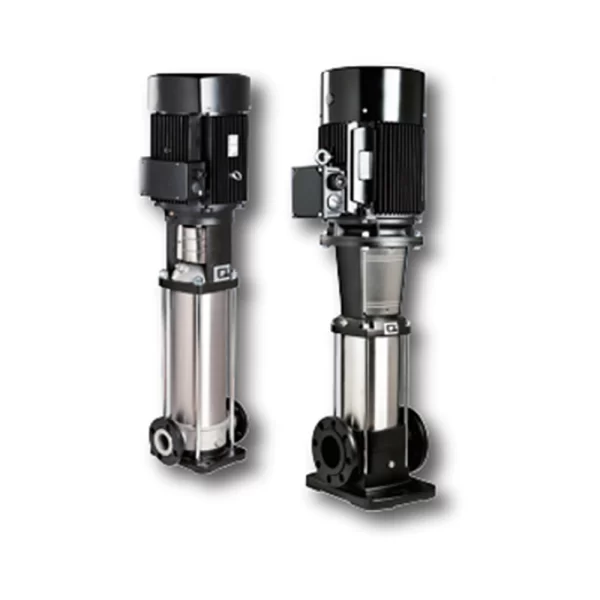
A5: We adhere to stringent quality control measures throughout the manufacturing process, from material selection to final assembly and testing. Our pumps, such as the Vertical Multi-Stage Centrifugal Pump, are built to international standards, ensuring reliability and long service life.
Keywords:
Self-priming pumps, centrifugal pumps, pump selection, industrial pumps, fluid transfer