Maximize Efficiency: The Best Energy-Saving Tips for Water Pump Systems
Water pump systems are essential in industrial and commercial operations. They often consume a significant portion of total energy. Reducing this energy consumption directly lowers operational costs and supports sustainability goals. We provide practical strategies and advanced technologies to help achieve these savings.
Understanding Water Pump Energy Consumption
Inefficient pumping systems lead to substantial financial losses. These losses come from excessive electricity use and increased maintenance needs. Optimizing these systems can yield significant cost reductions.
The Impact of Inefficient Pumping on Operational Costs
Many industrial and commercial facilities operate water pump systems below their optimal efficiency. This results in higher electricity bills. For example, a pump running at 60% efficiency instead of 80% can increase energy consumption by over 30%. Over time, these inefficiencies accumulate, impacting profit margins. Beyond energy costs, inefficient pumps experience more wear and tear. This leads to frequent breakdowns and increased repair expenses.
Key Factors Influencing Pump Energy Use
Several factors contribute to a pump system’s energy consumption. Understanding these factors helps identify areas for improvement.
- Oversizing: Many pumps are initially oversized for their actual operational needs. This leads to continuous operation at partial load, which is less efficient.
- System Design: Poor pipework design, including sharp bends and narrow diameters, increases friction losses. This forces pumps to work harder.
- Motor Efficiency: Older motors often have lower efficiency ratings. They convert less electrical energy into mechanical work, wasting power as heat.
- Control Methods: Fixed-speed pumps run at full capacity regardless of demand. This wastes energy when flow or pressure requirements are lower.
- Maintenance: Lack of regular maintenance, such as cleaning impellers or checking seals, degrades pump performance over time.
Advanced Technologies for Water Pump Energy Savings
Modern technology offers powerful tools to enhance pump system efficiency. These solutions provide precise control and reduce energy waste.
Implementing Variable Frequency Drives (VFDs) for Optimal Control
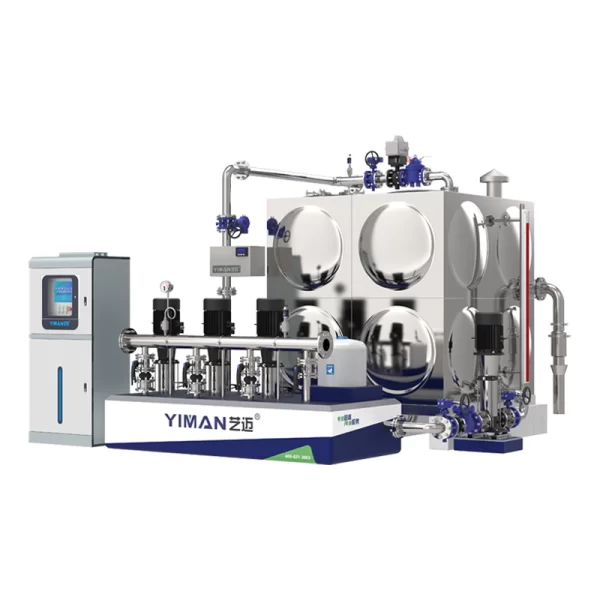
Variable Frequency Drives (VFDs) are crucial for energy efficiency in pump systems. They adjust motor speed to match actual demand. This avoids the energy waste associated with fixed-speed pumps. A VFD can reduce energy consumption by up to 50% in applications with varying flow requirements. For example, a pump operating at 80% speed uses only about 50% of its full power. This is due to the cube law relationship between pump speed and power consumption. Our Intelligent Digital Driven VFD Booster System offers precise control and significant energy savings.
Upgrading to High-Efficiency Motors: IE3 and IE4 Standards
Electric motors drive pump systems. Their efficiency directly impacts overall energy use. Upgrading to high-efficiency motors, such as IE3 or IE4 standards, can yield considerable savings. IE3 motors offer efficiency improvements of 2-3% over standard motors. IE4 motors, or Super Premium Efficiency motors, provide even greater savings, often reducing energy consumption by 5-15% compared to older models. For more information, read our article 《High Efficient Three-phase Asynchronous Motor: The Industrial Buyer’s Guide to IE4 Motors and Wholesale Procurement》. These motors are designed to minimize energy losses through improved materials and construction.
Leveraging Intelligent Digital Driven Booster Systems
Intelligent Digital Driven Booster Systems integrate VFDs with smart controls. These systems monitor real-time demand and adjust pump operation accordingly. They maintain constant pressure while minimizing energy use. This is particularly beneficial for applications with fluctuating water demand, like commercial buildings or residential areas. Our VFD Controlled Booster System provides intelligent pressure management for energy and water savings.
Strategic System Design and Maintenance Practices
Beyond technology upgrades, effective system design and consistent maintenance are vital for long-term energy efficiency.
Proper Pump Sizing and Selection for Specific Applications
Choosing the right pump for the job is fundamental. An oversized pump operates inefficiently, while an undersized pump struggles to meet demand. Correct sizing involves:
- Accurate Flow and Head Calculations: Determine the precise flow rate and pressure (head) required for the application.
- System Curve Analysis: Match the pump’s performance curve with the system’s resistance curve. The intersection point should be near the pump’s best efficiency point (BEP).
- Future Demand Consideration: Account for potential future changes in demand without oversizing the current system.
- Pump Type Selection: Select the most suitable pump type, such as a Single stage end suction volute pump or Vertical Multi-Stage Centrifugal Pump, based on the application’s specific needs.
The Importance of Regular Maintenance and Performance Audits
Regular maintenance prevents efficiency degradation and extends pump lifespan.
- Lubrication: Proper lubrication reduces friction in bearings, decreasing energy loss.
- Impeller Inspection: Clean impellers prevent blockages and maintain hydraulic efficiency.
- Seal Checks: Worn seals can cause leaks and reduce pump performance.
- Vibration Analysis: Detects imbalances or misalignment early, preventing major issues.
- Performance Audits: Periodically measure pump flow, pressure, and power consumption. Compare these to baseline data to identify efficiency drops.
Optimizing Pipework and System Layout for Reduced Head Loss
System layout significantly affects head loss, which is the resistance to fluid flow.
- Larger Pipe Diameters: Reduce fluid velocity and friction losses.
- Minimize Bends: Use gradual bends instead of sharp elbows to reduce turbulence.
- Shorten Pipe Runs: Reduce overall friction by minimizing the length of piping.
- Valve Selection: Choose low-resistance valves that do not impede flow unnecessarily.
Shanghai Yimai Industrial’s Solutions for Energy-Efficient Pumping
We are committed to providing solutions that maximize efficiency and reduce operational costs. Our product range includes advanced pumps and intelligent control systems.
High-Efficiency Pumps: Single Stage End Suction and Vertical Multi-Stage Options
We offer a variety of high-efficiency pumps designed for diverse industrial applications.
- Single stage end suction volute pump: These pumps are known for their compact design and high efficiency, suitable for general water supply and circulation systems. They feature CFD-based hydraulic designs, ensuring optimal performance.
- Vertical Multi-Stage Centrifugal Pump: Ideal for applications requiring high pressure, such as high-rise building pressurization and industrial process water systems. These pumps deliver powerful performance while maintaining energy efficiency.
Smart Control Systems for Predictive Maintenance and Energy Management
Our intelligent control systems go beyond basic automation. They incorporate features like:
- Real-time Monitoring: Continuous tracking of pump performance parameters.
- Predictive Maintenance: Algorithms analyze data to predict potential failures, allowing for proactive maintenance.
- Energy Management: Optimizes pump operation schedules to minimize energy consumption during off-peak hours.
- Remote Access: Allows operators to monitor and control systems from anywhere, enhancing responsiveness.
Integrated Solutions for Sustainable Water Management
We provide comprehensive integrated solutions for various water management needs. These include:
- VFD Controlled Booster System: Ensures constant water pressure with minimal energy use.
- Integrated Room Pump Station: A compact and energy-saving solution for urban water supply.
- Modular Integrated Water Plant: Offers rapid deployment and high efficiency for water treatment.
These integrated systems are designed to work seamlessly, providing reliable and sustainable water management.
Measuring and Verifying Energy Savings
Quantifying energy savings is essential to justify investments in efficiency upgrades. It also helps in continuous improvement efforts.
Calculating Return on Investment (ROI) for Energy Upgrades
Calculating ROI involves comparing the initial investment in energy-saving technologies with the resulting operational cost reductions.
- Initial Investment: Cost of new equipment, installation, and commissioning.
- Annual Savings: Reduced electricity bills, lower maintenance costs, and extended equipment life.
- Payback Period: Time required for savings to offset the initial investment.
For example, investing in an IE4 motor may have a payback period of 1-3 years due to significant energy savings.
| Metric | Old System (Fixed Speed, IE1 Motor) | Upgraded System (VFD, IE4 Motor) | Annual Savings |
|---|---|---|---|
| Annual Energy Consumption (kWh) | 150,000 | 90,000 | 60,000 kWh |
| Energy Cost per kWh | $0.12 | $0.12 | – |
| Annual Electricity Cost | $18,000 | $10,800 | $7,200 |
| Maintenance Costs | $1,500 | $800 | $700 |
| Total Annual Savings | – | – | $7,900 |
| Initial Investment | – | $20,000 | – |
| Payback Period | – | – | 2.5 years |
This table illustrates how an upgrade can lead to substantial financial benefits over time.
Monitoring Key Performance Indicators (KPIs) for Continuous Improvement
Continuous monitoring of KPIs ensures that efficiency gains are sustained.
- Specific Energy Consumption (SEC): Energy consumed per unit of fluid pumped (e.g., kWh/m³).
- Pump Efficiency: Ratio of hydraulic power output to electrical power input.
- Uptime and Reliability: Measures system availability and reduces unexpected downtime.
- Maintenance Costs: Tracks expenses related to repairs and scheduled servicing.
Regularly reviewing these KPIs helps identify further optimization opportunities and maintain peak performance.
Call to Action
Ready to optimize your water pump systems for maximum efficiency and cost savings? Contact our specialists today to explore tailored solutions that fit your specific industrial or commercial needs.
FAQs
What are the primary benefits of upgrading to an IE4 motor?
Upgrading to an IE4 motor provides several key benefits. These include significant energy savings, typically ranging from 5% to 15% compared to older motor standards. This reduces operational costs and carbon footprint. IE4 motors also offer increased reliability and a longer operational lifespan due to their superior design and construction, leading to lower maintenance requirements.
How does a VFD contribute to energy savings in a pump system?
A VFD saves energy by adjusting the motor’s speed to match the actual demand of the system. Unlike fixed-speed pumps, which run at full capacity constantly, a VFD allows for variable flow and pressure. This prevents energy waste during periods of lower demand. The power consumption of a pump is proportional to the cube of its speed, meaning even a small reduction in speed leads to substantial energy savings.
What role does proper pump sizing play in overall system efficiency?
Proper pump sizing is critical for system efficiency. An oversized pump operates far from its best efficiency point (BEP), leading to excessive energy consumption and increased wear. Conversely, an undersized pump struggles to meet demand, causing strain and potential failure. Correctly sized pumps operate closer to their BEP, maximizing efficiency and minimizing energy waste and maintenance needs.
Can older pump systems be retrofitted with energy-saving technologies?
Yes, many older pump systems can be retrofitted with energy-saving technologies. Common retrofits include installing VFDs, upgrading to high-efficiency IE3 or IE4 motors, and optimizing pipework. These upgrades can significantly improve the efficiency of existing infrastructure without requiring a complete system overhaul, offering a cost-effective path to energy reduction.
How often should a water pump system undergo an energy audit?
A water pump system should undergo an energy audit every 3 to 5 years, or whenever there are significant changes in operational parameters or energy costs. Regular audits help identify areas of inefficiency, detect performance degradation, and ensure that the system continues to operate optimally. This proactive approach helps maintain energy savings and extend the lifespan of the equipment.
Keywords:
Best Energy-Saving Tips for Water Pump Systems, VFD, IE4 motors, pump efficiency, operational costs