Optimizing Modern Sewage Lifting Units with Advanced Control Modes
In places where gravity can’t do the job, sewage lifting units quietly keep everything moving. I’ve watched stations go from headache-prone to rock-solid simply by choosing and tuning the right control mode. Dialed-in controls cut energy use, ease the maintenance load, and head off costly overflows—exactly what you need for wastewater infrastructure that’s both sustainable and dependable.
Understanding the Critical Role of Control Modes in Sewage Lifting Units
Effective control modes are fundamental to the efficient operation of sewage lifting units. These units move wastewater from lower elevations to higher ones, preventing environmental contamination and public health hazards. Without tight, precise control, you invite frequent breakdowns, excessive energy consumption, and premature wear on critical components.
1. Why Effective Control is Paramount for Sewage Management
Robust control keeps sewage lifting units running continuously and reliably. It prevents overflows that can trigger serious environmental damage and health risks. Optimized control trims energy consumption—one of the largest operating costs in wastewater facilities. It also reduces wear on pumps and ancillary equipment, extending service life and cutting maintenance spend. We consistently emphasize that strong control strategies are indispensable for both operational efficiency and environmental compliance.
2. The Evolution of Sewage Lifting Technology
Sewage lifting has come a long way from simple on/off pump logic. Early systems leaned on float switches, offering minimal precision or efficiency. Electromechanical relays and timers improved sequencing a bit, but still lacked adaptability for modern flow variability and reliability demands. Today’s advanced control modes use digital technologies for responsive, dynamic operation. This progression mirrors the rising need for efficient, reliable, and environmentally responsible wastewater management.
Exploring Key Control Modes for Enhanced Performance and Reliability
Modern sewage lifting units deploy several control modes, each with clear strengths and ideal use cases. The right choice depends on operational goals and site conditions. We evaluate these options to steer optimal system design.
1. Level-Based Control Systems: Operation and Advantages
Level-based control remains the most widely used approach. Sensors track the wastewater level in the wet well. When the level hits a defined “start” point, the pump engages; it runs until the level drops to a defined “stop” point. Depending on inflow and station capacity, multiple pumps can run in sequence or in parallel.
Advantages of Level-Based Control:
- Simplicity: Straightforward to design, install, commission, and operate.
- Cost-Effectiveness: Float switches and pressure transducers are typically inexpensive.
- Direct Response: Pumps react to actual sewage accumulation for timely removal.
- Reliability: With proper sensor selection and upkeep, level-based control is highly dependable.
Common Level Sensing Technologies:
| Technology | Principle of Operation | Advantages | Disadvantages |
|---|---|---|---|
| Float Switches | Mechanical switches activated by liquid buoyancy. | Inexpensive, simple, robust. | Prone to ragging, limited precision. |
| Pressure Transducers | Measure hydrostatic pressure, converting it to a level reading. | High accuracy, no moving parts in liquid. | Can be affected by density changes, calibration needs. |
| Ultrasonic Sensors | Emit sound waves and measure the time for echoes to return. | Non-contact, high accuracy, self-cleaning. | Affected by foam, temperature, and humidity. |
| Radar Sensors | Emit microwave signals and measure reflection time. | Unaffected by foam, temperature, or pressure. | Higher cost, complex installation. |
We find that matching the level sensor to the wastewater’s characteristics is critical to performance and reliability. For further insights into optimizing wastewater systems, you might find Optimizing Your Sewage Elevating System for Peak Performance beneficial.
2. Time-Based Control Systems: Applications and Limitations
Time-based control runs pumps on fixed schedules or for set durations, regardless of the actual wastewater level. It’s often paired with level controls or used where inflow is highly predictable.
Applications of Time-Based Control:
- Low-Flow Scenarios: In remote sites with minimal, steady inflow, time-based logic can prevent short-cycling.
- Scheduled Flushing: Periodic starts flush lines and deter solids buildup.
- Backup Systems: Serves as a secondary control if primary level instruments fail.
Limitations of Time-Based Control:
- Lack of Responsiveness: Can’t react to sudden inflow changes—risking overflows or needless run time.
- Energy Inefficiency: May operate when not needed or miss times when it is needed.
- Maintenance Issues: Idle periods can allow solids to accumulate and increase clogging risk.
- Limited Flexibility: Requires manual retuning when conditions change.
Overall, time-based control is less efficient and reliable than level-based or variable-speed approaches. We recommend it only for narrow, well-controlled use cases or as a fail-safe.
3. Variable Frequency Drive (VFD) Control: Maximizing Efficiency and Longevity
VFD Controlled Booster Water Supply System control represents a significant advancement in sewage lifting unit optimization. VFDs vary motor frequency and voltage to adjust speed and torque, allowing pumps to match inflow precisely.
Benefits of VFD Control:
- Energy Savings: Pumps run only as fast as needed, markedly cutting energy use—especially when flows fluctuate.
- Extended Equipment Life: Soft starts/stops reduce mechanical stress, limiting wear on pumps and motors.
- Reduced Maintenance: Smoother hydraulics curb cavitation and vibration, lowering breakdowns and service costs.
- Precise Flow Control: Maintains ideal wet well levels, avoiding overflows and excessive cycling.
- Noise Reduction: Lower speeds mean quieter operation.
- Improved System Reliability: Consistent, low-stress operation boosts overall dependability.
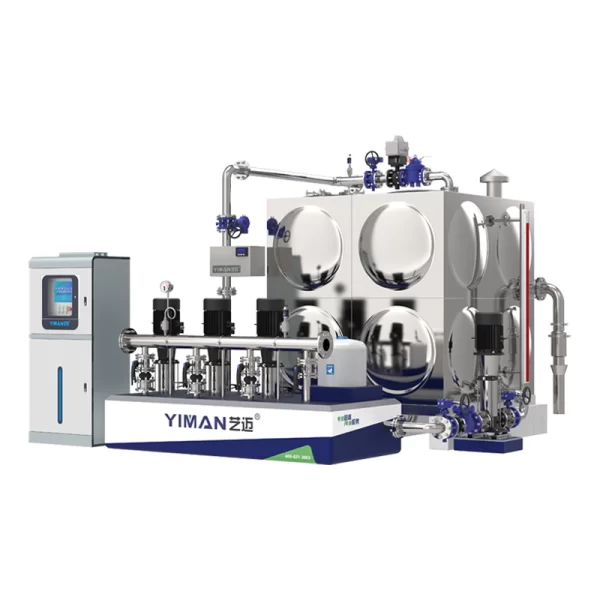
We have observed that integrating VFDs into sewage lifting units delivers substantial long-term savings and operational gains. For more details on efficient water pressure management, consider reading VFD Controlled Booster System Intelligent Pressure Management for Energy and Water Savings.
4. PLC and SCADA Integration: Achieving Advanced Automation and Monitoring
Programmable Logic Controllers (PLCs) and Supervisory Control and Data Acquisition (SCADA) systems are the backbone of advanced automation and comprehensive oversight in sewage lifting units.
PLC (Programmable Logic Controller):
A PLC is an industrial controller that continuously reads inputs and executes programmed logic to drive outputs. In sewage lifting units, PLCs coordinate pump sequencing, manage VFDs, handle alarms, and communicate with other systems.
Benefits of PLC Integration:
- Complex Control Logic: Executes strategies beyond simple start/stop level control.
- Flexibility: Easily reprogrammed to meet new requirements or upgrades.
- Diagnostic Capabilities: Detailed fault detection and diagnostics streamline troubleshooting.
- Integration: Unifies sensors, actuators, and multiple communication protocols.
SCADA (Supervisory Control and Data Acquisition):
A SCADA system provides centralized monitoring and control across multiple PLCs and field devices. It aggregates data, visualizes status, raises alarms, and enables remote adjustments.
Benefits of SCADA Integration:
- Centralized Monitoring: Real-time visibility of the entire sewage network from one location.
- Data Logging and Analysis: Historical records for performance analysis, trend tracking, and regulatory reporting.
- Remote Control: Start/stop pumps, change setpoints, and respond to alarms remotely.
- Predictive Maintenance: Uses operational data to predict failures and schedule proactive maintenance.
- Enhanced Security: Robust alarm management and access controls.
Together, PLCs and SCADA transform lifting operations into intelligent, highly automated, remotely manageable systems—essential for large municipal networks.
Selecting the Optimal Control Mode for Your Sewage Lifting Application
Choosing the right control mode requires a careful look at site conditions and operating goals. We guide clients through this process to ensure a precise fit.
1. Assessing Site-Specific Requirements and Operational Demands
Every site is different. We start by evaluating the unique characteristics of the application.
- Inflow Variability: Is inflow steady or highly variable? Significant variability often points to VFD control.
- System Capacity: Define the required duty point and pump count. Multi-pump setups benefit from advanced sequencing.
- Wet Well Dimensions: Size and geometry influence sensor placement and cycling frequency.
- Solids Content: Type/concentration of solids may dictate pump selection and anti-clog control strategies.
- Environmental Regulations: Local limits and reporting obligations can shape monitoring and control needs.
- Location Accessibility: Remote sites gain most from SCADA-enabled remote monitoring and control.
2. Evaluating Energy Efficiency and Cost-Benefit Analysis of Different Modes
Energy is a major operating expense in lifting stations. We run a full cost-benefit analysis for each control option.
- Fixed-Speed Pumps: Lower upfront cost but higher energy use due to on/off cycling and full-speed operation at low flows.
- VFD-Controlled Pumps: Higher initial cost, but energy savings commonly deliver rapid payback in variable-flow applications. We estimate savings from historical flow data.
- PLC/SCADA Systems: Higher capital for hardware/software, but long-term wins through optimized operation, reduced maintenance, and stronger data management.
We consider total cost of ownership (TCO) over the lifecycle: capex, energy, and maintenance.
3. Considering Maintenance, Reliability, and System Scalability
Sustained performance hinges on maintainability, reliability, and a path to scale.
- Maintenance Requirements: Simple controls may be easy to service but can cause more mechanical issues. Advanced systems often simplify troubleshooting with diagnostics.
- System Reliability: Redundancy in controls and sensing raises reliability. PLC-based systems are notably robust with self-diagnostics.
- Scalability: Plan for growth. PLC/SCADA architectures scale readily with added pumps or monitoring points.
- Operator Expertise: Align system complexity with staff capabilities; advanced platforms may require training or vendor support.
4. Integrating Shanghai Yimai Industrial Co., Ltd.’s Sewage Water Elevating System
At Shanghai Yimai Industrial Co., Ltd., we offer advanced Sewage Water Elevating System engineered for high performance and reliability. Our solutions integrate modern control technologies to suit diverse applications.
Our Sewage Water Elevating System (Model YMWM / YMWP / YMWB) features:
| Parameter | Specification |
|---|---|
| Rated Voltage / Frequency | 380V – 50Hz / 60Hz |
| Max Flow Rate | 130 m³/h |
| Max Head | 60 m |
| Application Fields | Subway stations, underground shopping malls, parking lots, and other locations where gravity drainage is not possible. |
Our systems are designed for intelligent operation, remote monitoring, and streamlined maintenance. We deliver energy savings, safety, and reliability—even in demanding environments—and tailor configurations to site conditions to maximize efficiency and minimize operating costs. For more information on our solutions, please see Sewage Water Elevating System Intelligent Solutions for Reliable and Efficient Wastewater Management.
Future Trends in Sewage Lifting Unit Control Technology
Digitalization and smart technologies are shaping the next wave of control—promising even greater efficiency, reliability, and environmental performance.
1. The Impact of IoT and AI on Predictive Maintenance
IoT and AI are changing how we maintain sewage lifting units.
- IoT Sensors: Continuous, real-time monitoring of pump performance, motor condition, vibration, temperature, and current draw.
- Data Analytics: AI detects patterns and anomalies that flag emerging faults.
- Predictive Maintenance: Instead of reactive or time-based service, systems predict failure windows so teams can intervene early—cutting costs and downtime.
- Optimized Operations: AI can refine pump scheduling and speeds based on forecast inflow and energy prices for added efficiency.
This transition from reactive to predictive maintenance reduces operating costs and boosts uptime.
2. Enhancements in Remote Monitoring and Smart City Integration
Remote capabilities continue to expand with better communications.
- Cloud-Based Platforms: Station data streams to the cloud for access via web or mobile from anywhere.
- Real-time Alerts: Immediate notifications help operators act quickly on alarms and critical events.
- Smart City Integration: Lifting units mesh with wider urban systems—stormwater, energy grids—to optimize resources and coordinate responses.
- Digital Twins: Virtual replicas enable scenario testing and fine-tuning of control strategies.
These advances point to sewage systems that are efficient, resilient, and seamlessly integrated into smarter, more sustainable cities.
Contact Us for Advanced Sewage Management Solutions
Upgrading sewage lifting units with advanced control modes is a smart investment in efficiency, reliability, and sustainability. Our team at Shanghai Yimai Industrial Co., Ltd. has the hands-on expertise to design, implement, and support these systems. We provide tailored solutions—including our Sewage Water Elevating System—to meet your specific challenges. Reach out to discuss how we can elevate your wastewater infrastructure.
Email: tony@yimaipump.com
Phone/WhatsApp: +86 134 8229 5009
About the Author
After-Sales Engineer
As an After-Sales Engineer at Shanghai Yimai Industrial Co., Ltd., I specialize in the practical application and optimization of industrial pumping and wastewater treatment systems. My experience includes direct involvement in the installation, commissioning, and maintenance of various control systems for sewage lifting units. I am committed to providing data-driven insights and reliable solutions that enhance operational efficiency and system longevity for our clients.
FAQs
1. What are the primary benefits of using VFD control in sewage lifting units?
VFD control delivers significant energy savings by matching pump speed to real-time flow demand, often cutting electricity consumption by up to 50% in variable-flow conditions. It also extends pump and motor life by reducing mechanical stress from frequent starts and stops, which lowers maintenance costs and improves reliability.
2. How does PLC integration improve the reliability of sewage lifting systems?
PLC integration boosts reliability through sophisticated control logic, precise multi-pump sequencing, and advanced diagnostics. PLCs detect faults, generate detailed alarms, and implement fail-safe routines to maintain continuous operation and reduce the risk of failures.
3. What factors should be considered when choosing between level-based and time-based control?
Consider inflow variability first: level-based control suits fluctuating flows by responding directly to sewage accumulation. Time-based control fits highly predictable, low-flow applications or serves as a backup. Generally, level-based control is more efficient and responsive, while time-based control risks overflows or wasted run time if conditions change.
4. Can existing sewage lifting units be upgraded with modern control modes?
Yes. Many stations can be retrofitted with VFDs, PLCs, and SCADA. Upgrades typically include new control panels, sensors, and communications hardware, yielding better efficiency, reliability, and visibility—without replacing the entire system.
5. How do advanced control modes contribute to environmental protection?
Advanced controls prevent sewage overflows that can pollute waterways and soil. They also cut energy consumption, shrinking the carbon footprint of wastewater operations. Optimized performance reduces chemical use and supports compliance with discharge regulations.