Effective Methods for Removing Oil and Solids from Wastewater
Industrial wastewater often carries a mix of oils and solids that, left unchecked, strain equipment and damage waterways. Meeting discharge limits while keeping operations reliable takes a staged approach that actually works in the field, from screening and gravity separation to coalescing systems, DAF, chemical treatment, filtration, and smart sludge handling. We understand how challenging clean discharge can be and focus on practical methods that balance compliance, environmental protection, and day-to-day efficiency.
Understanding the Challenges of Oil and Solids in Wastewater
Industrial operations frequently generate wastewater contaminated with various forms of oil and solid matter. These contaminants, if left untreated, can lead to severe environmental degradation and significant operational inefficiencies within a facility. Addressing these issues effectively requires a clear understanding of their impact and sources.
1. The Environmental and Operational Impact of Contaminants
The presence of oil and solids in wastewater creates multiple problems. Environmentally, discharged oils can form slicks on water bodies, blocking sunlight, reducing oxygen levels, and harming aquatic life. Solids, such as suspended particles and sludge, can accumulate in rivers and lakes, altering habitats and affecting water quality. Operationally, these contaminants can clog pipes, damage equipment, and reduce the efficiency of downstream treatment processes, leading to increased maintenance costs and potential regulatory fines. We consistently observe these impacts across various industrial sectors.
2. Identifying Common Sources of Oil and Solid Waste in Industrial Effluents
Oil and solid waste originate from diverse industrial activities. Manufacturing processes, food processing, vehicle maintenance, and metalworking often produce oily wastewater. Solids can include grit, organic matter, and various suspended particles from production lines or washing operations. Understanding these specific sources is the first step toward designing an effective wastewater treatment strategy. For further insights into environmental protection, consider reading Sewage Treatment Conference for Environmental Protection Seminar Attended by Yimai Industrial.
Essential Pre-Treatment Strategies for Wastewater Purification
Pre-treatment is a critical initial phase in wastewater purification, designed to remove larger contaminants before they can interfere with subsequent, more advanced treatment stages. This step protects downstream equipment and optimizes overall system performance.
1. Initial Screening and Grit Removal for Large Solids
The very first step in wastewater treatment involves removing large debris and heavy inorganic solids. Screening uses physical barriers to capture items like rags, plastics, and wood. Grit removal then targets sand, gravel, and other dense particles that settle out of the water. These processes prevent abrasive damage and blockages in pumps and pipes.
2. Gravity Separation Techniques for Oil and Suspended Solids
Gravity separation relies on density differences to separate oil and suspended solids from water. Oil, being less dense, floats to the surface, while heavier solids sink. This method is effective for free-floating oils and readily settleable solids. Common equipment includes API separators and corrugated plate interceptors.
| Contaminant Type | Method | Principle | Efficiency | Application |
|---|---|---|---|---|
| Large Solids | Screening | Physical barrier | High for large particles | Initial stage, protects equipment |
| Grit (heavy solids) | Grit Chambers | Gravity settling | High for dense inorganic solids | Pre-treatment, prevents abrasion |
| Free Oil | API Separator | Gravity separation (density) | Good for free oil droplets > 150 microns | Industrial wastewater, oil refineries |
| Suspended Solids | Clarifiers/Settling Tanks | Gravity settling | Good for settleable solids | Primary treatment, removes bulk solids |
Advanced Technologies for Efficient Oil-Water Separation
After initial gravity separation, more sophisticated technologies are often required to remove finer oil droplets and emulsified oils. These advanced methods ensure a higher degree of purification, meeting stringent discharge standards.
1. How Oil-Water Separator Systems Work to Achieve Clarity
Oil-water separator systems employ various principles to achieve high separation efficiency. These systems typically use coalescing media or advanced hydrocyclone designs to enhance the separation of oil from water. The coalescing media encourages small oil droplets to merge into larger ones, which then rise more rapidly to the surface for removal. Our Oil Water Separator System offers robust solutions for diverse industrial applications.
2. The Role of Dissolved Air Flotation (DAF) in Removing Emulsified Oils
Dissolved Air Flotation (DAF) is highly effective for removing emulsified oils and finely suspended solids that do not readily separate by gravity. DAF systems introduce microscopic air bubbles into the wastewater, which attach to oil droplets and solid particles, causing them to float to the surface as a scum layer. This scum is then skimmed off, leaving clarified water. DAF is particularly useful for industries like food processing and petrochemicals.
Comprehensive Methods for Fine Solids Removal from Wastewater
Removing fine solids requires methods that go beyond simple gravity separation, often involving chemical and mechanical processes to aggregate and capture smaller particles. These steps are crucial for achieving high-quality effluent.
1. Chemical Coagulation and Flocculation for Enhanced Particle Aggregation
Chemical coagulation and flocculation are essential for removing colloidal and fine suspended solids. Coagulants, such as aluminum sulfate or ferric chloride, neutralize the electrical charges on particles, causing them to clump together. Flocculants then bind these smaller clumps into larger, more easily settleable or filterable flocs. This process significantly improves the efficiency of subsequent physical separation steps.
2. Mechanical Filtration and Membrane Technologies for Ultra-Fine Particle Capture
Mechanical filtration employs physical barriers to remove suspended solids of various sizes. Sand filters, multi-media filters, and cartridge filters are common examples, each designed for specific particle ranges. For ultra-fine particle capture and even dissolved contaminants, membrane technologies like microfiltration, ultrafiltration, nanofiltration, and reverse osmosis are utilized. These advanced membranes provide superior effluent quality but require careful pre-treatment to prevent fouling.
3. Sludge Dewatering and Management for Solid Waste Reduction
The treatment processes generate sludge, a concentrated byproduct containing removed solids and chemicals. Sludge dewatering reduces its volume, making it easier and more cost-effective to handle and dispose of. Techniques include belt presses, centrifuges, and filter presses, which mechanically remove water from the sludge. Proper sludge management is vital for environmental compliance and minimizing waste disposal costs. For efficient solid waste management, consider our Double Helix Continuous Presser and Double Shaft Shredder Machine.
Integrating Yimai Industrial Solutions for Optimal Wastewater Treatment
At Shanghai Yimai Industrial Co., Ltd., we specialize in providing integrated solutions for industrial wastewater treatment. Our expertise spans various stages of purification, supporting efficient and compliant discharge.
1. Leveraging Yimai’s Oil-Water Separator Systems for Industrial Applications
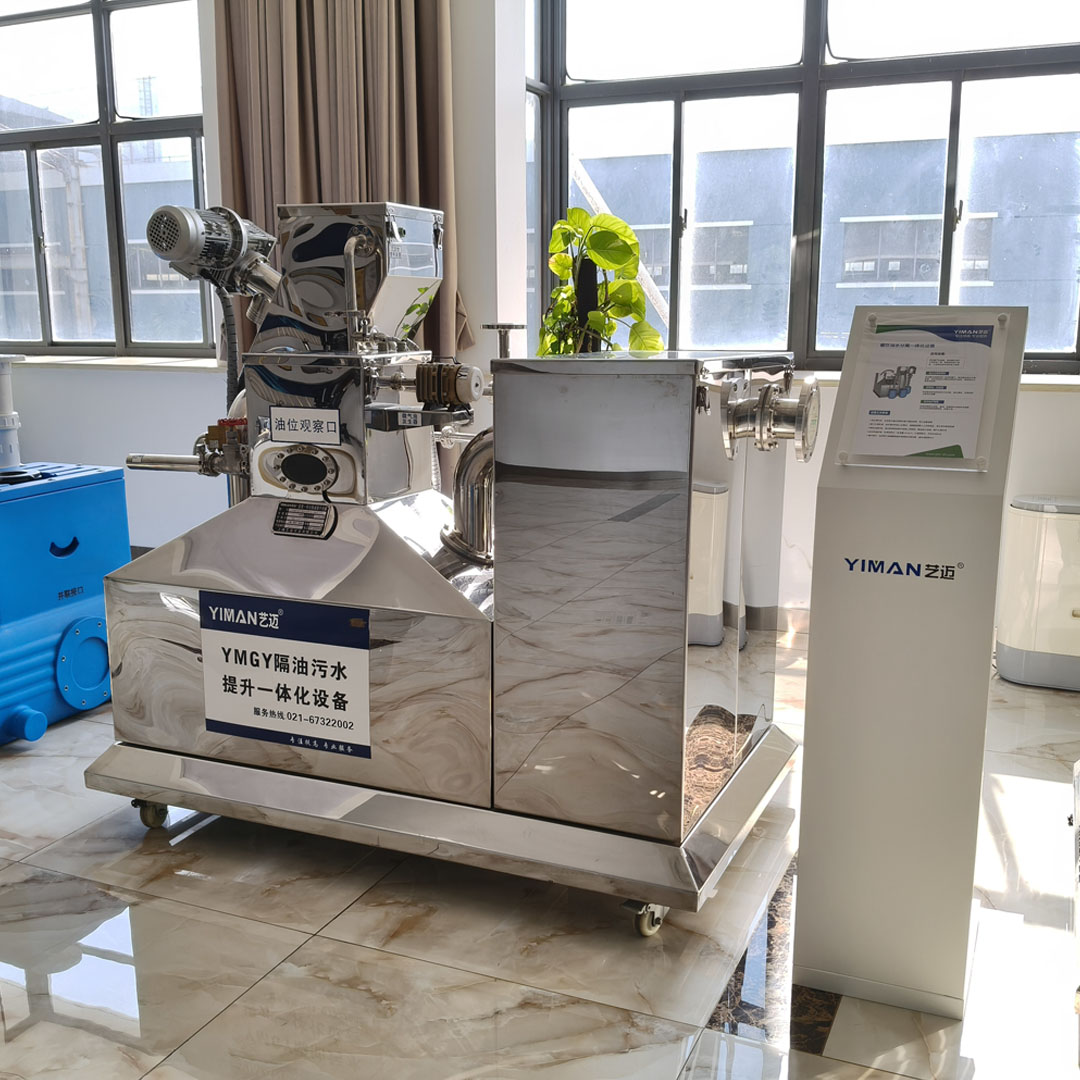
Our Oil Water Separator System (Model: YMGY) is engineered for effective removal of oil from wastewater across diverse industries. These systems are crucial for catering, public facilities, and food processing plants, ensuring compliance and environmental protection.
| Parameter | Specification |
|---|---|
| Model | YMGY |
| Treatment Capacity | 10 to 50 m³/h |
| Max Head | 30 m |
| Max Heating Temperature | 60 ℃ |
| Application Fields | Catering, shopping malls, hotels, schools, hospitals, food processing plants, food supermarkets |
2. Utilizing Yimai’s Sewage Lifting Systems for Efficient Wastewater Transport
For facilities where gravity drainage is impractical, our Sewage Water Elevating System provides reliable wastewater transport. These systems are designed for challenging environments, ensuring continuous and efficient flow.
| Parameter | Specification |
|---|---|
| Model | YMWM / YMWP / YMWB |
| Rated Voltage / Frequency | 380V – 50Hz / 60Hz |
| Max Flow Rate | 130 m³/h |
| Max Head | 60 m |
| Application Fields | Subway stations, underground shopping malls, parking lots (where gravity drainage is not possible) |
3. Implementing Yimai’s Solid Waste Treatment Systems for Comprehensive Management
We offer advanced solutions for solid waste management, complementing our wastewater treatment offerings. Our Double Helix Continuous Presser and Double Shaft Shredder Machine are designed for efficient volume reduction and processing of various solid wastes. These systems enhance resource recovery and reduce disposal burdens. We also provide Organic Waste Treatment System and Intelligent Waste Food Treatment System for specialized waste streams.
For further information on optimizing your wastewater infrastructure, you might find Optimizing Your Sewage Elevating System for Peak Performance insightful.
Partner with Yimai Industrial for Advanced Wastewater Treatment
Ensuring effective removal of oil and solids from your industrial wastewater is not just about compliance; it is about operational efficiency, environmental responsibility, and long-term sustainability. Shanghai Yimai Industrial Co., Ltd. provides robust, innovative, and custom-engineered solutions that meet these critical needs. Our comprehensive range of products, from advanced oil-water separators to efficient solid waste management systems, is designed to deliver superior performance and reliability. Contact us today to discuss your specific wastewater treatment challenges and discover how our expertise can benefit your operations.
Email: overseas1@yimaipump.com
Phone/WhatsApp: +86 13482295009
FAQs
1. What are the primary types of oil and solids found in industrial wastewater?
Industrial wastewater often contains various forms of oil, including free oil, emulsified oil, and dissolved oil, originating from processes like machining, food production, and vehicle maintenance. Solids range from large debris and grit to fine suspended particles and colloidal matter, often comprising organic waste, minerals, and process by-products.
2. How do environmental regulations impact wastewater treatment processes?
Environmental regulations, such as those set by local and international authorities, impose strict limits on the concentration of oil and solids that can be discharged into water bodies. These regulations necessitate robust treatment processes to avoid penalties, protect ecosystems, and ensure public health. Compliance drives the selection and design of treatment technologies.
3. What is the difference between physical, chemical, and biological wastewater treatment?
Physical treatment removes contaminants through mechanical means like screening, sedimentation, and filtration. Chemical treatment uses reagents to induce reactions such as coagulation and flocculation, aggregating particles for easier removal. Biological treatment utilizes microorganisms to break down organic pollutants. Often, effective wastewater treatment systems integrate all three approaches.
4. How can I determine the most suitable wastewater treatment system for my facility?
Determining the optimal system involves analyzing your wastewater’s characteristics, discharge requirements, available space, and budget. We recommend a detailed assessment of contaminant types and concentrations, flow rates, and desired effluent quality. Consulting with experienced environmental engineers and equipment providers is crucial for a tailored solution.
5. What are the benefits of integrating an intelligent wastewater treatment system?
Integrating an intelligent wastewater treatment system offers significant advantages, including real-time monitoring, automated process control, and predictive maintenance capabilities. These features lead to enhanced treatment efficiency, reduced operational costs, minimized human error, and improved compliance with environmental standards. Such systems optimize resource utilization and overall plant performance.