Optimal Oil-Water Separation Solutions for Hotels and Factories
Effective oil-water separation sits at the center of staying compliant and keeping operations steady across many sectors. When oily wastewater isn’t handled properly, fines follow and ecosystems suffer. Hotels and factories face very different waste streams, so one solution rarely fits all. Here, we share tailored approaches that meet regulatory demands while supporting sustainable practice.
Understanding the Critical Need for Oil-Water Separation in Modern Industries
Industrial and commercial activities generate large volumes of wastewater with oils and greases. If released untreated, these contaminants threaten the environment. Regulations worldwide set strict limits on oil and grease content in effluent. Meeting those limits is both a legal requirement and a reflection of environmental stewardship. Falling short can bring heavy penalties, shutdowns, and reputational harm.
Effective oil-water separation (OWS) systems keep natural water bodies from being polluted and protect public sewage infrastructure from blockages and corrosion. They also deliver economic gains by recovering valuable oils, cutting wastewater treatment costs, and extending the life of downstream equipment. Robust OWS solutions help balance ecological responsibility with financial performance.
Unique Oil-Water Separation Challenges Faced by Hotels and Hospitality
Hotels and other hospitality operations generate oily wastewater mainly from kitchens and laundries. Cooking, dishwashing, and food prep release fats, oils, and greases (FOGs) that can solidify in pipes, leading to clogs and overflows. Laundry streams carry detergents and various oils from linens.
The central challenge is controlling FOGs to prevent drain line issues and satisfy municipal discharge limits that specify maximum FOG concentrations. Traditional grease traps need frequent manual cleaning, which is labor-intensive and can be unhygienic. Modern OWS solutions for hotels should be compact, efficient, low-maintenance, and fit into existing plumbing systems.
We focus on automated setups that reduce manual work and deliver steady performance. This helps hotels uphold hygiene standards and avoid disruptive, costly events.
Addressing Complex Effluent: OWS Solutions for Diverse Factory Operations
Factories face a wider range of separation challenges due to varied industrial processes. Manufacturing, machining, and chemical processing can produce wastewater with multiple oils, lubricants, coolants, and suspended solids. Emulsified contaminants often resist simple gravity separation.
Higher volumes and tighter discharge limits are common, alongside heavy metals, chemicals, and other hazardous substances. Effective factory OWS solutions call for robust designs, advanced separation technologies, and materials that withstand corrosive media. Systems also need to manage fluctuating flows and changing contaminant loads.
In practice, the petroleum industry generates oily wastewater from drilling, refining, and storage. Lubricant manufacturers discharge significant oily streams. Construction and road maintenance encounter oil-contaminated runoff. Pharmaceuticals, plastics, rubber, and textiles each bring distinct OWS needs. Tailored approaches ensure efficient separation and compliance across these sectors. Our experience spans this range of applications.
Yimai’s Advanced Oil-Water Separator System: A Comprehensive Solution
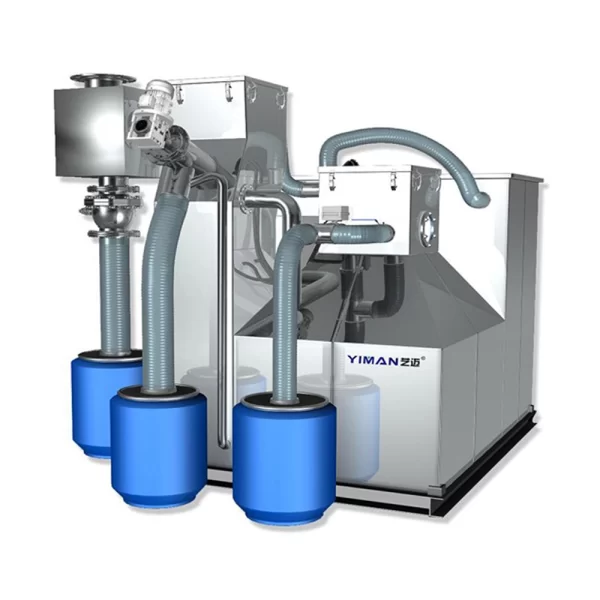
Shanghai Yimai Industrial Co., Ltd. offers a robust Oil-Water Separator System (Model YMGY) designed to meet the stringent demands of various industries. This system effectively separates oils, greases, and suspended solids from wastewater. We engineer our OWS systems for high performance and reliability.
The YMGY system features a maximum heating temperature of 60 ℃, improving separation for viscous oils. Treatment capacities range from 10 to 50 m³/h to match different operational scales. This scalability ensures both small hotels and large industrial facilities can adopt a suitable setup. The system is built for straightforward installation and operation to minimize downtime and operating costs.
We apply advanced separation techniques to achieve high purity in treated water, supporting regulatory compliance and often enabling water reuse. Durable construction supports long service life in demanding conditions.
| Feature | Oil-Water Separator System (Model YMGY) |
|---|---|
| Model | YMGY |
| Treatment Capacity | 10 / 15 / 20 / 25 / 30 / 35 / 40 / 50 m³/h |
| Max Head | 30 m |
| Max Heating Temperature | 60 ℃ |
| Application Fields | Catering, public facilities, food processing |
Our Oil-Water Separator System is critical for industries aiming for sustainable operations. It ensures environmental protection while optimizing resource utilization. If you’re interested, check 《Oil Water Separator System Efficient and Eco Friendly Compliance for Industrial Wastewater》.
Selecting and Implementing the Right OWS System for Sustainable Operations
Choosing the right OWS starts with understanding your wastewater: oil types, concentrations, and other contaminants. Next, size the required treatment capacity based on daily volumes. Also verify local regulations and discharge limits.
We recommend a thorough assessment of site-specific needs. Our engineers can guide system configuration, including space constraints, energy use, and maintenance demands. Proper installation and commissioning matter for long-term performance.
After startup, ongoing monitoring and maintenance keep efficiency and compliance on track. This includes periodic inspections, cleaning, and replacing consumables. A high-quality OWS system supports environmental responsibility and long-term operational sustainability.
What are the primary benefits of investing in a high-quality OWS system for my business?
A high-quality Oil-Water Separator (OWS) supports compliance with environmental regulations, helps avoid fines, protects public sewer systems, reduces operating costs through efficient waste handling, improves workplace safety by lowering slip risks, and strengthens brand reputation through sustainable practices. In hotels, it supports cleaner kitchen operations. In factories, it protects machinery and enables water reuse.
How does Yimai’s Oil-Water Separator System cater to both hotel and factory environments?
Shanghai Yimai Industrial Co., Ltd.’s Oil Water Separator Sewage Elevator System (Model YMGY) is designed with versatility to address the distinct needs of both hotels and factories. For hotels, it handles grease and food waste from catering operations to meet local discharge limits. For factories, it manages a broader spectrum of industrial oils and suspended solids to prevent contamination and support production processes. Systems are scalable from 10 to 50 m³/h and can be customized for specific waste streams and operational requirements.
What maintenance is required for an OWS system, and how does Yimai support it?
Regular maintenance supports optimal performance and long service life. Tasks include periodic sludge and oil removal, cleaning internal components, and inspecting seals and pumps. Yimai’s Oil-Water Separator System is designed for easy upkeep. We provide detailed operational manuals and professional after-sales support, with guidance on routine checks and troubleshooting. The robust design limits frequent interventions to keep uptime high.
Partner with Yimai for Advanced Wastewater Treatment
Ready to optimize your wastewater management and ensure environmental compliance? Contact Shanghai Yimai Industrial Co., Ltd. today for a customized Oil-Water Separator System consultation tailored to your hotel or factory’s specific needs. Email us at overseas1@yimaipump.com or call/WhatsApp +86 13482295009 to discuss your project and request a free quote. Partner with Yimai for efficient, reliable, and sustainable OWS solutions.