Modular Smart Water Plants: Unlocking Efficiency and Sustainability
Modern water management works best when it can flex without losing integrity. We see traditional systems straining to match changing demands, especially in fast-growing urban areas and remote communities. From experience, modular smart water plants bring the blend of advanced technology and adaptable design needed to deliver reliable, high-quality water with far less friction.
Understanding Modular Smart Water Plants
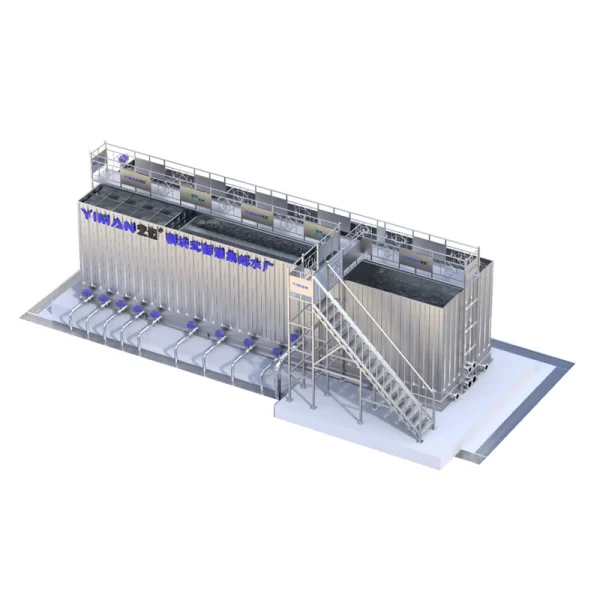
Modular smart water plants move beyond conventional treatment facilities by using pre-engineered, standardized units that can be combined and scaled as needed. The smart layer adds advanced digital technologies for real-time monitoring, automated control, and data-driven optimization across the treatment process. This stands in clear contrast to fixed infrastructure that is often oversized and hard to adjust.
What Defines a Smart Water Plant
A smart water plant uses cutting-edge technology to raise operational performance. It relies on broad sensor networks for continuous data collection, advanced analytics powered by artificial intelligence (AI) for predictive insights, and automated control that reacts to changing conditions. Together, these tools enable precise management of water quality, flow rates, and energy consumption. Compared with older systems, smart plants reduce human intervention while increasing efficiency and reliability.
The Modular Advantage Explained
Modular design enables rapid deployment, simple expansion, and relocation when needed. Each module is a self-contained unit dedicated to functions such as filtration, disinfection, or purification. Off-site manufacturing shortens construction schedules and cuts on-site costs. This flexibility suits temporary deployments, phased growth, and decentralized water supply strategies.
Key Benefits of Adopting Modular Smart Water Plants
Adopting modular smart water plants addresses critical infrastructure challenges with better operational performance, lower costs, and stronger environmental outcomes. Built-in scalability supports long-term adaptability.
1. Enhanced Operational Efficiency and Automation
These plants pair automation with digital control to materially improve efficiency. Real-time sensor data drives precise adjustments to treatment processes, optimizing chemical dosing and energy use. Manual labor drops and error risk decreases. The result is consistently high water quality using fewer resources. Our VFD Controlled Booster System offers intelligent pressure management for energy and water savings, adding another layer of efficiency. We have observed that integrating these systems significantly streamlines daily operations. Find out more about how we achieve this in 《VFD Controlled Booster System Intelligent Pressure Management for Energy and Water Savings》.
2. Significant Cost Savings and Faster Deployment
Pre-fabricated modules shorten construction timelines and reduce on-site labor, which lowers overall project cost and speeds commissioning. A compact footprint can trim land acquisition expenses. Scaling capacity to match demand prevents early overcapitalization.
3. Environmental Sustainability and Water Quality
Modular smart water plants support environmental sustainability by optimizing resource use and reducing waste. Efficient treatment processes cut chemical consumption and energy footprints. Advanced filtration and disinfection technologies deliver water quality that often exceeds regulatory standards, protecting public health and reducing environmental impact. Our Direct Drinking Water System provides instant access to pure hydration. Learn more about ensuring safe, healthy, clean, and high-quality direct drinking water in 《Direct Drinking Water System Instant Access to Pure Hydration》.
4. Scalability and Adaptability for Future Needs
Modularity makes expansion or reconfiguration straightforward as demand changes. Additional modules can be integrated with minimal disruption, avoiding costly overhauls. This adaptability helps future-proof water management against population growth and industrial change. Our Modular Integrated Water Plant offers production capacity up to 50,000 m³/day, ensuring stable effluent water quality regardless of raw water variations.
Technological Innovations Driving Smart Water Plants
Intelligence in modular smart water plants comes from integrated technologies that deliver granular control, predictive capabilities, and advanced treatment, all aimed at dependable performance.
Integration of IoT and AI for Predictive Maintenance
Internet of Things (IoT) sensors collect high-volume data on water quality, flow, pressure, and equipment status. Artificial intelligence (AI) analyzes these data streams to predict equipment failures, optimize maintenance schedules, and flag inefficiencies before they escalate. Predictive maintenance reduces downtime and extends the life of critical components. This proactive approach significantly enhances system reliability.
Advanced Filtration and Treatment Processes
These plants use advanced filtration and treatment technologies, including multi-media filtration, broad-spectrum adsorption, ultrafiltration, and reverse osmosis (RO) membranes. Ultraviolet (UV) disinfection and ozone cycling support effective removal of organic matter, heavy metals, bacteria, and viruses. Results consistently surpass national standards. Our Direct Drinking Water System effectively removes harmful substances, ensuring safe and high-quality drinking water.
Real-World Applications and Industry Impact
Modular smart water plants are reshaping water management across sectors where traditional systems fall short. The effects range from improved public health to more sustainable industrial operations.
Urban and Rural Water Supply Solutions
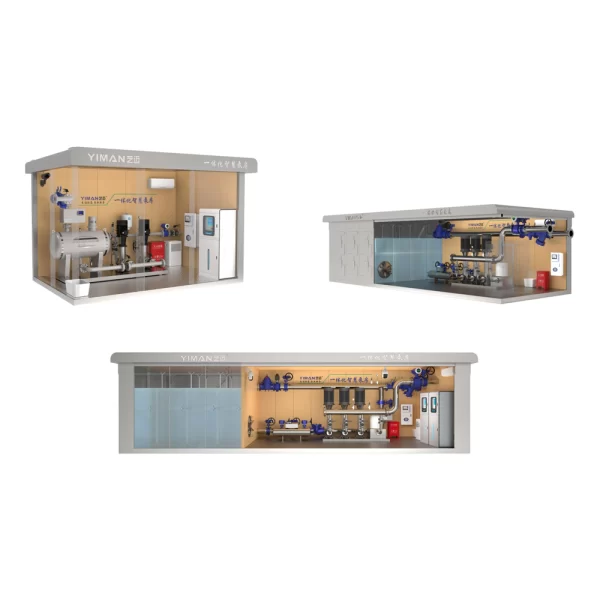
These systems work well in both urban and rural contexts. In cities, they can quickly add capacity or function as decentralized treatment points. In rural areas, they offer a scalable, cost-effective path to safe drinking water where centralized infrastructure is impractical or too expensive. Integrated Room Pump Stations are crucial for secondary water supply in old urban residential areas and for upgrading rural drinking water standards. For more information, explore 《Integrated Room Pump Station A Space Saving Revolution for Smarter More Efficient Water Supply》.
Industrial Water Management and Reuse
Industries gain from modular smart water plants for process water treatment and wastewater recycling. Systems can be configured to meet specific requirements, support compliance with discharge regulations, and enable water reuse. This lowers operating costs and reduces environmental impact. The Oil-Water Separator System is an efficient and eco-friendly solution for industrial wastewater compliance.
Choosing the Right Modular Smart Water Plant Provider
Selecting the right provider sets the foundation for a successful rollout and long-term performance. Look for a partner with proven capability and a deep understanding of water treatment challenges.
Yimai Industrial’s Expertise in Water Solutions
Shanghai Yimai Industrial Co., Ltd. is a professional manufacturer with extensive experience in water systems and environmental engineering solutions. We specialize in modular intelligent integrated water plants, offering production capacities up to 50,000 m³/day. Our solutions feature modular integrated layouts, unattended intelligent operation, and stable effluent water quality, exceeding national standards. We design our systems for rapid expansion, transformation, and emergency water supply needs.
Key Considerations for Implementation
When planning a modular smart water plant, assess technical depth, customization options, and after-sales support. Confirm the system can adapt to future regulations and technology changes. Verify the efficiency and reliability of core components, including pumps and motors, which drive overall performance. Our IE4 Three Phase Electric Motor offers ultra-efficiency, powering a low-carbon revolution.
FAQs
What makes a water plant ‘smart’?
Smart water plants combine IoT sensors, AI-driven analytics, and automation to monitor, control, and optimize treatment in real time. The result is predictive maintenance, higher efficiency, and stronger water quality management.
How do modular smart water plants save costs?
They cut costs through faster installation, reduced civil works, lower operating expenses from automation and energy efficiency, and fewer maintenance interventions with predictive analytics. Because capacity is scalable, you invest in the right size at the right time.
Are modular water plants suitable for remote or rural areas?
Absolutely. Their compact form, ease of transport, rapid deployment, and decentralized operation make them well suited to remote and rural locations. They deliver reliable, high-quality treatment where centralized systems are impractical or too expensive.
What is the typical lifespan of a modular smart water plant?
With proper maintenance and quality components, these systems are built for long-term service comparable to traditional plants. Modularity makes it easier to upgrade or replace individual units, extending overall lifespan and keeping pace with new technologies.
How does Yimai Industrial ensure the quality of its modular smart water plants?
Shanghai Yimai Industrial Co., Ltd. follows stringent quality control, uses high-grade materials, and integrates advanced technologies across its modular plants. Expertise in electrical motors, water pumps, and integrated systems supports reliable, efficient performance, with comprehensive support to match.
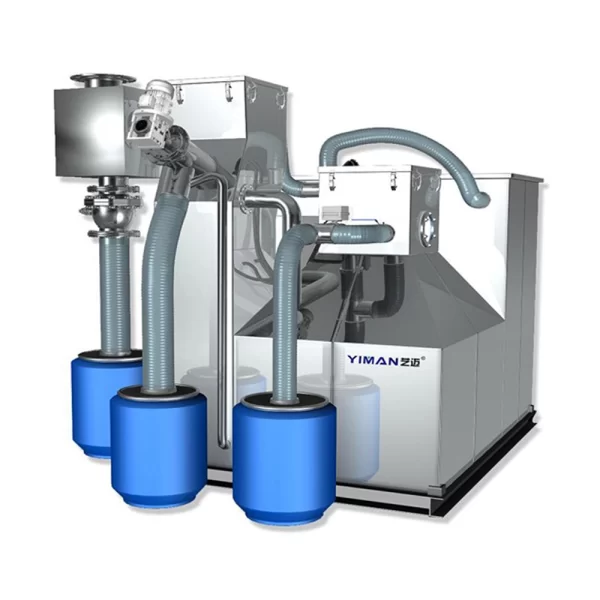
Transform Your Water Infrastructure Today
Ready to transform your water infrastructure with cutting-edge modular smart water plants? Contact Shanghai Yimai Industrial Co., Ltd. today to discuss your specific needs and discover our innovative solutions. Email us at overseas1@yimaipump.com or call/WhatsApp +86 13482295009 for a consultation.