Unmanned Smart Water Plants: Advanced Operational Mechanics
Water infrastructure keeps evolving, and unmanned smart water plants sit at the interesting intersection of necessity and technological capability. These facilities run continuously with minimal human presence, which sounds futuristic until you realize the underlying systems have been maturing for decades. The real shift happened when sensor costs dropped and processing power became cheap enough to make comprehensive automation economically viable.
What Actually Makes These Plants Work
The operational reality of an unmanned water plant comes down to layered systems talking to each other reliably. A SCADA system sits at the center, pulling data from sensors scattered throughout the facility and pushing commands back out to equipment. Flow meters, pressure transducers, level sensors, and water quality probes feed continuous streams of information into this central brain.
The physical architecture breaks into distinct functional layers. Field equipment handles the actual water treatment, including pumps, filters, chemical dosing systems, and disinfection units. Each piece of equipment carries its own sensors and actuators. Above that, PLCs and RTUs process local data and execute control logic without waiting for instructions from headquarters. The supervisory layer provides the overview and intervention capability, while the information layer handles the unglamorous but critical work of storing data and generating reports.
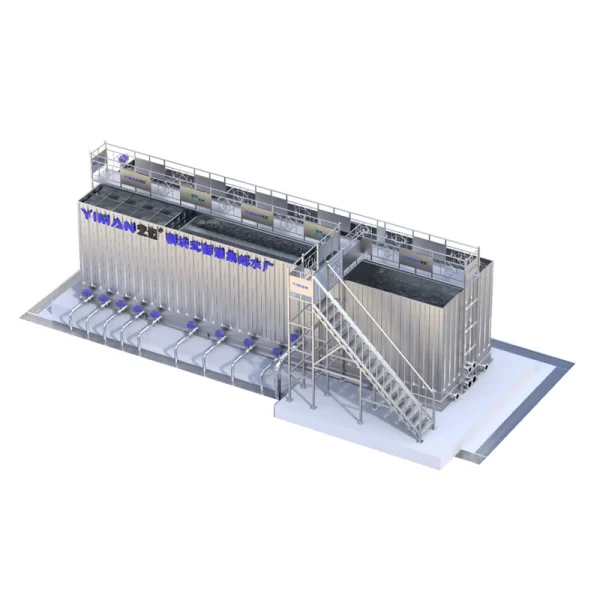
Communication infrastructure ties everything together. IoT protocols have simplified this considerably, though the specific implementation varies based on site conditions and existing infrastructure. Booster systems and modular integrated plants designed for these environments need to slot into whatever communication framework exists, which requires careful attention to protocol compatibility.
Continuous Water Quality Monitoring and What the Data Actually Tells You
Data acquisition sounds straightforward until you consider the volume involved. A single plant might generate millions of data points daily from sensors tracking pH, turbidity, chlorine residuals, dissolved oxygen, and dozens of other parameters. The raw numbers mean little without context and pattern recognition.
Analytics platforms process this flood of information, looking for trends that human operators would miss. A gradual drift in turbidity readings might indicate filter media degradation weeks before it becomes a problem. Seasonal patterns in raw water quality can inform treatment adjustments before conditions deteriorate.
AI applications in water treatment have moved beyond the experimental phase. Algorithms trained on historical data can predict equipment failures, optimize chemical dosing based on incoming water characteristics, and flag anomalies that warrant investigation. The practical value shows up in reduced chemical costs, fewer emergency repairs, and more consistent output quality.
Maintaining Water Quality Without Constant Human Oversight
Smart water plants handle quality assurance through automated response protocols. When sensors detect parameter deviations, the system doesn’t wait for someone to notice and react. Chemical dosing adjusts automatically. Filtration rates change. If conditions exceed safe thresholds, alarms trigger and the system can isolate affected sections while alerting remote operators.
This approach works because the response logic has been programmed based on operational experience and regulatory requirements. The system knows what to do when turbidity spikes or chlorine residuals drop because engineers anticipated those scenarios and defined appropriate responses.
How Automation Actually Handles Plant Operations
PLCs and distributed control systems execute the moment-to-moment decisions that keep water flowing. Pump speeds adjust based on demand. Valves open and close following programmed sequences. Chemical injection rates respond to real-time quality readings. None of this requires someone standing at a control panel.
Remote operation capability extends this automation to human oversight. Operators monitoring multiple facilities from a central location can intervene when needed, but the systems handle routine operations independently. Digital twin technology has added another dimension, allowing operators to simulate scenarios and test responses before implementing changes on live equipment.
| Aspect | Manual Approach | Automated Approach |
|---|---|---|
| Monitoring | Scheduled rounds and spot checks | Continuous sensor coverage |
| Control | Physical adjustment of equipment | Algorithm-driven actuator commands |
| Response Time | Minutes to hours depending on staffing | Seconds to minutes |
| Staffing Requirements | Multiple operators per shift | Remote supervision with occasional site visits |
| Data Utilization | Limited historical analysis | Real-time analytics and predictive modeling |
| Consistency | Variable based on operator experience | Algorithmic precision |
For related technical details on pressure management systems, see 《VFD Controlled Booster System Powering Smarter Water Pressure with Efficiency and Precision》.
Predictive Maintenance Changes the Economics
The shift from reactive to predictive maintenance represents one of the most tangible benefits of smart plant technology. Equipment like vertical multi-stage centrifugal pumps and split casing double suction pumps carry embedded sensors that track vibration signatures, bearing temperatures, and power consumption patterns.
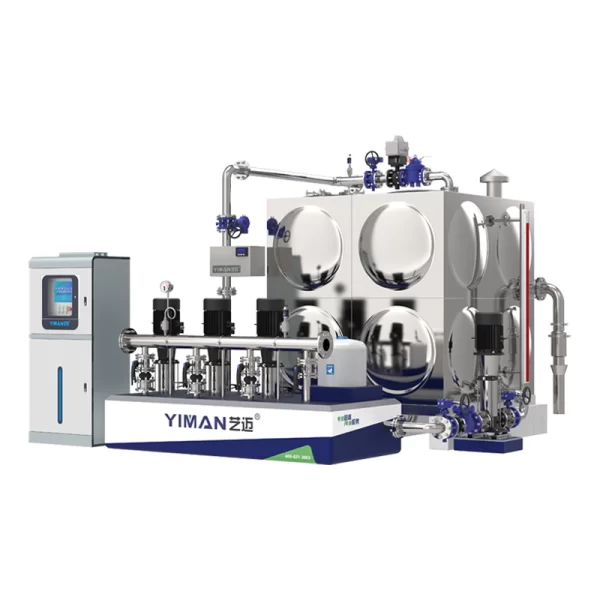
Machine learning algorithms trained on this data can identify subtle changes that precede failures. A pump running slightly hotter than normal, or drawing marginally more current, might indicate bearing wear that will cause failure in weeks or months. Catching these issues early allows maintenance scheduling during convenient windows rather than emergency response during peak demand.
The financial impact compounds over time. Fewer emergency repairs mean lower parts costs and reduced overtime labor. Equipment lasts longer when problems get addressed before they cause secondary damage. Energy consumption drops when systems run at optimal efficiency rather than compensating for degraded components.
The Building Blocks of Unmanned Operation
Three elements make unmanned operation viable. First, comprehensive sensor networks that capture enough data to understand plant conditions without physical inspection. Second, control systems sophisticated enough to respond appropriately to changing conditions. Third, analytics platforms that can identify patterns and predict problems before they manifest as failures.
These components work together rather than independently. Sensors without analytics just generate noise. Analytics without automated control requires human operators to implement recommendations. The integration matters as much as the individual capabilities.
Financial and Environmental Outcomes
The economic case for unmanned smart plants rests on several factors. Labor costs drop significantly when routine monitoring shifts from on-site personnel to remote supervision. Energy optimization through intelligent control reduces utility expenses. Predictive maintenance cuts both repair costs and equipment replacement frequency.
Chemical usage typically decreases because dosing responds to actual conditions rather than conservative estimates. This saves money and reduces environmental impact simultaneously. Precise treatment means less chemical waste entering the environment and lower procurement costs.
Carbon footprint reductions follow from energy efficiency gains. Pumps running at optimal speeds consume less power than those operating at fixed rates regardless of demand. Treatment processes optimized for current conditions use less energy than those designed for worst-case scenarios.
Quantifying the Financial Benefits
The specific savings vary by facility size, existing infrastructure condition, and local labor costs. Generally, operational expenditure reductions of 20-40% are achievable through comprehensive automation. Energy savings alone often justify significant portions of the initial investment. Maintenance cost reductions compound over equipment lifecycles, with some facilities reporting 50% decreases in unplanned downtime.
The payback period depends heavily on starting conditions. Facilities with aging infrastructure and high labor costs see faster returns than those already running efficiently with optimized staffing.
Where Water Infrastructure Goes From Here
Unmanned smart water plants represent the current state of what’s technically and economically feasible. The technology continues advancing, with better sensors, more sophisticated algorithms, and improved communication protocols expanding what’s possible. Modular integrated plants and advanced booster systems designed for these environments will keep evolving alongside the broader technological ecosystem.
The challenges ahead involve aging infrastructure that needs upgrading, workforce transitions as operational roles shift toward technical oversight, and cybersecurity concerns that grow with increased connectivity. None of these obstacles are insurmountable, but they require thoughtful planning and investment.
Working with Yimai Industrial on Water Infrastructure Projects
Shanghai Yimai Industrial Co., Ltd. manufactures Modular Integrated Water Plant equipment and booster systems built for integration into smart water infrastructure. Our engineering team works with project developers to match equipment specifications to operational requirements. Reach out at overseas1@yimaipump.com or call/WhatsApp +86 13482295009 to discuss specific applications.
Common Questions About Unmanned Smart Water Plants
How does automation improve day-to-day operational efficiency?
Automation eliminates the delays inherent in human-mediated processes. Sensors detect changes immediately, control systems respond within seconds, and adjustments happen continuously rather than at shift changes or inspection intervals. This responsiveness keeps processes optimized throughout the day, reducing waste and maintaining consistent output quality. Equipment like the Intelligent Digital Drived VFD Booster System demonstrates this principle through precise pressure control that adapts to demand patterns automatically.
What protects remote monitoring systems from security threats?
Security for these systems involves multiple defensive layers. Encrypted communications prevent data interception. Network segmentation isolates critical control systems from general internet traffic. Access controls limit who can view data or issue commands. Physical security at remote sites prevents unauthorized equipment access. Regular security audits identify vulnerabilities before they can be exploited. These measures reflect the critical infrastructure status of water treatment facilities.
Is upgrading existing facilities to smart operation practical?
Most existing facilities can incorporate smart technology incrementally. Adding sensors to existing equipment provides data visibility. Installing PLCs enables automated control of specific processes. SCADA integration ties individual improvements into coordinated operation. The VFD Controlled Booster Water Supply System exemplifies equipment designed for both new construction and retrofit applications. The upgrade path depends on current infrastructure condition and operational priorities.