NEMA versus IEC Motors Choosing the Right Industrial Standard
Picking the right motor standard shapes everything from initial system design to years of maintenance down the road. Questions about NEMA versus IEC motors come up constantly, especially when applications span different regions or require specific performance characteristics. Working with industrial equipment across the spectrum, including the IE3 Three Phase Electric Motor and IE4 Three Phase Electric Motor, gives practical insight into how these standards actually play out in real installations.
NEMA Motor Standards and What They Mean for Industrial Use
The National Electrical Manufacturers Association sets standards that dominate the North American market. NEMA motors emphasize performance, durability, and the ability to swap units between manufacturers without headaches. This standardization makes life easier when a motor fails at 2 AM and you need a replacement fast.
NEMA frame sizes define consistent mounting dimensions and shaft heights for motors of similar horsepower. A NEMA 215T frame motor from one manufacturer will physically interchange with another. No custom brackets, no machining, just bolt it in.
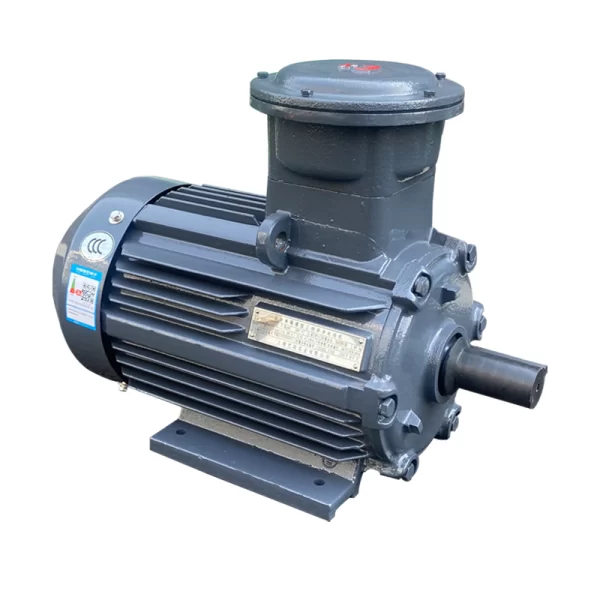
NEMA design letters (A, B, C, D) tell you about torque-speed characteristics. Design B handles most applications with normal starting torque and low starting current. Design C delivers high starting torque for conveyors and similar loads. Design D provides very high starting torque for intermittent, high-impact situations. NEMA Premium efficiency ratings set minimum efficiency levels for energy conservation. Hazardous area classifications cover motors operating in volatile environments. Our YBX4 Explosion-Proof Three-Phase Electric Motor meets stringent safety standards for exactly these conditions.
IEC Motor Standards and Their Global Reach
The International Electrotechnical Commission standards show up everywhere outside North America. IEC emphasizes dimensional standardization and worldwide compatibility. IEC motors tend to run more compact than NEMA units at the same power output, which matters when floor space is tight.
IEC frame numbers define motor dimensions consistently across international markets. This consistency simplifies integration into projects that span multiple countries or source equipment globally.
IEC voltage compatibility accommodates the diverse voltage and frequency requirements found worldwide. A motor rated for both 50Hz and 60Hz operation opens doors that a single-frequency unit cannot. IEC protection classes (IP ratings) specify ingress protection against solids and liquids, which becomes critical in harsh industrial environments. Our YBX3 Explosion Proof Three Phase Electric Motor and YBX4 Explosion Proof Three Phase Electric Motor products comply with IEC60079 and EN50018 standards, reaching efficiency levels up to IE5.
How NEMA and IEC Design Philosophies Differ
NEMA and IEC motors reflect fundamentally different design priorities. NEMA focuses on standardized performance and mechanical interchangeability, which often produces heavier, more robust motors. IEC prioritizes dimensional standardization and global compatibility, resulting in more compact and lighter designs. These differences shape industrial motor selection in practical ways.
NEMA motors typically carry higher service factors, meaning they handle temporary overloads better. IEC motors often feature more precise torque characteristics and a wider range of efficiency classes (IE1, IE2, IE3, IE4, IE5). NEMA motors dominate North American installations. IEC motors rule European and Asian markets. This regional split affects procurement strategies and spare parts availability.
What are the main differences between NEMA and IEC motor designs?
The main differences between NEMA and IEC motor designs show up in frame dimensions, performance curves, and enclosure types. NEMA motor frame sizes run larger for a given horsepower, providing greater mechanical strength. IEC motors are more dimensionally compact. NEMA design letters specify torque characteristics while IEC focuses on standardized dimensional series. Enclosure types vary between standards, though both offer robust protection options.
| Feature | NEMA Motors | IEC Motors |
|---|---|---|
| Primary Market | North America | Europe, Asia, Global |
| Design Focus | Performance, Interchangeability, Robustness | Dimensional Standardization, Global Compatibility |
| Frame Sizes | Larger for equivalent HP, T-frame series | More compact, standardized numerical series |
| Service Factor | Commonly 1.15 or higher | Typically 1.0 (design-specific overload capacity) |
| Efficiency | NEMA Premium (IE3 equivalent) | IE1, IE2, IE3, IE4, IE5 |
| Voltage/Frequency | Primarily 230/460V, 60Hz | Multi-voltage, 50/60Hz |
Choosing the Right Standard for Global Projects
The choice between NEMA and IEC motor standards ripples through every phase of a global industrial project. Design, procurement, and maintenance strategies all shift based on this decision. For North American projects, NEMA compliance simplifies integration and ensures spare parts sit on local shelves. IEC motors make more sense for international projects because of their widespread adoption and voltage flexibility.
Supply chain realities matter here. Sourcing NEMA motors outside North America can mean longer lead times and higher costs. IEC motor availability might be limited in NEMA-centric regions. Compliance requirements vary by location, and picking the wrong standard creates integration headaches. Our experience with diverse international projects, like those discussed in 《Russian Customers In Depth Visit to Yimai Witnessing the Core Production Techniques of Motors and Pumps》, reinforces how much this strategic choice matters.
How do NEMA and IEC motor standards impact global industrial projects?
NEMA and IEC motor standards affect global industrial projects through supply chain logistics, regional preferences, and compliance requirements. NEMA motors are easier to source and maintain in North America. IEC motors offer broader global availability and better voltage compatibility for international deployments. Matching regional standards ensures regulatory compliance and smoother project execution.
Cost and Long Term Operation
The cost picture for NEMA versus IEC motors goes well beyond the purchase price. Energy efficiency and maintenance implications add up over years of operation. NEMA Premium efficiency motors, roughly equivalent to IEC IE3, deliver meaningful energy savings across their lifespan. Total cost of ownership also includes spare parts availability and expected service life.
IEC motors with higher IE ratings (IE4, IE5) can achieve superior energy efficiency, which translates to lower operating costs over time. Their compact design can reduce installation space requirements. Maintenance costs depend on regional accessibility of parts and local technical expertise. Our IE4 Three Phase Electric Motor provides ultra-efficiency for operations focused on long-term savings.
Which motor standard is more cost effective for long term operation?
The more cost-effective motor standard for long-term operation depends on the specific situation. Initial purchase price, energy consumption, and spare parts availability all factor into total cost of ownership. IEC motors with higher efficiency ratings (IE4, IE5) often produce greater energy savings over time, even when upfront costs run higher. NEMA motors, while robust, may incur higher energy costs unless specified with premium efficiency.
Optimize Your Industrial Systems with Yimai Industrial Motor Solutions
Navigating the complexities of NEMA and IEC motor standards requires expert insight. Shanghai Yimai Industrial Co., Ltd. specializes in providing high-quality electrical motors and integrated industrial solutions tailored to your specific project requirements. Whether you’re seeking robust NEMA-compliant motors for North American operations or globally compatible IEC standard motors, our team offers unparalleled expertise and a comprehensive product portfolio. Partner with us to ensure optimal performance, efficiency, and longevity for your industrial applications. Contact us today to discuss your motor needs and discover how our engineering excellence can power your success. Email: overseas1@yimaipump.com | Phone/WhatsApp: +86 13482295009.
Frequently Asked Questions About NEMA and IEC Motors
What are the primary applications where NEMA motors are preferred over IEC motors?
NEMA motors fit best in North American industrial settings where robust construction and interchangeability matter most. Heavy-duty applications benefit from standardization and readily available spare parts. The design caters to higher horsepower requirements within specific NEMA frame sizes, matching common US industrial practices.
Can NEMA and IEC motors be used interchangeably in the same industrial system?
Adapting NEMA and IEC motors for the same system is technically possible but usually requires significant modifications to mounting, shaft dimensions, and electrical connections. Direct interchangeability rarely works because of fundamental differences in design philosophy, frame sizes, and performance characteristics. Careful engineering and custom adapters become necessary to ensure proper fit and function, which affects overall system efficiency and cost.
How do NEMA and IEC motor efficiency ratings compare?
Both NEMA and IEC standards define motor efficiency ratings, but testing methods and classification systems differ. NEMA uses efficiency classes like NEMA Premium while IEC uses IE codes (IE1, IE2, IE3, IE4). Direct numerical comparison can mislead without understanding the underlying test procedures. Comparing motors based on their respective standard’s efficiency class gives a more accurate assessment within their operational contexts.