
Submersible Pumps: Essential for Basement Drainage and Sewage Lifting
Submersible pumps sit at the center of two problems that never really go away: keeping water out of places it shouldn’t be, and moving wastewater to where it can be treated. I’ve watched these machines work in basement sumps, construction pits, and municipal lift stations, and what strikes me most is how quietly they do their job when properly matched to the application. The engineering is straightforward in principle—seal a motor, couple it to an impeller, drop the whole unit into the fluid—but the details matter enormously. Get the specifications wrong, and you’re looking at clogged impellers, burned motors, or worse. This piece walks through the technical considerations that separate a pump that lasts from one that fails, covering everything from impeller geometry to maintenance schedules.
How Submersible Pumps Actually Work
A submersible pump operates entirely beneath the fluid surface, which solves several problems at once. There’s no priming required because the pump is already surrounded by the medium it’s moving. The motor stays cool because the pumped fluid carries heat away continuously. Cavitation—that destructive phenomenon where vapor bubbles form and collapse against impeller surfaces—becomes far less likely when the pump sits under positive pressure at the suction inlet.
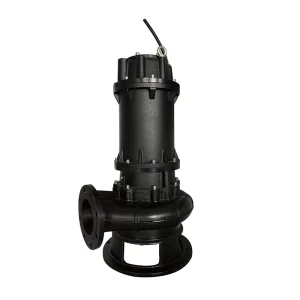
The construction is distinctive. An hermetically sealed motor connects directly to the pump body, creating a single compact unit with no external shaft seals exposed to atmosphere. This arrangement works particularly well in deep sumps, underground facilities, and any location where a surface-mounted pump would struggle with suction lift limitations. A submersible pump pushes water rather than pulling it, which fundamentally changes what’s possible in terms of installation depth and efficiency.
For basement drainage, tunnel dewatering, and construction site applications, this design provides reliable water ingress prevention without the complexity of vacuum-assisted priming systems. The pump simply starts when submerged and moves water until the level drops below its intake.
Drainage Pumps Versus Sewage Pumps: The Technical Divide
The choice between a drainage pump and a sewage pump comes down to what’s in the water. This isn’t a minor distinction—it determines impeller design, motor sizing, material selection, and ultimately whether the pump survives its intended service life.
Drainage pumps handle relatively clean water. Groundwater seeping into a basement, rainwater collecting in a sump, construction site dewatering—these applications involve fluid with minimal solids content. The pumps designed for this work prioritize flow rate and efficiency over solids handling. Open impellers move large volumes quickly, and discharge connections tend toward smaller diameters because there’s nothing chunky that needs to pass through.
Sewage pumps face a different reality. Raw wastewater contains solids, fibrous materials, rags, and abrasive particles that would destroy a drainage pump within weeks. The engineering response involves specialized impeller geometries. Vortex impellers create a spinning flow pattern that moves solids without direct contact. Channel impellers provide a clear passage for larger objects. Grinder pumps take the most aggressive approach, macerating everything into a fine slurry before pumping—essential for pressure sewer systems where the discharge line diameter must stay small.
| Feature | Drainage Pump (Sump Pump) | Sewage Pump (Effluent/Grinder) |
|---|---|---|
| Primary Use | Clean water, groundwater, flood prevention | Raw sewage, wastewater with solids, industrial effluent |
| Solids Handling | Minimal solids, small particles (e.g., up to 10mm) | Large solids, fibrous materials, abrasive particles |
| Impeller Type | Open, semi-open | Vortex, grinder, channel |
| Discharge Size | Smaller (e.g., 1.25″ – 2″) | Larger (e.g., 2″ – 4″), or grinder discharge |
| Motor Power | Generally lower | Higher, especially for grinder pumps |
| Corrosion Resistance | Standard | Enhanced, often cast iron or stainless steel for aggressive media |
Pump sizing calculations must account for both hydraulic requirements and fluid characteristics. Head and flow rate determine the basic curve selection, but solids handling capacity and corrosion resistance narrow the field considerably for wastewater applications. Many installations benefit from automatic pump control that responds to level sensors, running the pump only when needed and reducing wear.
For municipal wastewater applications with more complex requirements, 《Selecting Municipal Wastewater Treatment Pumps》 provides additional guidance on system design.
What separates a basement drainage pump from a sewage lifting pump?
The core difference is solids handling capability. A submersible pump designed for basement drainage typically handles clean water or fluid with small, non-abrasive particles—perhaps up to 10mm in diameter. These units use open impellers optimized for hydraulic efficiency. A submersible sewage pump must pass significant solids, fibrous materials, and abrasive particles without clogging or excessive wear. This requires vortex impellers, channel designs, or grinder mechanisms, along with larger discharge passages and more robust construction materials.
Integrated Systems and Intelligent Controls
Modern submersible pumping systems incorporate technologies that would have seemed excessive a generation ago, but the operational benefits justify the complexity. Variable frequency drives adjust motor speed to match actual demand, reducing energy consumption significantly compared to fixed-speed operation. A pump that runs at 80% speed when full flow isn’t needed consumes far less power than one cycling on and off at full capacity.
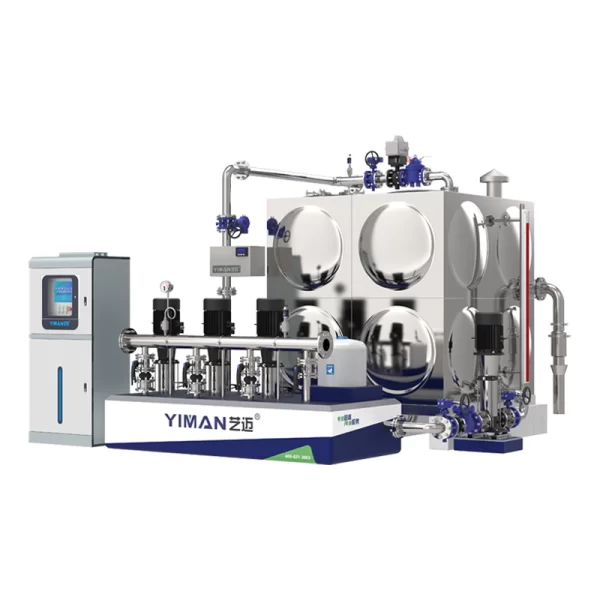
Automatic pump control has evolved beyond simple float switches. Programmable logic controllers monitor multiple inputs—level sensors, pressure transducers, flow meters, motor current—and make operational decisions that optimize both performance and equipment life. These systems can alternate between duty and standby pumps to equalize wear, detect developing problems before they cause failures, and log operational data for maintenance planning.
Backup pump systems provide redundancy in applications where failure isn’t acceptable. A sewage lift station serving a hospital or food processing facility needs to keep running regardless of individual component failures. Alarm systems alert operators to abnormal conditions—high water levels, motor overtemperature, seal leakage—before small problems become emergencies.
Prefabricated pump stations, like those manufactured by Shanghai Yimai Industrial, arrive on site as complete integrated units. The wet well, pumps, piping, controls, and access provisions are engineered and assembled under controlled conditions, then installed as a single package. This approach reduces field labor, eliminates coordination problems between trades, and ensures that all components work together as designed. Features like water hammer protection and intelligent leakage detection come standard rather than being added as afterthoughts.
Installation Practices and Maintenance Requirements
A submersible pump’s service life depends heavily on how it’s installed and maintained. The equipment itself may be robust, but poor installation creates stress concentrations, vibration problems, and premature wear that no amount of quality manufacturing can overcome.
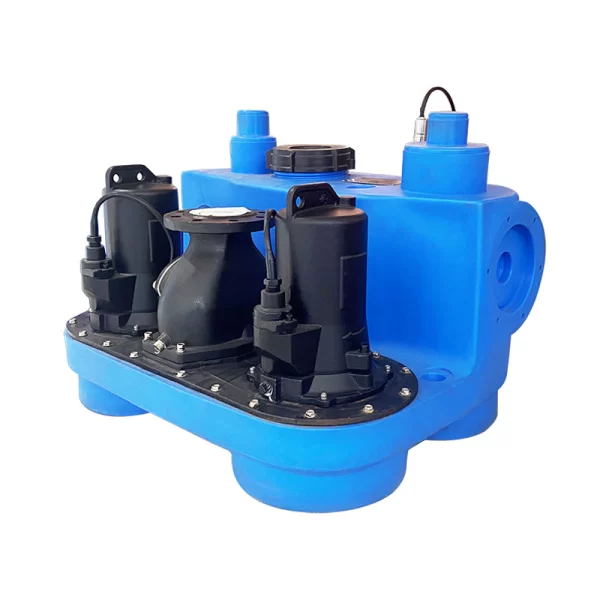
Proper sump design matters more than many installers realize. The pump needs adequate submergence to prevent vortex formation at the inlet, but not so much depth that maintenance becomes difficult. Inlet conditions should provide relatively uniform flow without excessive turbulence or entrained air. Discharge piping must be sized and supported to handle the hydraulic forces involved, with check valves positioned to prevent backflow and water hammer.
Preventative maintenance follows predictable patterns. Regular visual inspections catch debris accumulation, unusual wear patterns, or developing seal problems before they cause failures. Impeller clearances should be checked periodically—worn impellers lose efficiency gradually, and the energy cost of running a degraded pump often exceeds the cost of timely replacement. Mechanical seals require attention because they’re the primary barrier between the pumped fluid and the motor windings. A leaking seal that goes unaddressed will eventually destroy the motor.
For sewage applications, the maintenance burden increases. Fibrous materials wrap around impellers and shafts. Grease and solids accumulate in wet wells. Grinder mechanisms wear and require periodic replacement. A realistic pump maintenance schedule accounts for these realities rather than assuming the pump will run indefinitely without attention.
Environmental regulations add another layer of responsibility. Wastewater systems must prevent contamination of groundwater and surface water. This means maintaining seal integrity, providing secondary containment where required, and documenting compliance with applicable standards. The regulatory framework varies by jurisdiction, but the underlying principle—don’t let sewage escape into the environment—remains constant.
How should I approach pump selection for a specific basement or sewage application?
Start with the fluid. Clean water drainage and solids-laden sewage require fundamentally different equipment. Next, determine the hydraulic requirements: what flow rate do you need, and what total head must the pump overcome? For sewage applications, establish the solids handling requirement—maximum particle size, fibrous content, abrasive characteristics. Then evaluate power availability, control requirements, and material compatibility. A pump that meets the hydraulic specifications but can’t handle the fluid chemistry will fail prematurely. Corrosion resistance matters particularly in wastewater service where hydrogen sulfide and other aggressive compounds are present.
What maintenance practices extend submersible pump life?
Regular inspection catches problems early. Check the impeller for wear, erosion, and accumulated debris. Verify that mechanical seals remain intact—any sign of leakage into the motor housing demands immediate attention. Monitor motor performance through current draw, operating temperature, and sound. Unusual noise often indicates bearing wear or impeller imbalance. For sewage pumps, clean the wet well periodically to prevent grease and solids accumulation that can interfere with float switches and level sensors. Document all maintenance activities to establish baseline performance and track degradation over time.
Shanghai Yimai Industrial: Manufacturing Capability and Product Range
Shanghai Yimai Industrial Co., Ltd. manufactures pumping and wastewater equipment for applications ranging from building water supply to municipal infrastructure. The product line includes variable frequency drive booster systems that maintain constant pressure across varying demand conditions, integrated prefabricated pump stations for rapid deployment, and modular water treatment plants that can be configured for specific capacity requirements.
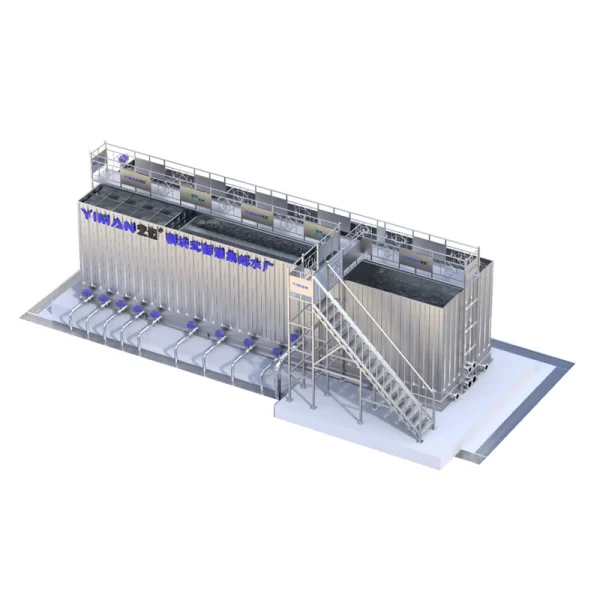
The Sewage Water Elevating System addresses the specific challenges of moving wastewater from collection points to treatment facilities or gravity sewers. These systems incorporate the solids handling capability, corrosion resistance, and control features that sewage service demands.
Beyond pumping equipment, the company produces wastewater treatment systems including oil-water separators and organic waste processing equipment. This breadth allows for integrated solutions where pumping and treatment requirements intersect—industrial facilities often need both capabilities, and sourcing from a single manufacturer simplifies coordination and support.
Custom engineering services address applications that don’t fit standard product configurations. Unusual site constraints, specific performance requirements, or integration with existing infrastructure may require modified designs. The engineering team works with project specifications to develop solutions that meet actual needs rather than forcing applications into predetermined product categories.
Frequently Asked Questions About Submersible Pumping Systems
What advantages do submersible pumps offer for basement drainage?
Submersible pumps operate quietly because the motor is underwater, away from occupied spaces. They require no priming since they’re already submerged in the fluid they’re pumping. The compact design takes minimal floor space in a sump pit. Continuous operation is possible without overheating concerns because the pumped water provides motor cooling. For flood prevention and groundwater management, these characteristics make submersible pumps the practical choice in most residential and commercial basement applications.
Can submersible pumps handle different types of sewage and wastewater?
Specialized submersible sewage pumps are engineered specifically for wastewater service. Vortex impeller designs handle solids without direct contact, reducing wear and clogging risk. Grinder pumps macerate solids into slurry, enabling transport through smaller diameter pressure sewers. Material selection—cast iron, stainless steel, or specialized alloys—addresses the corrosive nature of wastewater. The key is matching pump specifications to the actual fluid characteristics: particle size, fiber content, chemical composition, and temperature all influence equipment selection.
How does Shanghai Yimai Industrial ensure equipment reliability?
Manufacturing quality starts with material selection and continues through machining, assembly, and testing. Components are sourced from qualified suppliers and inspected before use. Assembly occurs under controlled conditions with documented procedures. Completed units undergo performance testing to verify they meet specifications before shipment. For integrated systems like prefabricated pump stations, factory assembly ensures that all components work together properly—problems are identified and corrected before equipment reaches the job site rather than during commissioning.
Partner with Shanghai Yimai Industrial
For water management and sewage lifting applications that require reliable equipment and technical support, Shanghai Yimai Industrial Co., Ltd. offers consultation services tailored to specific project requirements. Contact the team via email at overseas1@yimaipump.com or by phone/WhatsApp at +86 13482295009.