Modular Water Plant: Raw Water to Tap Water Solutions
Clean drinking water remains one of those challenges that sounds simple until you actually try to solve it at scale. Population growth keeps pushing demand higher, raw water sources vary wildly in quality, and traditional infrastructure takes years to build. I’ve watched communities wait through endless planning cycles while their water needs only grew more urgent. Modular water treatment systems cut through much of that delay, turning raw water into tap water through factory-built units that ship ready to install. The approach works for remote villages, expanding industrial zones, and cities that can’t afford to wait another decade for conventional plants to come online.
Why Traditional Water Infrastructure Struggles to Keep Pace
Traditional water infrastructure faces mounting pressure from population growth and environmental shifts. Conventional treatment plants demand extensive planning, substantial capital investment, and construction timelines measured in years rather than months. These large centralized systems often lack the flexibility to respond when demographics change quickly or when raw water quality fluctuates seasonally.
Modular water treatment systems represent a fundamentally different approach to water management. These pre-engineered, factory-assembled units can be transported and installed on-site within weeks. The reduction in civil works alone changes the economics of water projects dramatically.
Modular integrated water plants are built for agility. They serve decentralized water systems well, whether that means remote communities, temporary settlements, or industrial zones expanding faster than municipal infrastructure can follow. Their compact footprint and scalable design minimize environmental impact while making efficient use of available resources. The trend toward these adaptable solutions has accelerated, particularly where raw water quality presents significant challenges. This shift creates more resilient water supply infrastructure that can actually respond to changing conditions.
The Treatment Process From Raw Water to Tap Water
The journey from raw water to tap water in a modular system moves through carefully sequenced stages. Each stage targets specific contaminants, collectively transforming diverse raw water sources into safe drinking water.
Pre-treatment typically begins with screening and coagulation to remove larger suspended solids. The coagulation process uses chemical agents to bind fine particles together, making them easier to separate in subsequent stages. Advanced filtration follows, employing technologies like ultrafiltration or reverse osmosis depending on the specific raw water profile and target quality standards.
Disinfection comes after filtration to eliminate bacteria and viruses. UV sterilization or chlorine dosing are common approaches, each with advantages depending on the application. The combination ensures the water meets stringent potable water production requirements.
Modular plants often demonstrate 30% faster deployment and 20% lower energy consumption compared to conventional facilities. These efficiency gains come from optimized process design and the ability to match treatment capacity precisely to actual demand.
How Modular Integrated Water Plants Operate
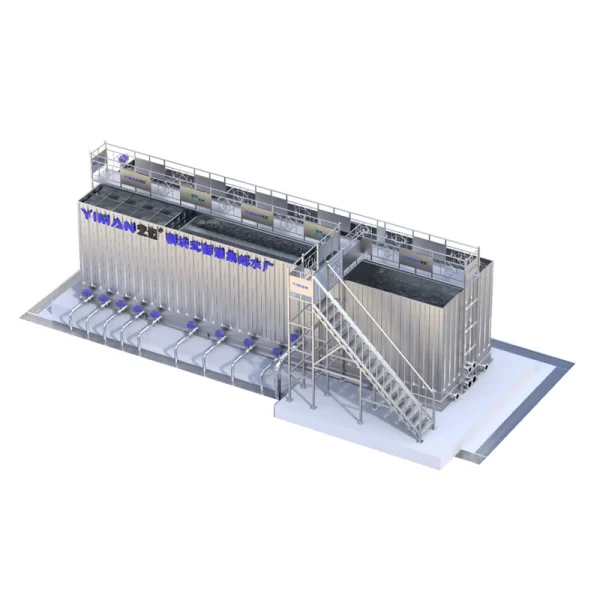
Modular integrated water plants combine pre-engineered treatment units into a cohesive system. Units handling coagulation, sedimentation, filtration, and disinfection are selected and configured based on the specific characteristics of the incoming raw water.
Factory assembly ensures consistent quality control that would be difficult to achieve with on-site construction. The compact water treatment units typically include automation systems that allow efficient operation with minimal staffing. This modular approach delivers tailored solutions for diverse raw water profiles without requiring custom engineering for each installation.
Strategic Benefits of Integrated Plant Design
Modular systems compress project timelines and reduce capital expenditure while providing flexibility for urban and industrial growth. The Modular Integrated Water Plant design enables rapid deployment, which proves critical for emergency water supply situations or infrastructure that needs to expand quickly.
Scalability is built into the concept. Additional modules integrate as demand increases, avoiding the common problem of over-investing in capacity that won’t be needed for years. This makes modular systems highly cost-effective water solutions for organizations that need to manage capital carefully.
The compact nature of integrated plant designs minimizes land requirements, a significant advantage in densely populated areas where space carries a premium. Environmental impact from water treatment also decreases through optimized processes and lower energy consumption. Pre-engineered water systems deliver consistent performance, contributing to reliable urban water infrastructure.
| Feature | Modular Plant (Yimai) | Traditional Plant |
|---|---|---|
| Deployment Time | Weeks to Months | Years |
| Capital Cost | Lower initial investment, scalable | High initial investment |
| Footprint | Compact, minimal land use | Large, extensive civil works |
| Scalability | Easily expandable | Difficult and costly to expand |
| Water Quality | Stable, exceeds national standards | Can be variable, complex to upgrade |
| Energy Consumption | Optimized, lower operational energy | Higher operational energy |
Key Advantages Over Traditional Systems
Modular integrated water plants offer several distinct advantages. Scalability allows precise capacity matching to current demands with straightforward expansion paths for future growth. The reduced footprint suits urban areas or sites where land availability constrains options.
Faster commissioning translates directly to quicker access to potable water. Adaptability to varying raw water conditions ensures consistent treatment effectiveness regardless of seasonal changes or source quality fluctuations. The result is a more resilient and reliable water supply.
For insights into optimizing water supply systems more broadly, consider reading 《Integrated Room Pump Station A Space Saving Revolution for Smarter More Efficient Water Supply》. The article explores how pump station designs contribute to overall system efficiency.
Meeting Tap Water Quality Standards Consistently
Consistent tap water quality matters regardless of what the raw water source looks like on any given day. Modular water plants achieve this through advanced filtration and disinfection technologies working in sequence.
These systems integrate sophisticated components including ultrafiltration membranes and UV disinfection units to remove contaminants effectively. The Modular Integrated Water Plant consistently meets or exceeds international potable water standards, with effluent turbidity typically at or below 0.1 NTU. This performance significantly surpasses national benchmarks.
Bacteria removal reaches 100%, while Giardia and Cryptosporidium removal rates consistently achieve 6 log reduction. These numbers reflect the system’s robust performance against the pathogens that cause the most serious waterborne illness.
Process optimization happens through real-time monitoring and automated controls that adapt to variations in raw water quality. This ensures stable effluent water quality and guarantees safe drinking water. Remote monitoring capabilities enhance oversight and enable rapid response to any operational deviations.
Maintaining Quality Across Diverse Raw Water Sources
A modular water plant ensures consistent tap water quality through adaptive treatment protocols and robust filtration stages. Real-time water quality sensors continuously monitor incoming raw water characteristics, measuring parameters like turbidity, pH, and organic content.
The system automatically adjusts treatment parameters based on this data. Chemical dosing rates and filtration speeds adapt to optimize performance for current conditions. Advanced filtration technologies, particularly membrane systems, effectively remove impurities across a wide range of raw water qualities. Multi-stage disinfection guarantees pathogen elimination, ensuring the final tap water meets stringent quality standards even when source water quality varies significantly.
Operational Efficiency and Long-Term Cost Management
Optimizing operational costs while ensuring long-term reliability drives many decisions about water treatment infrastructure. Modular integrated water plants perform well on both counts through advanced automation and streamlined maintenance protocols.
Lower operational costs result directly from intelligent control systems that minimize energy consumption and chemical usage. Pump selection matters significantly here. Integrating efficient equipment like the Vertical Multi Stage Centrifugal Pump or the Single Stage End Suction Volute Pump contributes measurably to energy savings over the system’s operating life.
Lifecycle cost analysis for water plant solutions often reveals that total cost of ownership for modular systems runs lower than traditional plants. Reduced installation times, lower labor requirements for daily operation, and simplified module replacement all contribute to this advantage. Sludge management is optimized as well, with integrated systems designed for efficient waste handling. These systems support industrial water management applications with unattended and intelligent operation capabilities.
Maintenance Considerations for Integrated Treatment Solutions
Integrated water treatment solutions feature maintenance and operational characteristics that differ from conventional plants. Predictive maintenance schedules often rely on real-time data from remote diagnostics, which minimizes unplanned downtime by identifying potential issues before they cause failures.
Standardized modules simplify replacement and repair processes. When a component needs service, technicians work with familiar equipment rather than custom-fabricated parts. Operators benefit from user-friendly interfaces and automation that streamline daily tasks and enhance overall operational efficiency.
For guidance on pump selection, which significantly affects operational excellence, refer to 《Picking the Right Water Pump A Step by Step Selection Guide》.
Partner with Shanghai Yimai for Advanced Water Solutions
Shanghai Yimai Industrial Co., Ltd. specializes in advanced water treatment and pumping solutions. We engineer modular integrated water plants tailored to your specific raw water challenges and tap water demands. Our expertise ensures reliable, efficient, and sustainable water supply. Contact our experts today for a consultation: overseas1@yimaipump.com | +86 13482295009.
What applications suit modular integrated water plants best?
Modular Integrated Water Plant systems work well for municipal potable water supply, industrial process water, remote communities, disaster relief, and temporary construction sites. Their flexibility allows adaptation to diverse raw water sources and fluctuating demand patterns, providing reliable tap water production across varied conditions.
How do modular systems handle raw water quality that changes over time?
Modular integrated water plants incorporate adaptable treatment trains. Various pre-treatment, filtration, and disinfection modules can be configured to manage fluctuations in raw water quality effectively. The system adjusts treatment intensity based on real-time monitoring, ensuring consistent output of high-quality tap water regardless of seasonal or source-related variations.
What lifespan and maintenance requirements should operators expect?
With proper maintenance, a modular integrated water plant can operate for 20 to 30 years, comparable to traditional plants. Maintenance tends to be more straightforward due to standardized modules and remote monitoring capabilities. This reduces downtime and operational costs for producing tap water while extending equipment service life.