Booster Water System Design: 5 Steps to Guaranteed Constant Pressure
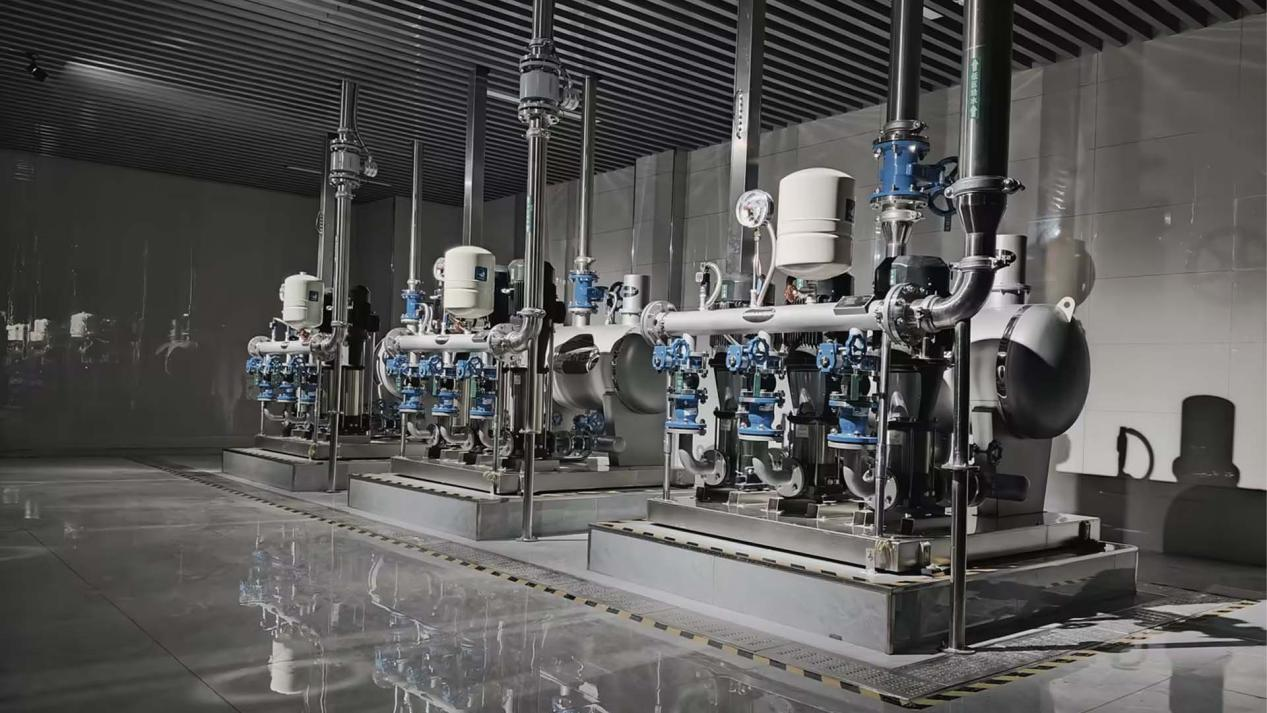
A stable, reliable water supply is non-negotiable for high-rise residential, commercial, and industrial facilities. The modern Booster Water System must deliver consistent pressure regardless of fluctuating demand, all while minimizing operational costs. We approach this as an engineering challenge that requires precise control, efficient hardware, and intelligent integration.
The most effective modern solution moves beyond outdated, pressure-tank-based systems that suffer from pressure surges and poor energy use. The key to both stable pressure and low energy costs is frequency-controlled constant pressure water supply.
Why Modern Booster Water System Solutions Demand Constant Pressure Control?
In any high-demand setting, water usage changes dramatically throughout the day. A traditional system that runs pumps at full speed to meet peak demand will waste substantial energy during off-peak hours and cause pressure fluctuations that can damage plumbing and inconvenience users.
The frequency-controlled constant pressure system solves this by using a Variable Frequency Drive (VFD) and a precise control system. The control system monitors the real-time system pressure and adjusts the pump motor speed accordingly.
By using the VFD, we can ensure the system delivers exactly the flow needed to maintain a pre-set constant pressure at all times. This avoids the constant start-stop cycling of conventional systems, which not only saves energy but also extends the life of the pumps and motors. Energy savings of 30% to 60% are standard compared to old-style systems.
Selecting the Right Pump for High-Rise and High-Flow Applications
The selection of the pump itself is crucial and depends heavily on the required flow rate and delivery head (pressure). For most Booster Water System applications in high-rise buildings, we typically specify either Vertical Multistage Centrifugal Pumps or Split-Casing Double Suction Pumps.
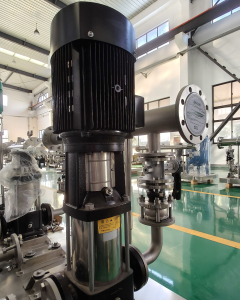
Vertical Multistage Pumps are ideal for delivering high-pressure over long vertical distances. Their design, which uses multiple impellers in sequence, efficiently builds the necessary head. For standard high-rise and commercial applications, we recommend Stainless Steel Vertical Multistage Pumps due to their smaller footprint and resistance to corrosion, ensuring a clean water supply.
When the system requires very high flow rates (such as for large-scale municipal water transfer or major industrial supply), the Split-Case Double Suction Pump becomes the pump of choice. Its design handles high volume with minimal axial thrust, leading to high efficiency and reliable, heavy-duty performance. The split-case design also simplifies maintenance, as the internal components can be accessed without removing the motor or disturbing the piping.
Implementing the Integrated Intelligent Pumping House
A modern Booster Water System is not just a collection of pumps and pipes; it is a fully engineered solution, often delivered as an Integrated Intelligent Pumping House (or Integrated Pump Room).
The shift from custom-built, on-site pump rooms to factory-integrated systems minimizes installation time and guarantees performance consistency. These integrated houses include the pumps, the VFD control panel, and the structural enclosure, all pre-wired and tested.
Our Integrated Room Pump Station solutions incorporate features that directly address common pain points:
- Remote Monitoring and Control: Municipal and property engineers can use the system’s smart control panel for remote monitoring. This allows for real-time diagnostics, performance adjustments, and proactive fault detection, ensuring stable system operation without constant on-site inspections.
- Predictive Maintenance: The control system tracks pump and motor vibration, temperature, and current draw. By analyzing this data, we move from reactive repairs to predictive maintenance, scheduling service before component failure occurs.
- Space Saving and Noise Reduction: By integrating all components into a compact, optimized structure, we reduce the Integrated Pump Room Noise reduction is also critical for urban installations, which is achieved through specific anti-vibration mounts and insulated enclosures.
Critical Best Practices for Booster Pump Maintenance
Even the most technologically advanced Booster Water System requires consistent attention. Proper booster pump maintenance ensures the longevity of the equipment and the reliability of the water supply. We focus on three core areas: inspection, control system health, and motor monitoring.
Mechanical Inspection (Weekly/Monthly):
Vibration and Noise: Listen for unusual noises or excessive vibration, which often indicate bearing wear or impeller issues.
Seal Integrity: Check for water leaks at the pump seals. Minor weeping is sometimes acceptable for packing seals, but excessive leakage requires immediate attention. For mechanical seals, any leakage is a sign of failure.
Temperature Checks: Monitor bearing and motor casing temperatures. Overheating is a primary indicator of excessive friction or electrical issues.
Control System and VFD Calibration (Quarterly):
Pressure Sensor Verification: The VFD relies entirely on accurate pressure sensor readings. Calibrate or verify the pressure sensors against a known standard gauge to ensure the system is maintaining the true constant pressure water supply.
VFD Heat Management: Ensure the VFD control cabinet’s ventilation and cooling fans are clean and fully operational. VFD failure is often caused by overheating due to dust accumulation.
Motor Health Monitoring (Regular Intervals):
The motor is the heart of the system. We use highly efficient motors, such as the IE3 series three-phase asynchronous motor with its IP55 protection, but continuous monitoring is key.
Check electrical load (current draw) under various operating conditions. An increasing current draw for the same output head and flow rate is a clear sign of internal pump or motor degradation. We rely on the control system’s data logs for this trend analysis.
Reliable Water Supply Starts with Design
Building a reliable Booster Water System means moving past simple pump replacement and embracing an integrated, intelligent, and energy-efficient solution. By choosing the correct pump type (like the Vertical Multistage Pump for high head or the Split-Casing Double Suction Pump for high flow), implementing frequency-controlled constant pressure technology, and committing to proactive maintenance, facilities can guarantee a stable water supply while dramatically lowering operating costs.
Energy Savings in Constant Pressure Water Supply
The industry’s focus is rapidly moving toward maximizing energy savings in constant pressure water supply systems. While current IE3 and IE4 asynchronous motors offer significant efficiency improvements over older models, the next generation of power lies in the Permanent Magnet Synchronous Motor (PMSM).
PMSMs eliminate rotor slip and offer substantially higher efficiency, particularly at the partial load conditions typical of a VFD-controlled booster system. We project that replacing a traditional IE4 series three-phase asynchronous motor with an equivalent-sized Permanent Magnetic Electric Motor in a constant pressure application can yield an additional 4% to 8% energy saving annually over the IE4 three-phase electric motor.
For instance, based on our analysis, a 55kW motor operating 8,000 hours per year can save over 5,000 kWh annually when moving to a Permanent Magnet Synchronous Motor. This shift to PMSM technology, combined with the comprehensive monitoring of the Integrated Intelligent Pumping House, represents the pinnacle of achieving both maximum energy efficiency and system reliability in the modern Booster Water System.
As a leading booster pump supplier, Shanghai Yimai provides integrated Booster Water Systems engineered to ensure consistent and stable water pressure in high-rise buildings and commercial complexes. Our systems are designed for automatic pressure regulation, significantly enhancing water usage comfort while being energy-efficient. Partner with us for robust and intelligent solutions that eliminate low water pressure issues effectively.
Need help choosing the right pump or motor? Contact our experts for a personalized solution.
FAQs
Q: How often should I inspect the seals in my Booster pump maintenance schedule?
A: You should inspect pump seals, particularly mechanical seals, visually every week for any sign of leakage. For a constant pressure water supply system, the pump runs almost continuously. We recommend full seal and bearing inspections every 6 to 12 months as part of a preventative Booster pump maintenance program to avoid catastrophic failure and downtime.
Q: What is the main benefit of frequency-controlled constant pressure over traditional systems?
A: The main benefit is energy savings and stable pressure. Traditional on/off systems waste energy and cause pressure surges. The VFD in a frequency-controlled constant pressure system adjusts motor speed precisely, ensuring constant pressure while running the pump only as fast as needed, leading to significant energy reduction and reducing wear on all system components.
Q: Can my existing pump room be upgraded to an Integrated Intelligent Pumping House?
A: Yes, in most cases. We can conduct an on-site audit to assess your current equipment, structural capacity, and electrical supply. The upgrade typically involves replacing older fixed-speed pumps with VFD-controlled pump sets (often Vertical Multistage Centrifugal Pumps), installing a new intelligent digital control system, and integrating remote monitoring capabilities, transforming it into a fully functional Integrated Intelligent Pumping House.
Keywords
Booster Water System,constant pressure water supply, frequency-controlled constant pressure, Integrated Intelligent Pumping House, Booster pump maintenance