
How to Choose the Right Integrated Pump Station for Your Project
Selecting an integrated pump station involves navigating complex technical specifications and diverse application requirements. A well-chosen system ensures optimal fluid management, operational efficiency, and long-term reliability for any project. We understand the critical nature of this decision for engineers, facility managers, and urban planners. This guide provides a comprehensive framework, drawing on our extensive experience, to help you make an informed choice that aligns with your project’s unique demands.
Understanding the Core Challenges in Pump Station Selection
Integrated pump stations are essential components in modern infrastructure, managing water and wastewater across various sectors. However, selecting the appropriate system presents several inherent challenges that demand careful consideration. Missteps in this initial phase can lead to significant operational inefficiencies, increased costs, and potential system failures.
1. Recognizing the diverse needs of different applications
Each application for an integrated pump station possesses unique requirements. For instance, urban sewage collection demands robust handling of solids and corrosive media, while clean water supply systems prioritize hygiene and consistent pressure. Industrial wastewater treatment may involve specific chemical resistances and flow rates. Recognizing these distinct demands prevents generic solutions from being applied to specialized problems. We observe that a detailed understanding of the fluid characteristics, flow patterns, and environmental conditions is paramount for successful implementation.
2. Overcoming common pitfalls in pump station sizing
Incorrect sizing represents a frequent and costly error. An undersized system struggles to meet demand, leading to frequent overloads and premature wear. Conversely, an oversized system incurs higher capital costs and operates inefficiently, consuming excessive energy. Accurate sizing requires precise calculations of peak flow rates, dynamic head, and projected future demand. Ignoring these factors often results in suboptimal performance and increased operational expenses.
3. Addressing concerns about long-term operational costs and maintenance
The initial purchase price of an integrated pump station constitutes only a portion of its total lifecycle cost. Energy consumption, routine maintenance, and potential repair expenses significantly impact long-term financial viability. Systems with proprietary components or complex maintenance procedures can escalate costs over time. Engineers must consider the ease of access for maintenance, availability of spare parts, and the system’s overall energy efficiency during the selection process.
Key Factors to Consider When Choosing an Integrated Pump Station
A methodical approach to evaluating integrated pump stations involves assessing several critical factors. These considerations ensure the selected system performs reliably, efficiently, and cost-effectively throughout its service life.
1. Evaluating project specific requirements and hydraulic conditions
The foundation of any successful pump station selection lies in a thorough understanding of the project’s specific needs. This includes defining the required flow rate (Q), total dynamic head (H), and system pressure. Engineers must account for pipe friction losses, elevation changes, and any unique hydraulic characteristics of the system. For example, a system designed for high-rise building pressurization will have different head requirements than one for farmland irrigation.
2. Assessing the types of media to be pumped and their characteristics
The nature of the fluid being pumped dictates crucial design choices, particularly material selection and pump type.
* Clean Water: Requires materials that maintain water quality and prevent contamination.
* Sewage/Wastewater: Often contains solids, abrasives, and corrosive elements. This necessitates robust pumps with non-clogging impellers and corrosion-resistant materials.
* Industrial Fluids: May involve specific chemical compositions, temperatures, or viscosities, demanding specialized pump designs and materials.
Stainless steel single screw pump are often used for viscous or abrasive media.
3. Understanding the importance of material selection and corrosion resistance
The longevity and reliability of an integrated pump station depend heavily on the materials used in its construction. Components exposed to aggressive media, such as wastewater or certain industrial chemicals, require high levels of corrosion resistance. Materials like fiberglass-reinforced plastic (FRP) for tanks and stainless steel for internal components offer excellent durability. Proper material selection mitigates premature failure and reduces maintenance frequency.
4. Considering energy efficiency and environmental impact of the system
Energy consumption represents a major operational cost for pump stations. Selecting high-efficiency pumps and motors, such as those with IE3 or IE4 ratings, can significantly reduce electricity usage. Variable Frequency Drives (VFDs) optimize pump speed according to demand, further enhancing efficiency. Beyond energy, the environmental footprint, including noise levels and potential for leaks, should also be evaluated. Environmentally conscious choices contribute to sustainable infrastructure.
If you’re interested, check Building an Energy-Efficient Water Pumping System.
5. Analyzing the benefits of intelligent control systems and remote monitoring
Modern integrated pump stations often incorporate intelligent control systems. These systems utilize sensors, programmable logic controllers (PLCs), and communication modules for automated operation, fault detection, and remote monitoring. Benefits include:
* Optimized Performance: Adjusts pump operation based on real-time demand.
* Preventative Maintenance: Alerts operators to potential issues before they escalate.
* Reduced Labor Costs: Minimizes the need for constant on-site supervision.
* Enhanced Reliability: Ensures continuous operation and rapid response to anomalies.
Remote monitoring capabilities allow operators to oversee multiple stations from a central location, improving overall system management.
If you’re interested, check IoT in Water Treatment: Modern Water Plants Need Smart Solutions.
Exploring Types of Integrated Pump Stations and Their Applications
Integrated pump stations come in various configurations, each suited to specific operational environments and requirements. Understanding these distinctions is key to making the optimal choice.
1. Delving into prefabricated pump stations for urban infrastructure
Prefabricated pump stations are factory-assembled, self-contained units typically installed underground. They consist of a cylindrical chamber housing pumps, valves, piping, and control systems.
* Advantages: Rapid installation, minimal on-site construction, compact footprint, and often superior hydraulic design due to factory optimization. They are ideal for urban areas with limited space and tight construction schedules.
* Applications: Urban sewage collection, rainwater drainage, and municipal water supply.
These stations offer processing capacities ranging from 50 to 100,000 m³/day, with pump powers from 0.75 to 370 kW. Their fiberglass-reinforced plastic construction ensures no leakage risk and long service life.
If you’re interested, check Integrated Prefabricated Pump Stations: The Smart, Sustainable Choice for Modern Infrastructure.
2. Examining integrated room pump stations for compact solutions
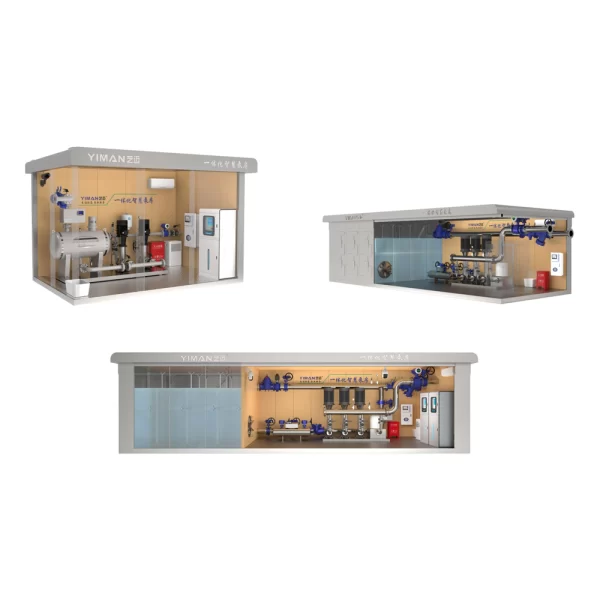
Integrated Room Pump Stations are above-ground, compact units designed for smaller-scale applications or renovations where space is a premium. They integrate pumps, control panels, and often a small reservoir within a single, enclosed structure.
* Advantages: Easy installation, compact design, security protection, energy saving, and quiet operation. They often feature intelligent leakage protection and are designed for unattended operation.
* Applications: Renovation of secondary water supply facilities in old urban residential areas, upgrading rural drinking water standards, and relay water supply in hilly areas.
These stations are suitable for flow capacities up to 4 m³/h and can operate in ambient temperatures from -35°C to 65°C.
3. Differentiating between various pump types suitable for integration
The heart of any pump station is its pumps. Different pump types are selected based on the fluid characteristics, required flow, and head.
* Vertical Multi-Stage Centrifugal Pumps: Ideal for high-pressure applications with clean water, such as high-rise building pressurization or boiler feed systems. They offer high head capabilities in a compact vertical design.
* Split casing double suction pumps: Used for large flow rates of clean, low-viscosity liquids, commonly found in water plants, power stations, and industrial water supply systems. They provide high efficiency and reliability for demanding applications.
* Submersible Pumps: Frequently used in sewage and wastewater applications, as they operate submerged in the fluid, reducing noise and requiring less space. They are designed to handle solids effectively.
* Single stage end suction volute pumps: Versatile pumps used for water supply, circulation systems, and industrial applications involving clean liquids. They offer a balance of flow and head capabilities.
The Advantages of Yimai’s Integrated Pump Station Solutions
Shanghai Yimai Industrial Co., Ltd. specializes in providing comprehensive fluid management solutions, including advanced integrated pump stations. Our expertise ensures that each system is designed and manufactured to the highest standards of performance, reliability, and efficiency.
1. Highlighting the technical features and benefits of Yimai products
Yimai’s integrated pump stations incorporate cutting-edge technology to deliver superior performance. Our Prefabricated Pump Stations feature CFD-optimized hydraulic designs, ensuring maximum efficiency and minimal energy consumption. They are constructed from fiberglass-reinforced plastic, offering exceptional corrosion resistance and a long service life. The Integrated Room Pump Stations boast intelligent control systems, enabling unattended operation, real-time monitoring, and intelligent leakage protection, which significantly reduces operational risks and maintenance requirements. These systems are designed for easy installation and compact integration, making them suitable for diverse urban and rural applications.
2. Showcasing the quality and reliability of Yimai’s engineering
We adhere to stringent quality control standards throughout the manufacturing process. Our pumps, including Vertical Multi-Stage Centrifugal Pumps and Split casing double suction pumps, are built with robust materials like cast iron, SS304, and SS316L, ensuring durability even in challenging environments. The integration of high-efficiency Electric Motors, such as IE3 and IE4 series three-phase asynchronous motors, guarantees optimal energy utilization and reduced operating costs. Yimai’s commitment to engineering excellence translates into reliable, long-lasting products that minimize downtime and operational disruptions for our clients.
3. Explaining the customization options available for specific projects
Yimai understands that every project has unique demands. We offer extensive customization options for our integrated pump stations. This includes tailoring pump configurations, material specifications, control system logic, and overall station dimensions to precisely match project requirements. Our engineering team collaborates closely with clients to develop bespoke solutions that address specific hydraulic conditions, fluid characteristics, and environmental constraints. This ensures that each integrated pump station delivers optimal performance and seamless integration into existing infrastructure.
A Step-by-Step Guide to Selecting Your Ideal Pump Station
Choosing the right integrated pump station requires a structured approach. Following these steps will help ensure a successful selection and implementation.
1. Defining your project scope and performance criteria
Begin by clearly outlining the purpose of the pump station, the type of fluid to be handled, and the required flow rates and pressure head. Consider both average and peak demands, as well as any future expansion plans. Document all environmental conditions, including temperature ranges and potential seismic activity.
2. Consulting with experts for tailored recommendations
Engage with experienced engineers or manufacturers like Yimai early in the planning phase. Provide them with detailed project specifications. Their expertise can help identify potential challenges and recommend the most suitable technologies and configurations. This collaborative approach ensures that the design considers all critical aspects.
3. Reviewing installation and maintenance considerations
Evaluate the proposed system’s installation requirements, including site preparation, civil works, and utility connections. Assess the ease of access for routine maintenance, component replacement, and potential repairs. Consider the availability of local support and spare parts. A well-planned maintenance strategy extends the system’s lifespan and reduces operational costs.
4. Planning for future scalability and system upgrades
Anticipate future growth or changes in demand. Select a system that allows for scalable expansion or easy upgrades to accommodate increased capacity or evolving technological standards. This foresight prevents costly overhauls and ensures the long-term viability of your investment.
Partner with Yimai for Your Integrated Pump Station Needs
Selecting the ideal integrated pump station is a critical decision that impacts project efficiency, cost-effectiveness, and long-term reliability. At Shanghai Yimai Industrial Co., Ltd., we combine extensive expertise with innovative technology to deliver tailored solutions that meet the most demanding project requirements. Our commitment to quality, energy efficiency, and intelligent design ensures that your investment provides lasting value. Contact us today to discuss your project and discover how our integrated pump station solutions can optimize your fluid management infrastructure.
Email: tony@yimaipump.com
Phone/WhatsApp: +86 134 8229 5009
FAQs
1. What is an integrated pump station and why is it beneficial?
An integrated pump station is a pre-assembled, self-contained unit that includes pumps, piping, valves, and control systems within a single structure. Benefits include faster installation, reduced civil works, compact footprint, enhanced reliability through factory testing, and often lower operational costs due to optimized design and intelligent controls.
2. How do I determine the correct size for my integrated pump station?
Determining the correct size involves calculating the required flow rate (Q) and total dynamic head (H) for your specific application. This includes accounting for peak demand, friction losses in pipes, and elevation changes. Consulting with hydraulic engineers or pump station specialists is crucial for accurate sizing.
3. What are the typical maintenance requirements for these systems?
Typical maintenance includes routine inspections of pumps, motors, seals, and control systems. Operators must check for leaks, vibrations, and unusual noises. Regular cleaning of sumps and strainers, lubrication of moving parts, and periodic calibration of sensors are also essential to ensure optimal performance and longevity.
4. Can integrated pump stations be customized for unique applications?
Yes, integrated pump stations can be highly customized. Manufacturers like Yimai offer various options for pump types, materials, control logic, and structural configurations. This allows for precise tailoring to specific project requirements, fluid characteristics, and environmental conditions, ensuring optimal performance.
5. What factors influence the cost of an integrated pump station?
Several factors influence the cost, including capacity (flow rate and head), pump type and number, material of construction, complexity of the control system, level of automation, and specific site conditions. Energy efficiency ratings and additional features like remote monitoring also impact the overall investment.