Preventing Grease Solidification in OWS Units: A Comprehensive Guide
Grease that hardens inside Oil-Water Separator (OWS) units can derail operations faster than many expect. We have seen it cut efficiency, push up maintenance, and raise compliance risk. The fix starts with understanding why FOG congeals, catching early signs, and using practical controls that blend temperature management, pre-treatment, chemical or biological support, smart design, and disciplined maintenance. With a clear plan, performance steadies and equipment life stretches, which matches our experience in the field.
Understanding the Challenges of Grease Solidification in Oil-Water Separators
Grease, oil, and fat (FOG) are common in industrial wastewater. When they cool, they can solidify inside OWS units designed to remove them from water. Once that happens, a chain of operational issues follows.
1. The Impact of Solidified Grease on OWS Performance
Solidified grease undermines OWS functionality. It builds thick layers that slow separation, cutting both capacity and efficiency. The accumulation can obstruct pipes, valves, and other critical components, which raises the risk of overflows and environmental exposure. Cleaning cycles become more frequent and labor-intensive, elevating costs and downtime. If left unchecked, recurring solidification shortens the service life of the OWS and related infrastructure.
2. Common Causes of Grease Solidification in Industrial Settings
Several conditions drive grease solidification in OWS units. Low ambient temperatures speed cooling and encourage FOG to congeal. High influent FOG concentrations, common in food processing or catering operations, can overwhelm separator capacity. Inadequate system design or incorrect sizing can reduce residence time, limiting separation before cooling occurs. Fluctuating wastewater temperatures and inconsistent flow rates also amplify the challenge and complicate FOG control.
3. Identifying Early Warning Signs of Grease Buildup
Early detection keeps minor issues from turning major. Watch for reduced flow rates that signal partial blockages. Visual checks may show visible grease layers or deposits on tank walls and baffles. Pumps that cycle more often or make unusual noises can indicate higher viscosity or developing blockages. A rise in effluent oil and grease levels points to impaired separation. Foul odors often suggest anaerobic decomposition within accumulated FOG.
Effective Strategies for Preventing Grease Solidification in OWS Units
Preventing grease solidification works best with a multi-pronged plan that blends physical, chemical, and biological methods. Putting these measures in place ahead of problems preserves OWS performance and helps maintain compliance.
1. Implementing Optimal Temperature Control for Grease Management
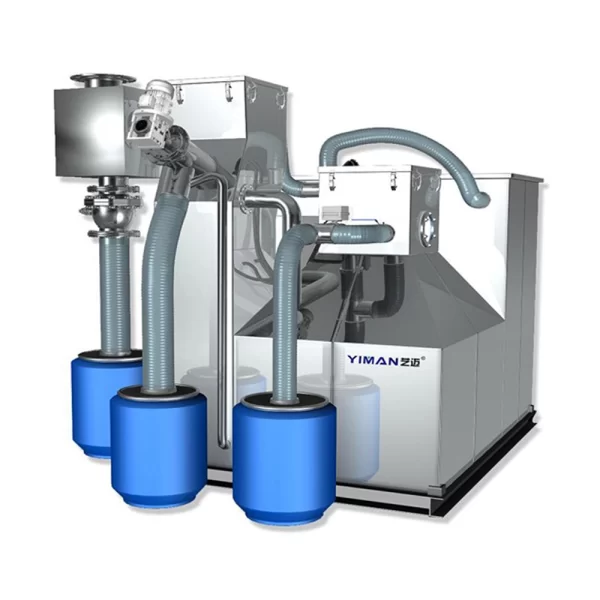
Keeping the OWS at an elevated temperature is a highly effective way to prevent grease from solidifying. At higher temperatures, grease stays liquid, which makes separation and removal easier. We recommend heating wastewater to at least 40-60°C, depending on the specific FOG composition. Our Oil Water Separator Sewage Elevator System (Model: YMGY) features a maximum heating temperature of 60°C, specifically designed to keep FOG emulsified and prevent congealment. This integrated heating capability supports continuous, efficient operation in colder environments or with high FOG loads.
2. Utilizing Advanced Filtration and Pre-treatment Techniques
Pre-treatment plays a central role in cutting the FOG load that reaches the OWS. Installing screens and strainers upstream removes larger solids and some grease before it enters the separator. Dissolved Air Flotation (DAF) can remove emulsified oils and suspended solids, easing the burden on the OWS. Grease traps and interceptors should be correctly sized and maintained to capture FOG near its source. These steps reduce the amount of grease that can later solidify inside the OWS.
3. The Role of Chemical Additives and Biological Treatments
Chemical and biological tools complement physical controls. Chemical demulsifiers break oil-water emulsions, improving separation. Selection and dosing must be managed carefully to avoid downstream issues or discharge limit conflicts. Biological treatments, using FOG-degrading microorganisms, break grease into simpler, more soluble compounds. These agents are effective for long-term FOG control and odor reduction. Their success depends on consistent monitoring of pH, temperature, and nutrient levels.
4. Establishing Robust Regular Maintenance and Cleaning Schedules
Consistent maintenance stops grease buildup before it hardens. Set a detailed schedule for inspection, pump-out, and cleaning based on FOG load and unit capacity. Removing accumulated grease early prevents adhesion and hard layers. A preventive maintenance program reduces costs and limits disruptions compared to reactive repairs. We provide detailed maintenance guidelines to support the longevity and efficiency of our OWS systems.
Design and Operational Considerations for Enhanced OWS Performance
Strong prevention starts with sound design and tuned operating practices. Together, they drive reliability and efficiency over the long term.
1. Selecting the Right Oil-Water Separator System for Your Needs
Choosing an OWS requires a close look at wastewater volume and characteristics, FOG concentration and type, and regulatory discharge limits. Flow rate, temperature, and the likelihood of emulsification guide technology selection. Gravity separators suit free-floating oils, while coalescing plate separators improve removal of smaller droplets. Our Oil-Water Separator System (Model: YMGY) is available with varying treatment capacities to match different industrial demands.
2. Optimizing OWS Unit Design to Minimize Grease Accumulation
Good OWS design includes features that discourage accumulation. Smooth internal surfaces and sloped bottoms make grease and sludge removal easier. Well-placed baffles and skimmers concentrate FOG for capture before it solidifies. Integrating heating elements, as in our YMGY model, keeps FOG fluid. Proper ventilation limits noxious gases and helps maintain stable temperatures within the unit.
3. Leveraging Shanghai Yimai’s Oil-Water Separator System for Superior Results
Shanghai Yimai Industrial Co., Ltd. offers advanced OWS systems built to address grease solidification. Our YMGY model features a maximum heating temperature of 60°C, designed to keep FOG from solidifying. This integrated heating capability maintains consistent performance even with high FOG concentrations or in colder operating environments. We also support system selection, installation, and maintenance to help ensure stable long-term operation. Our solutions focus on efficiency and environmental compliance.
If you are looking for efficient and eco-friendly compliance for industrial wastewater, check 《Oil Water Separator System Efficient and Eco Friendly Compliance for Industrial Wastewater》.
Maximizing Efficiency and Compliance Through Proactive Grease Prevention
Proactive grease prevention pays off well beyond continuity of operations. It influences costs and environmental performance in measurable ways.
1. Achieving Cost Savings and Extended Equipment Lifespan
By preventing grease solidification, facilities cut maintenance tied to frequent cleaning, repairs, and component replacement. Steady operation reduces downtime, sustaining productivity and lowering labor spend. An OWS kept clear of heavy grease operates more efficiently and uses less energy. This approach extends equipment lifespan and delays capital outlay for new units.
2. Ensuring Environmental Compliance and Reducing Odor Issues
Effective grease control supports compliance with discharge regulations. When FOG does not solidify, treated wastewater stays within quality limits, avoiding fines and penalties. Less accumulation also reduces odors from FOG decomposition, which improves working conditions and community relations. This strengthens a company’s environmental reputation.
3. Best Practices for Industrial Wastewater Management
Sound wastewater management starts at the source. Reduce FOG where possible, segregate waste streams, and monitor wastewater characteristics regularly. Train personnel on correct OWS operation and maintenance. Integrating advanced technologies, such as our Oil-Water Separator System with heating capabilities, provides robust and reliable performance. Continuous improvement through data analysis and process optimization can further raise efficiency and compliance.
If you are interested in innovative wastewater solutions, check 《Sewage Treatment Conference for Environmental Protection Seminar Attended by Yimai Industrial》.
Contact Us Today for Advanced OWS Solutions
Preventing grease solidification in your Oil-Water Separator units is central to operational efficiency and environmental compliance. Shanghai Yimai Industrial Co., Ltd. provides advanced OWS systems, including our YMGY model with integrated heating, designed for these challenges. Our expertise in water systems and environmental engineering supports reliable and sustainable solutions for industrial needs. Contact us to discuss your requirements and see how our products can optimize your wastewater treatment processes.
Email: overseas1@yimaipump.com
Phone/WhatsApp: +86 13482295009
FAQs
1. What are the primary risks of grease solidifying in an OWS unit?
Solidified grease causes blockages, reduces separation efficiency, and can trigger overflows. It raises maintenance frequency, accelerates wear, and may lead to environmental non-compliance with related fines. Together, these factors increase operating costs and reduce reliability.
2. How often should an OWS unit be inspected for grease buildup?
Inspection frequency depends on FOG load and wastewater characteristics. We recommend daily visual checks and weekly detailed inspections for high-volume or high-FOG applications. For lower loads, monthly inspections may suffice, but a dynamic schedule based on operating data works best.
3. Can cold temperatures exacerbate grease solidification in OWS units?
Yes. Cold temperatures speed the cooling and solidification of FOG. OWS units in colder climates or unheated spaces face higher risks of blockages and reduced efficiency, which calls for active temperature control.
4. What role does pH play in preventing grease solidification?
Extremes in pH can change grease behavior and affect emulsion stability. Highly acidic or alkaline conditions can sometimes break down or emulsify FOG, but maintaining a neutral pH range is generally recommended for OWS performance and to limit equipment corrosion.
5. How can Shanghai Yimai’s OWS system help prevent grease solidification?
Shanghai Yimai’s Oil-Water Separator System (Model: YMGY) includes integrated heating with a maximum heating temperature of 60°C. This keeps FOG in a liquid state, prevents solidification, and supports continuous, efficient separation under challenging conditions.