When is an Oil-Water Separator Essential for Your Operations?
Oil and water have a talent for showing up together at the worst possible moments on a plant floor. After years working in water and environmental protection, I have seen how a thin sheen in wastewater can snowball into violations, equipment headaches, and community complaints. Oil-water separators are the quiet workhorses that prevent that spiral, protecting ecosystems and keeping operations on track. Deciding when they become non-negotiable comes down to your process, what regulators expect, and the consequences to both your assets and the environment. Below, I walk through how I size up that need and why robust separation technology earns its keep.
Understanding the Critical Need for Oil-Water Separation in Industrial Settings
Many industrial processes generate wastewater with oils and greases, and that mix creates both environmental and operational risk. Discharging oily water harms aquatic life and soils, and it lingers longer than most operators expect. On the plant side, oil fouls equipment, undermines efficiency, and drives up maintenance. Effective oil-water separation reduces those risks, helps meet environmental requirements, and protects the integrity of your systems. I often see facilities underestimate the long tail of inadequate separation, which shows up as fines, reputation hits, and premature equipment failure.
Identifying Key Scenarios That Demand an Oil-Water Separator System
Certain situations make an oil-water separator a must-have, especially where oily wastewater needs treatment before discharge or reuse. We group these scenarios to make the decision point clear.
1. Navigating Environmental Regulations and Compliance Requirements
Environmental rules around the world set strict limits on oil and grease in discharged wastewater. Miss the mark and you face fines and legal trouble, not to mention risks to your operating license. An oil-water separator helps ensure effluent meets required quality parameters and supports sustainable operations. This is especially important for facilities near sensitive ecosystems or public water sources.
2. Protecting Equipment and Infrastructure from Contamination
Oil and grease damage downstream assets. They clog pipes, foul pumps, and undercut the efficiency of later treatment steps. In wastewater treatment plants, oil can disrupt biological processes and cause costly interruptions. Putting an oil-water separator upstream shields critical equipment, extends service life, and reduces maintenance frequency. It is a smart way to protect capital investments.
3. Enhancing Wastewater Treatment Efficiency and Discharge Quality
Removing oil early improves the performance of the rest of the treatment train. Oil and grease can hinder filtration and disinfection, so separating them first allows these processes to work as intended. The result is consistently higher quality effluent that meets strict discharge standards. That bump in performance matters for any facility aiming for strong environmental results.
4. Recovering Valuable Resources from Waste Streams
In some industries, the separated oil has value. Food processing and petroleum refining are good examples, where recovered oil can be reprocessed or sold, turning a disposal problem into revenue. That shift supports a more circular economy and improves the financial picture.
5. Managing Specific Industrial Effluents and Spills
Manufacturing, automotive, and petroleum operations deal with both ongoing oily effluents and the occasional spill. An oil-water separator handles varying oil concentrations so routine discharges and emergencies are both managed properly. This capability is vital for operational safety and environmental responsibility. If you are interested in waste management at a systems level, consider reading about Organic Waste Treatment System Turning Waste into Resources for a Circular Economy.
Exploring the Diverse Applications of Oil-Water Separators Across Industries
Oil-water separators show up across a wide range of industries, each with its own constraints. Beyond checking the compliance box, they bring real operational benefits. Here are the sectors where these systems are part of everyday practice.
1. Catering and Food Processing Facilities Ensuring Clean Discharges
Catering and food processing generate wastewater rich in fats, oils, and greases, known as FOG. Left unchecked, FOG solidifies in drains, causes blockages, and creates odors. Oil-water separators, especially grease traps, keep FOG out of sewers and help sites meet local discharge rules. They protect public systems from expensive damage and maintain hygienic conditions. Our Oil-Water Separator System is specifically designed for these applications.
2. Automotive and Manufacturing Workshops Preventing Pollution
Repair shops, manufacturing lines, and metalworking operations send out wastewater with lubricants, coolants, and hydraulic oils that can be toxic. Oil-water separators prevent harmful substances from reaching waterways and soils. They also make it possible to reuse process water, lowering both consumption and disposal costs.
3. Petroleum and Chemical Plants Mitigating Environmental Risks
Petroleum and chemical plants handle large volumes of oil and chemicals, so the stakes are higher. Oil-water separators are core equipment for treating process water, stormwater runoff, and spills. They help prevent environmental incidents and protect workers and surrounding communities. These systems fit into broader environmental management strategies.
4. Marine and Shipping Operations Complying with Discharge Standards
Ships and offshore platforms generate oily bilge water and other oily waste streams. International maritime rules, such as MARPOL, strictly control oil discharges to the ocean. Oil-water separators on vessels are mandatory to treat bilge water before discharge, protecting marine ecosystems. These systems are built to run reliably in tough marine conditions while meeting global standards.
5. Public Facilities and Commercial Buildings Maintaining Hygiene
Shopping malls, hotels, schools, and hospitals need oil-water separation in kitchens and maintenance areas. These spaces generate FOG that can trigger plumbing failures and unsanitary conditions. Installing oil-water separators supports proper wastewater management, keeps hygiene standards up, and prevents expensive repairs. For more insights into water management in public facilities, you might find Integrated Room Pump Station A Space Saving Revolution for Smarter More Efficient Water Supply informative.
How Shanghai Yimai’s Oil-Water Separator System Delivers Optimal Performance
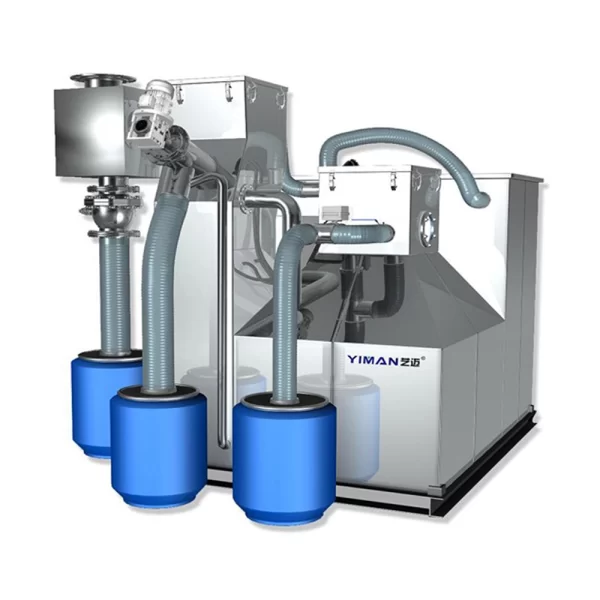
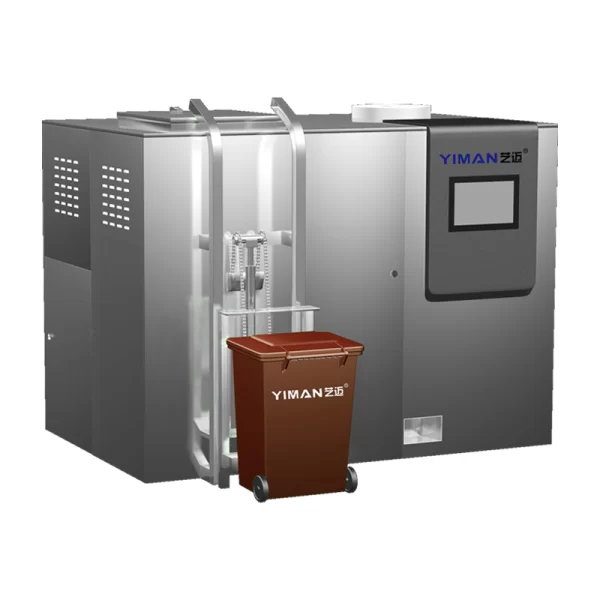
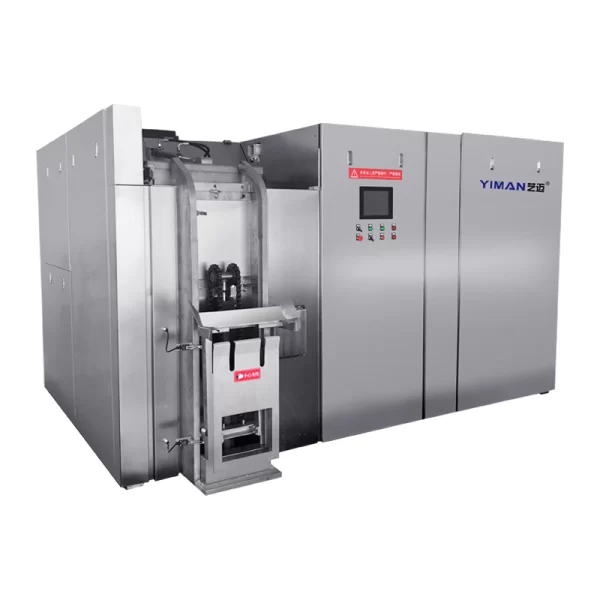
At Shanghai Yimai Industrial Co., Ltd., we design and build oil-water separators for a wide range of industrial needs. The YMGY model reflects a focus on efficiency, reliability, and environmental compliance, with technology that is easy to run day in and day out.
1. Key Features and Technical Advantages of the YMGY Model
The YMGY model combines a multi-stage approach, using gravity separation with advanced filtration or coalescence technologies, to remove both free and emulsified oils with high efficiency. The system is engineered for stable performance across varied operating conditions.
| Feature | Description | Benefit |
|---|---|---|
| Treatment Capacity | 10 to 50 m³/h | Scalable for diverse operational demands |
| Max Head | 30 m | Accommodates various installation configurations |
| Max Heating Temp | 60 °C | Enhances separation of viscous oils and greases |
| Application Fields | Catering, public facilities, food processing | Versatile for broad industry use |
| Automatic Operation | Integrated intelligent control system | Reduces manual intervention and labor costs |
| Compact Design | Optimized footprint | Saves valuable floor space in industrial facilities |
| Corrosion Resistance | High-grade materials | Ensures long service life and minimal maintenance |
2. Ensuring Efficient Oil and Grease Removal for Various Applications
The YMGY system delivers oil and grease removal that often exceeds 90 percent. That level of performance supports tight discharge limits and protects downstream processes. The design handles a wide range of oil types and concentrations, from light hydrocarbons to heavy greases, which makes it a fit for many industrial and commercial settings.
3. Maximizing Operational Reliability and Minimizing Maintenance
Reliability and low maintenance are built into the design. The YMGY model uses robust construction and intelligent controls that track performance and alert operators before small issues become big ones. A modular layout simplifies installation and gives easy access for routine service. The result is less downtime and lower operating costs.
Choosing the Right Oil-Water Separator for Your Specific Needs
Getting the selection right takes a clear look at your process conditions. The payoff is better performance, compliance confidence, and strong long-term economics. Here is how I approach the selection step by step.
1. Factors to Consider When Selecting a Separation System
- Flow Rate and Capacity: Determine the maximum volume of wastewater requiring treatment per hour.
- Oil Concentration and Type: Analyze the oil content and its characteristics (e.g., density, viscosity, emulsification).
- Required Effluent Quality: Understand the specific discharge limits mandated by local and national regulations.
- Space Constraints: Evaluate the available footprint for installation and consider compact designs if space is limited.
- Operating Temperature: Account for the temperature of the wastewater, as it affects oil viscosity and separation efficiency.
- Maintenance Requirements: Assess the ease of cleaning and maintenance to minimize operational downtime.
- Budget and Lifecycle Costs: Consider both initial investment and long-term operating expenses, including energy consumption and spare parts.
2. The Benefits of Partnering with an Experienced Manufacturer
Working with an experienced manufacturer such as Shanghai Yimai Industrial Co., Ltd. gives you practical advantages. We support you throughout selection so the system matches your needs, drawing on deep experience in water and environmental protection to deliver reliable, high-performance solutions. We also provide full after-sales support, including installation assistance, training, and maintenance services. That partnership helps the system perform as intended and last. For more information on selecting industrial equipment, you may find Picking the Right Water Pump A Step by Step Selection Guide useful.
Contact Us
Effective oil-water separation is not just a regulatory checkbox, it is a strategic investment in environmental protection and operational efficiency. If your operations involve oily wastewater, an oil-water separator is essential. Our team at Shanghai Yimai Industrial Co., Ltd. is ready to help you find the ideal solution. Contact us today to discuss your specific needs and learn more about our advanced Oil-Water Separator System solutions.
Email: overseas1@yimaipump.com
Phone/WhatsApp: +86 13482295009
FAQs
1. What are the primary types of oil-water separators?
The main types include gravity separators, such as API and CPI separators that rely on density differences, coalescing plate separators that use inclined plates to promote droplet merging, and hydrocyclones that apply centrifugal force. Each type is suited to particular oil droplet sizes and flow ranges.
2. How does an oil-water separator work?
Most systems use gravity separation. Oil, being less dense than water, rises to the surface while heavier solids settle. Coalescing plates or other media speed things up by helping small droplets merge into larger ones, which separate more readily.
3. What regulations govern oil-water separation?
Rules vary by region and sector, but they typically set limits on oil and grease in discharged wastewater. Examples include the U.S. EPA effluent guidelines, MARPOL for maritime discharges, and local municipal codes. Meeting these standards avoids penalties.
4. How often should an oil-water separator be maintained?
Maintenance frequency depends on separator type, wastewater volume, and oil and solids loading. Plan for regular inspections, sludge removal, and cleaning of coalescing plates or media, usually on a quarterly to annual schedule, to keep performance on point.
5. Can oil-water separators handle different types of oils?
Yes. They can treat crude oil, lubricating oils, hydraulic oils, and cooking oils. Effectiveness depends on the separator design and oil characteristics, including density, viscosity, and whether the oil is free or emulsified.