
Diesel vs Electric Fire Pumps: Optimizing Fire Safety
Choosing between diesel and electric fire pumps isn’t just a technical specification exercise. It shapes how your facility responds when everything else fails. I’ve seen installations where the wrong pump choice turned a manageable incident into a costly disaster, and others where thoughtful selection meant the system performed exactly as needed during an actual emergency. The decision touches safety, budget, regulatory standing, and operational reality in ways that deserve careful examination.
Fire Pump Systems and What NFPA 20 Actually Requires
Fire pump systems do one essential job: they boost water pressure and flow to sprinklers and standpipes when municipal supply falls short. Without adequate pressure, even the best-designed sprinkler layout becomes ineffective. A jockey pump maintains baseline system pressure, preventing the main fire pump from cycling unnecessarily due to minor leaks or pressure fluctuations. This seemingly small component protects the main pump from wear while keeping the system ready.
NFPA 20 governs how these systems get selected, installed, and maintained. The standard isn’t optional for commercial and industrial fire protection — it defines minimum requirements for pump sizing, controller specifications, testing protocols, and installation details. Regular fire pump testing verifies operational readiness, and documentation of these tests matters for insurance and code compliance. Risk assessment protocols specific to fire safety guide the entire design process, ensuring the system matches the actual hazard profile of the facility.
| Requirement Category | Description |
|---|---|
| Pump Selection | Must match calculated flow and pressure demands based on sprinkler system hydraulic calculations |
| Controller Standards | Specific requirements for automatic and manual starting, monitoring, and alarm functions |
| Testing Frequency | Weekly no-flow tests, annual flow tests, and periodic full-load testing as specified |
| Installation | Dedicated pump rooms, proper drainage, ventilation, and access requirements |
| Documentation | Maintenance records, test results, and system modifications must be maintained |
Diesel Fire Pumps and Their Independent Power Advantage
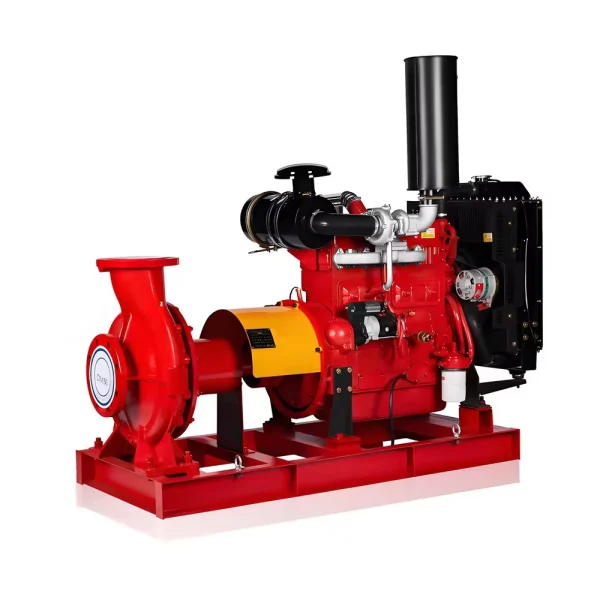
Diesel fire pumps operate completely independent of the electrical grid. When the power goes out — whether from a storm, equipment failure, or the same fire you’re trying to suppress — a diesel pump keeps running. This independence makes diesel the default choice for critical infrastructure, remote industrial sites, and any facility where uninterrupted fire protection cannot depend on external power sources.
The mechanical robustness of diesel engines allows consistent performance under demanding conditions. The YM10B-231DE Fire Fighting Diesel Engine demonstrates this capability with 231 kW main power at 1500 r/min, providing reliable output when it matters most.
Diesel installations come with practical complications. Fuel storage requires dedicated tanks meeting specific codes, and fuel management demands attention to prevent degradation. Diesel fuel can develop microbial growth and water contamination if left sitting too long, so regular testing and rotation matter. Maintenance costs run higher than electric alternatives because diesel engines have more moving parts requiring specialized technicians. Remote monitoring becomes essential for tracking fuel levels, battery condition, and engine readiness between tests.
Electric Fire Pumps and Their Operational Efficiency
Electric fire pumps integrate cleanly with existing building electrical systems. No fuel storage, no exhaust systems, no combustion byproducts. This simplifies installation in urban and commercial settings where space is limited and environmental compliance adds complexity. Modern electric motors, including advanced IE3 Three Phase Electric Motor and IE4 Three Phase Electric Motor, deliver high efficiency that translates to lower operating costs over the system’s lifespan.
The environmental profile of electric pumps appeals to facilities pursuing sustainability goals. Zero direct emissions during operation, quieter running, and reduced regulatory burden for air quality compliance all factor into the decision. Shanghai Yimai Industrial Co., Ltd. supplies various electric motors suited for fire pump applications, including the YBX3 Explosion Proof Three Phase Electric Motor and YBX4 Explosion Proof Three Phase Electric Motor, addressing safety requirements in hazardous environments.
The fundamental limitation of electric pumps is grid dependency. If the power fails, the pump fails — unless backup systems exist. This reality drives requirements for emergency generators, automatic transfer switches, or uninterruptible power supplies. The backup infrastructure adds cost and complexity, partially offsetting the simpler primary installation.
Making the Decision Between Diesel and Electric Fire Pumps
Selecting the right fire pump requires balancing multiple factors rather than following a simple rule. Site conditions, regulatory requirements, budget constraints, and operational priorities all influence the outcome. Hybrid fire pump systems combining electric and diesel units offer enhanced redundancy for facilities where neither option alone provides adequate protection.
Primary Selection Factors for New Installations
Site conditions determine much of the decision. Reliable local power availability favors electric pumps, while unstable grids or remote locations point toward diesel. The regulatory landscape matters too — local building codes may mandate specific configurations, and environmental regulations affect diesel engine specifications. Budget analysis should include both initial capital expenditure and projected life cycle costs, since the cheaper installation option isn’t always the cheaper long-term choice.
| Feature | Diesel Fire Pump | Electric Fire Pump |
|---|---|---|
| Power Source | Independent (Diesel Fuel) | Grid-Dependent (Electricity) |
| Reliability | High (Independent of grid) | High (Requires reliable grid/backup) |
| Installation | More complex (fuel storage, exhaust) | Simpler (integration with existing electrical) |
| Maintenance | Higher (engine maintenance, fuel quality) | Lower (fewer moving parts, less complex) |
| Environmental Impact | Higher emissions, noise | Lower emissions, quieter operation |
| Operational Cost | Fuel costs, higher maintenance | Electricity costs, lower maintenance |
| Application | Remote sites, critical infrastructure | Urban areas, facilities with stable power |
Installation Complexity and Long-Term Maintenance Costs
Diesel pump installations require dedicated fuel tanks, exhaust systems with proper routing, and adequate ventilation. These elements add to initial costs and consume space that might otherwise serve other purposes. Electric pumps integrate more easily into existing electrical infrastructure, though substantial upgrades may be necessary if the building’s electrical service lacks capacity.
Maintenance patterns differ significantly between the two types. Diesel engines need regular oil changes, fuel filter replacements, coolant checks, and battery maintenance. The fuel system itself requires attention — filters, injectors, and fuel quality all affect reliability. Electric pumps have fewer mechanical components and simpler maintenance schedules, typically limited to bearing lubrication, alignment checks, and electrical connection inspections. Both types require attention to vibration control and adherence to safety protocols during maintenance.
Comparing Long-Term Operational Costs
Long-term costs for diesel pumps include fuel expenses and more frequent preventative maintenance. Electric pumps incur electricity costs but benefit from lower maintenance requirements. Over a 20-year system lifespan, electric pumps often prove more economical in areas with stable power and reasonable electricity rates. Facilities with unreliable power must factor in backup generator costs when evaluating electric options.
Scenarios Favoring One Type Over the Other
Diesel fire pumps prove superior for remote industrial sites, locations with unstable power grids, and facilities where fire protection must continue regardless of external conditions. Electric pumps work best in urban high-rises, commercial buildings with reliable power, and facilities prioritizing lower emissions and simpler integration. The specific infrastructure and risk profile of each facility determines which option makes sense.
Work With Shanghai Yimai on Your Fire Pump Selection
Getting fire pump selection right requires matching equipment capabilities to actual site conditions and protection requirements. Shanghai Yimai Industrial Co., Ltd. provides consultation, design support, and supply of high-performance water pumps, booster systems, and integrated solutions for industrial and commercial fire safety applications. Our Vertical Turbine Fire Fighting Pump delivers optimal performance in demanding applications, and our Fire Fighting Diesel Engine models ensure uninterrupted operation when grid power isn’t available.
Contact our engineering team to discuss your project requirements and develop a fire pump configuration that meets your safety, compliance, and operational needs.
Email: overseas1@yimaipump.com | Phone/WhatsApp: +86 13482295009
Frequently Asked Questions
What lifespan should I expect from industrial fire pumps?
Well-maintained industrial fire pumps typically last 20 to 30 years, whether diesel or electric. Critical components often need attention sooner — diesel engines and electric motors may require overhaul or replacement between 10 and 15 years, depending on operational hours, maintenance quality, and environmental conditions. Regular testing per NFPA 20 standards and consistent maintenance extend useful life and ensure the fire suppression system stays ready.
How do environmental regulations affect the diesel versus electric decision?
Environmental regulations increasingly favor electric fire pumps because they produce zero direct emissions during operation. Diesel engines must meet stricter emission standards, such as EPA Tier ratings, requiring advanced exhaust treatment systems and careful fuel management. These requirements add complexity and cost to diesel installations, making electric pumps the more straightforward choice where reliable power exists.
Do hybrid fire pump systems offer meaningful advantages?
Hybrid systems combining an electric main pump with diesel backup can provide both operational efficiency and grid independence. The electric pump handles normal operation with lower emissions and maintenance costs, while the diesel unit ensures protection continues during power outages. This configuration requires careful design to meet NFPA 20 standards and optimize switching between power sources, but it addresses the primary weakness of each individual approach.