
End Suction vs Double Suction Pump: Choosing Your Industrial Solution
Choosing between end suction and double suction centrifugal pumps shapes how an industrial system performs for years. I’ve watched engineers agonize over this decision, and for good reason—the wrong choice means wasted energy, premature wear, or a pump that simply cannot keep up with demand. The differences between these two designs run deeper than most specification sheets suggest, touching everything from maintenance schedules to long-term operating costs.
How End Suction Pumps Work
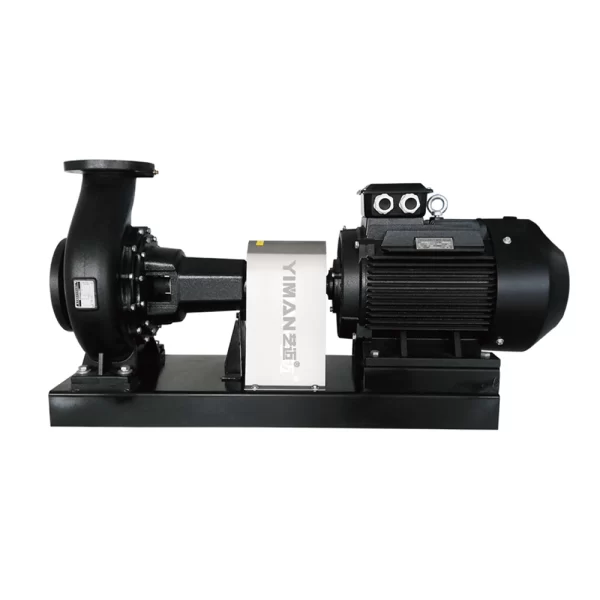
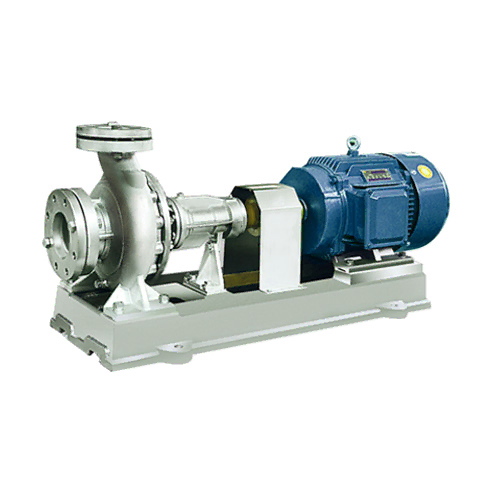
End suction pumps pull fluid in through one side of the impeller and push it out radially, usually through an upward-facing discharge. This straightforward flow path keeps manufacturing costs down and makes these pumps genuinely versatile. Fluid enters axially, the impeller vanes accelerate it, and the volute converts that velocity into pressure. Single-stage operation means fewer moving parts, which translates to simpler repairs when something eventually needs attention.
These pumps handle clean, low-viscosity liquids well. They struggle with solids or abrasive particles, but for water and similar fluids, they deliver reliable performance without unnecessary complexity. Shanghai Yimai Industrial produces end suction pumps like the Single Stage End Suction Volute Pump that balance efficiency with durability for everyday fluid handling tasks.
Where End Suction Pumps Make Sense
End suction pumps show up constantly in HVAC systems, circulating water through heating and cooling loops. They work well for general water transfer, irrigation, and light industrial processes where flow and head requirements stay moderate. The design suits applications needing consistent, clean fluid movement without the capacity demands that would justify a larger, more complex pump.
What Makes Double Suction Pumps Different
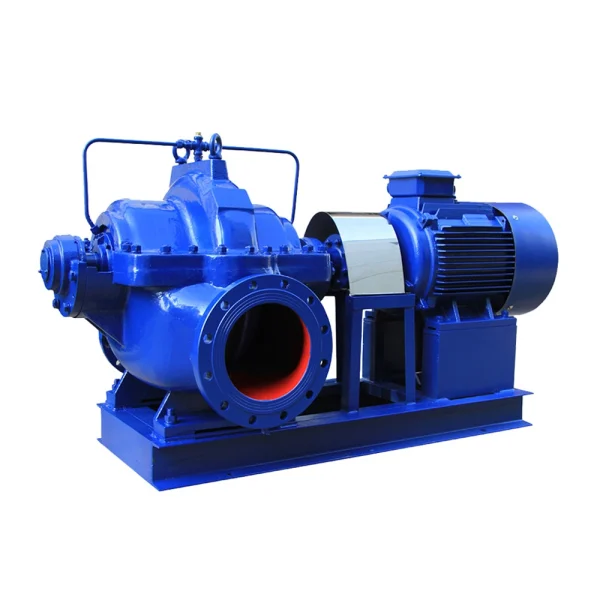
Double suction pumps, particularly horizontal split case designs, solve problems that end suction pumps cannot. The impeller draws fluid from both sides simultaneously, which balances axial thrust almost completely. This balanced loading means the pump can achieve higher flow rates while requiring less net positive suction head. Lower NPSH requirements reduce cavitation risk significantly.
The symmetrical flow pattern also dampens vibration. Less vibration means bearings last longer and the pump runs more quietly. For a given flow rate, the hydraulic profile stays more compact than single-suction alternatives would allow.
When Double Suction Pumps Justify Their Cost
Large volume applications reveal where double suction pumps earn their keep. Power generation facilities, municipal water systems, and fire protection installations all benefit from the balanced impeller design. Hydraulic losses drop, energy consumption falls, and the pump maintains efficiency across a wider operating range. Over a fifteen or twenty year service life, those efficiency gains compound into substantial cost savings.
Why Impeller Design Matters So Much
The impeller determines nearly everything about pump performance. End suction pumps typically use overhung impellers, which creates unbalanced radial and axial forces that bearings must absorb. Double suction impellers sit supported on both ends, and the dual-entry design cancels axial forces almost entirely.
Open, semi-open, and closed impeller configurations each suit different conditions. Closed impellers maximize efficiency with clean fluids. Open designs tolerate some solids. The choice affects cavitation behavior and shapes the entire performance curve.
Comparing the Numbers
Flow rate, total dynamic head, and efficiency tell most of the story when comparing pump types. Double suction pumps generally outperform end suction models at high flow rates and moderate to high heads. Their balanced design reduces the NPSH required, which matters enormously in systems where suction conditions are marginal.
| Feature | End Suction Pump | Double Suction Pump |
|---|---|---|
| Max Flow Rate | Up to 4000 m³/h (Yimai ES/CS series) | Up to 3975 m³/h (Yimai YMS series) |
| Max Head | Up to 150 m (Yimai ES/CS series) | Up to 230 m (Yimai YMS series) |
| Axial Thrust | Unbalanced | Balanced |
| NPSH Requirements | Higher | Lower |
| Maintenance | Easier (back pull-out design) | More complex (split casing allows easier access) |
| Application | General water transfer, HVAC, light industrial | Large volume transfer, power generation, municipal |
Energy consumption analysis should factor into every pump selection. A pump that costs less upfront but runs inefficiently will cost more over its lifetime than a better-matched alternative. For more on high-capacity applications, see 《Split Casing Double Suction Pump High Efficiency Fluid Handling for Demanding Industrial Applications》.
Matching Pumps to Real Applications
The right pump depends entirely on what the system actually needs. Clean, low-viscosity fluids in HVAC or water supply systems often call for the Single Stage End Suction Volute Pump. The compact footprint and straightforward maintenance make practical sense when flow demands stay moderate.
Water treatment plants, power stations, and municipal distribution systems need the capacity that double suction pumps provide. The Split Casing Double Suction Pump handles large volumes efficiently while keeping NPSH requirements manageable. Fire protection systems often rely on vertical turbine pumps, which deliver the reliability and flow rates that safety codes demand.

Wastewater applications introduce complications. Solids handling, space constraints, and corrosion resistance all influence pump selection in ways that favor specialized designs over standard centrifugal options.
Maintenance and Long-Term Costs
Purchase price tells only part of the cost story. Lifecycle costs include maintenance labor, spare parts, energy consumption, and eventual replacement. End suction pumps win on simplicity—fewer specialized components, easier access for repairs, and back pull-out designs that allow servicing without disturbing piping.
Double suction pumps demand more from maintenance crews, but their robust construction and balanced operation reduce how often major work becomes necessary. Bearings last longer when they are not absorbing unbalanced thrust. The split casing design actually simplifies access to internal components when overhauls do happen.
Vibration monitoring catches problems early in both pump types. Regular analysis prevents small issues from becoming expensive failures. The choice between end suction and double suction ultimately balances initial investment against operating costs and expected service life.
Optimize Your Pumping Solutions with Shanghai Yimai Industrial
Shanghai Yimai Industrial Co., Ltd. is a professional manufacturer of high-quality water pumps and integrated pumping solutions. For expert consultation on selecting the optimal end suction or double suction pump for your specific industrial application, or to explore our full range of robust pumping systems, contact our engineering team today. We provide tailored solutions designed for efficiency, reliability, and long-term performance. Email: overseas1@yimaipump.com | Phone/WhatsApp: +86 13482295009
Frequently Asked Questions About Industrial Pumps
What are the primary advantages of a double suction pump over an end suction pump for high-volume applications?
The double suction impeller draws fluid from both sides, which balances axial thrust and allows smoother operation with less vibration. This design lowers NPSH requirements, reducing cavitation risk when suction conditions are tight. Efficiency typically runs higher than comparable end suction pumps at elevated flow rates, which translates to lower energy costs over the pump’s service life.
How do I determine the correct pump size and type for my specific industrial process?
Pump selection starts with understanding the fluid—its viscosity, temperature, and any solids content. From there, required flow rate and total dynamic head define the operating point. The system curve must match the pump curve at a point where efficiency remains acceptable. Undersizing causes the pump to struggle. Oversizing wastes energy and can cause operational instability. Engineering teams perform these calculations to ensure the selected pump fits the actual system demands.
What are the common causes of cavitation in both end suction and double suction pumps, and how can it be prevented?
Cavitation happens when available NPSH drops below what the pump requires. High fluid temperatures, excessive suction lift, restricted suction piping, and clogged strainers all contribute. Prevention requires designing the suction side carefully, maintaining adequate submergence or flooded suction conditions, and selecting pumps with NPSH requirements that leave margin for real-world variations. Regular inspection of suction piping and strainers catches problems before they cause damage.