Modular Water Plant Installation for Rural & Remote Areas
Getting clean drinking water to people who live far from cities has always been one of those problems that sounds simple until you actually try to solve it. The distances are enormous, the budgets are tight, and the usual approach of building a big treatment plant just doesn’t work when you’re dealing with a village at the end of a dirt road or a community perched on a mountainside. Modular water plants have changed how we think about this challenge. These systems arrive pre-built, ready to connect, and can start producing safe water in weeks rather than years. For communities that have waited generations for reliable water access, that difference in timeline isn’t just convenient—it’s transformative.
Remote Communities Face Unique Water Infrastructure Barriers
Remote communities deal with obstacles that make conventional water treatment impractical. Geographic isolation drives up transportation costs for materials and equipment. Limited local budgets can’t absorb the capital requirements of traditional construction. Finding engineers and technicians willing to work in these locations for extended periods adds another layer of difficulty.
Traditional water treatment plants demand extensive civil works, prolonged construction periods, and substantial capital investment. These requirements effectively exclude many off-grid locations from consideration. A project that might take six months in an urban setting can stretch to several years when every piece of equipment must travel unpaved roads or be airlifted to site.
Modular water plants address these constraints through pre-engineered, containerized designs that minimize on-site construction. Installation time drops from years to weeks in many cases. Costs fall because factory assembly is more efficient than field construction. These systems can be positioned in diverse environments, from arid regions to mountainous terrains, adapting to whatever conditions exist. Many incorporate energy-efficient technologies that lower operational expenditures over the system’s lifetime. Shanghai Yimai Industrial Co., Ltd. develops modular integrated water plant solutions specifically for these challenging environments, ensuring community water supply reaches people who need it most.
| Feature | Traditional Water Plants | Modular Water Plants |
|---|---|---|
| Construction Time | Months to Years | Weeks to Months |
| Cost | High Capital Investment | Lower Initial Investment |
| Scalability | Limited, Complex Expansion | Highly Scalable, Add-on Units |
| Footprint | Large | Compact |
| Installation | Extensive On-site Civil Work | Minimal On-site Assembly |
| Relocation | Not Feasible | Possible |
Matching System Specifications to Local Water Conditions
Selecting an appropriate modular water treatment system requires careful evaluation of site-specific factors. The starting point is always a comprehensive water source assessment. Raw water quality varies enormously between locations, and understanding what contaminants are present determines which treatment technologies the system needs.
Water quality standards for rural areas establish the targets the system must achieve. This means measuring turbidity, pH levels, dissolved solids, and microbial presence in the source water. A mountain stream presents different challenges than a brackish well or a river downstream from agricultural land.
Site conditions shape system design in ways that aren’t always obvious at first. Extreme weather affects equipment selection and housing requirements. Limited road access constrains the size of modules that can be delivered. The filtration technologies modular systems employ must handle varying raw water characteristics without constant adjustment. Disinfection methods for remote locations should work effectively while requiring minimal chemical handling, since resupply logistics can be complicated.
Power requirements for water plant operations deserve particular attention. Some sites have grid connections, others rely entirely on generators or renewable energy. A modular integrated water plant can be configured for any of these scenarios, but the choice affects both capital and operating costs. Scalability remains a key advantage, allowing future expansion as community needs grow. Shanghai Yimai’s expertise in integrated pre-casting pump station solutions and various water pumps ensures foundational components perform reliably under demanding conditions.
What are the key considerations for selecting a modular water plant for a remote site?
Selecting a modular water plant for a remote site involves assessing several critical factors. Raw water analysis determines the necessary treatment technologies, such as filtration or reverse osmosis. System capacity planning ensures the plant meets current and future demand without over- or under-sizing. Renewable energy integration should be considered to minimize operational costs and enhance reliability in off-grid locations. Environmental resilience of the system is crucial for enduring harsh conditions, ensuring continuous operation.
From Delivery to First Water: The Installation Sequence
Installing a modular water plant follows a streamlined sequence that emphasizes efficiency over complexity. The pre-engineered nature of these systems means most of the difficult work happens at the factory, not in the field.
- Site Preparation: Clear and level the designated area, ensuring stable ground for the modular units.
- Foundation Laying: Install a simple concrete slab or compacted gravel base, minimizing extensive civil works.
- Module Delivery: Transport pre-engineered water systems, often containerized water plants, to the site.
- Module Placement: Position the modular units using cranes, aligning them according to the design specifications.
- Interconnection: Connect the pre-fabricated piping and electrical systems between modules, facilitating a plug-and-play approach.
- External Connections: Link the plant to raw water sources, treated water distribution, and power supply.
- System Integration: Integrate control systems and monitoring equipment for automated operation.
- Commissioning: Conduct thorough testing and calibration of all components to ensure optimal performance.
- Operator Training: Provide comprehensive training to local personnel on plant operation and routine maintenance.
This process significantly reduces installation challenges that remote areas typically present. Shanghai Yimai’s modular integrated water plant solutions exemplify this efficiency, designed for rapid deployment and minimal on-site disruption.
How long does it typically take to install a modular water treatment system?
The typical installation timeline for a modular water treatment system varies based on size and complexity, but it is significantly faster than conventional plants. Smaller units can be operational within weeks, while larger, more complex systems might take a few months. This rapid deployment capability optimizes project timelines and construction efficiency for remote projects. A standard 50 m³/day plant can often be installed and commissioned within 4-6 weeks.
Keeping Systems Running Without Specialized Staff
Effective operational management determines whether a modular water plant succeeds over the long term. These systems are designed for ease of operation, often featuring automated controls and remote monitoring capabilities. The goal is minimizing the need for specialized on-site personnel, since finding and retaining such staff in remote areas presents ongoing challenges.
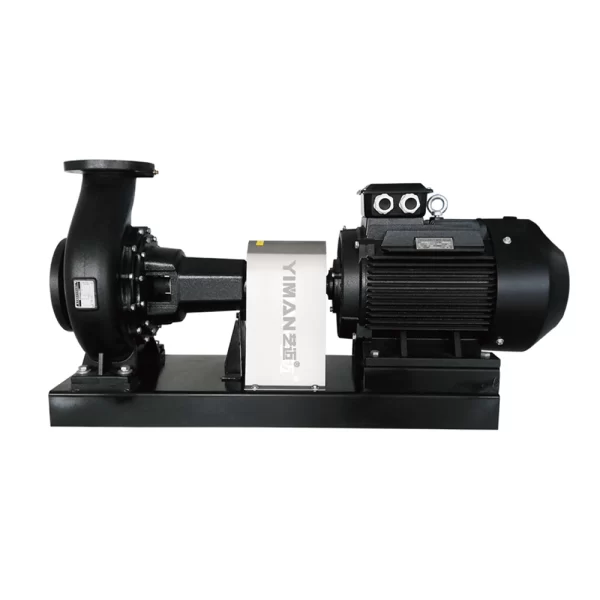
Maintenance schedules for modular water plants typically involve routine filter changes, chemical replenishment, and periodic system checks. These tasks can be performed by trained local operators rather than requiring visits from external technicians. Shanghai Yimai provides robust water pumps and VFD controlled booster systems for reliable water distribution.
Training local operators is essential for long-term sustainability of water access. This empowers communities to manage their own water resources effectively rather than depending on outside support. Spare parts management and readily available technical support further contribute to uninterrupted service. Energy efficient water treatment components, such as high-efficiency pumps and motors, reduce operational costs, making these solutions more viable for communities with limited budgets. Remote monitoring capabilities allow for proactive issue detection and resolution, minimizing downtime even when technical experts are hundreds of kilometers away.
Meeting Health Standards in Decentralized Systems
Meeting stringent water quality standards and navigating regulatory compliance frameworks are critical for any water treatment solution. Modular systems are engineered to achieve specific effluent quality parameters, often exceeding national and international benchmarks. This involves incorporating advanced treatment technologies such as ultrafiltration, reverse osmosis, and UV disinfection.
Water quality testing is performed rigorously during commissioning and throughout the plant’s operational life to verify performance. Certification of water treatment processes and components further assures reliability. Shanghai Yimai commits to quality across all its products, ensuring modular integrated water plant systems meet health and safety standards. These systems are designed to adapt to local regulatory requirements, providing safe and reliable drinking water regardless of jurisdiction.
Field Results from Challenging Deployments
Modular water plants have demonstrated significant impact in diverse challenging environments. In a remote village in Southeast Asia, a modular system provided 500 m³/day of potable water, drastically reducing waterborne diseases. This installation was completed in under two months, highlighting the rapid deployment advantage that makes these systems practical where traditional construction would be impossible.
Another project in a drought-stricken African community utilized a modular integrated water plant to treat brackish groundwater. Water that had been unusable for drinking became a reliable community water supply, transforming daily life for residents who had previously spent hours collecting water from distant sources.
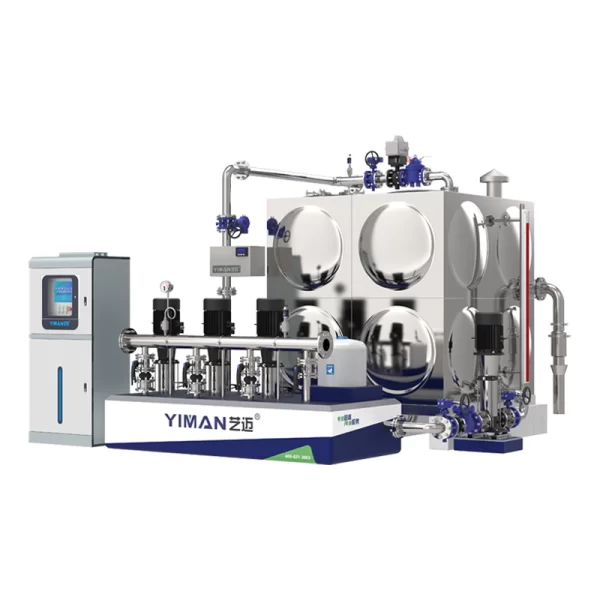
These initiatives showcase the impact of modular water plants on community development and public health outcomes. During a natural disaster, a containerized modular unit was deployed for emergency relief, supplying drinking water within days of arrival. These examples underscore the versatility and effectiveness of modular water solutions in addressing critical water scarcity issues globally.
Partner with Shanghai Yimai for Sustainable Water Solutions
Shanghai Yimai Industrial Co., Ltd. is a professional manufacturer dedicated to providing robust and intelligent water solutions. Our expertise in Modular Integrated Water Plants, booster systems, and comprehensive water treatment technologies ensures reliable, sustainable water access for even the most challenging rural and remote environments. Contact us today at overseas1@yimaipump.com or +86 13482295009 to discuss your project requirements and discover how our tailored solutions can empower your community or operation.
Frequently Asked Questions About Modular Water Plants
What kind of maintenance is required for a modular water plant in a rural setting?
Modular Integrated Water Plants are designed for low maintenance, often featuring automated processes and remote monitoring. Routine tasks typically include filter cleaning/replacement, chemical replenishment, and periodic system checks. Shanghai Yimai’s systems are built for durability and ease of service, minimizing the need for specialized on-site personnel in remote areas.
Are modular water treatment systems scalable for growing communities?
Yes, a significant advantage of modular water treatment systems is their inherent scalability. Units can be added or upgraded as demand increases, allowing communities to expand their water supply infrastructure incrementally without major overhauls. This flexibility makes them ideal for dynamic rural and remote populations.
How do modular water plants address varying raw water quality challenges?
Modular water plants are highly adaptable and can be configured with various treatment technologies, including advanced filtration, reverse osmosis, and disinfection methods, to effectively treat diverse raw water sources such as surface water, groundwater, or brackish water. Shanghai Yimai designs systems tailored to specific water quality profiles.