Smart Water Plant Solutions for Public Facilities Efficiency
Managing water in public buildings has always been a balancing act between tight budgets, aging pipes, and the expectation that clean water will flow without interruption. Schools and government facilities face this pressure daily, often with infrastructure that predates modern efficiency standards. Smart water plants change the equation by bringing real-time monitoring, automated controls, and predictive analytics into systems that once ran on guesswork and scheduled maintenance. The shift is not just technical—it reshapes how facilities approach resource allocation, public health protection, and long-term planning.
Why Intelligent Systems Are Replacing Traditional Water Infrastructure
Intelligent water management systems mark a fundamental departure from how public facilities have historically handled water. Traditional setups rely on manual readings, reactive repairs, and limited visibility into what happens between the meter and the tap. Smart water plants flip this model by embedding sensors throughout the network, feeding data into centralized platforms that track flow rates, pressure levels, and quality indicators in real time.
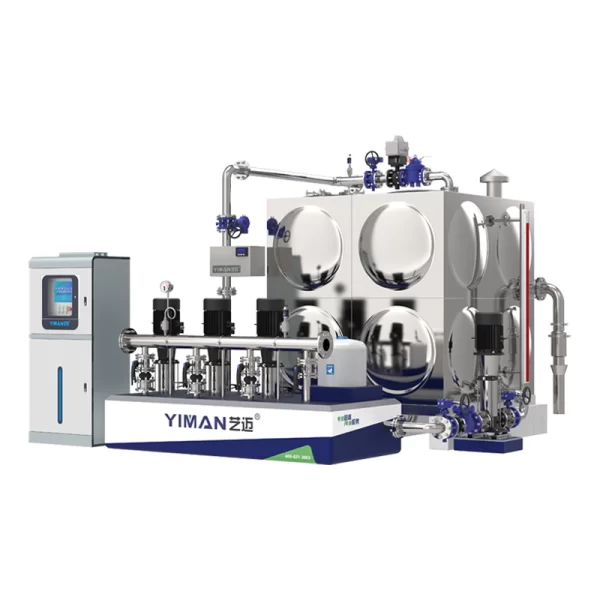
For school water management and government building water operations, this level of oversight was previously unattainable without dedicated staff monitoring equipment around the clock. Now, automated controls adjust pump speeds based on actual demand rather than fixed schedules. Anomalies trigger alerts before they escalate into failures. The global smart water management market is projected to reach over $30 billion by 2027, reflecting how seriously public and private sectors are taking this transition. Shanghai Yimai Industrial Co., Ltd. has developed modular intelligent integrated water plant solutions specifically designed to meet the operational realities of diverse public settings, where reliability and efficiency must coexist.
The Financial Case for Smart Water Plants in Public Facilities
Budget constraints shape every decision in public sector water management. Smart water plants address this reality directly by cutting operational costs through measurable efficiency gains. Facilities implementing these systems typically see water consumption drop by 20-30%, while energy costs associated with pumping can fall by up to 50% in larger installations.
These numbers translate into freed-up funds that can support other essential services. Automated pump systems respond to real-time demand rather than running at constant output, eliminating the energy waste that accumulates when traditional systems operate on fixed cycles. Water conservation technology built into smart water plants catches leaks and inefficiencies that would otherwise go unnoticed for months, compounding savings over time.
Breaking Down How Smart Water Plants Cut Costs
The cost reduction mechanisms in smart water plants work across multiple fronts simultaneously. Predictive maintenance water analytics monitor equipment health continuously, flagging components that show early signs of wear before they fail catastrophically. This prevents the emergency repair scenarios that drain maintenance budgets and disrupt operations.
Automated pump systems and precise distribution controls generate substantial energy savings water systems would otherwise lose to inefficiency. Labor costs decrease as well—automated monitoring handles tasks that previously required staff to physically check gauges and log readings. The combination of these factors builds a compelling return on investment for public entities evaluating infrastructure upgrades.
| Feature | Traditional Water System | Smart Water Plant System |
|---|---|---|
| Water Consumption | High | Reduced (20-30%) |
| Energy Costs | High | Reduced (up to 50%) |
| Maintenance | Reactive, unpredictable | Predictive, scheduled |
| Operational Control | Manual, limited data | Automated, real-time data |
| Leak Detection | Manual, delayed | Automated, instant |
Protecting Public Health Through Continuous Water Quality Monitoring
Schools and government buildings carry a heightened responsibility for the health of everyone who walks through their doors. Water quality monitoring in these settings cannot rely on periodic testing alone—contaminants can enter systems between scheduled checks, and the consequences of exposure fall disproportionately on vulnerable populations like children and the elderly.
Smart water plants address this vulnerability through continuous real-time water analytics. Sensors track parameters including pH, chlorine levels, turbidity, and temperature, comparing readings against established safety thresholds. When values drift outside acceptable ranges, the system alerts operators immediately rather than waiting for the next manual test. This proactive stance significantly reduces the risk of waterborne illness outbreaks and keeps facilities in compliance with environmental regulations. For safe drinking water schools, this technology provides protection that manual sampling simply cannot match. The approach contributes to broader water security solutions that public spaces increasingly require.
How Integrated Technologies Power Smart Water Plant Performance
The effectiveness of smart water plants stems from how different technologies work together rather than operating in isolation. IoT in water systems provides the foundation—sensors distributed throughout pipes, tanks, and treatment stages collect data continuously. This information flows into AI water management platforms that identify patterns, predict maintenance needs, and optimize operations based on historical and real-time inputs.
Advanced pumping solutions handle the physical work of moving water efficiently. Booster water systems maintain consistent pressure across facilities regardless of demand fluctuations. The modular intelligent integrated water plant design allows facilities to scale capacity as needs change without replacing entire systems. Remote monitoring water capabilities mean operators can oversee performance and respond to issues from anywhere, reducing response times and improving overall system reliability.
Core Technologies Behind Modern Smart Water Plants
Modern smart water plants bring together several technology layers that each serve distinct functions. IoT sensors handle real-time data acquisition from every point in the distribution network. AI-driven analytics process this information to generate predictive insights about equipment health and consumption patterns. SCADA water systems provide centralized control interfaces where operators can monitor and adjust operations.
Cloud-based water management platforms store historical data and enable remote access from any authorized device. Water pressure optimization algorithms ensure consistent delivery while minimizing energy use. Leak detection systems catch losses that would otherwise go unnoticed, protecting both water resources and facility budgets.
Strategic Implementation for Public Sector Success
Rolling out smart water plant solutions in public facilities requires careful planning to avoid disruption and maximize benefits. A phased implementation strategy works best, beginning with a comprehensive water system audit that maps existing infrastructure and identifies priority areas for improvement.
This audit reveals where inefficiencies concentrate and which upgrades will deliver the fastest returns. From there, customized water solutions can address the specific challenges each facility faces—whether that means retrofitting aging pump stations, adding quality monitoring to distribution lines, or implementing full system automation. Project planning water phases should include detailed scheduling that accounts for facility operations, budget cycles, and stakeholder coordination. Shanghai Yimai Industrial Co., Ltd. guides public sector project management through each stage, building resilient water infrastructure that serves facilities for decades.
Documented Results from Public Facility Implementations
The impact of smart water plants becomes clearest when examining actual deployments. Smart water plant case studies from municipal buildings, schools, and government offices demonstrate consistent patterns of improvement across efficiency metrics, cost reduction, and environmental performance.
One municipal building reduced water consumption by 25% and energy costs by 30% within twelve months of implementing a modular intelligent integrated water plant. A school water conservation example showed 15% water usage reduction alongside improved compliance with quality standards. These public facility water savings reflect what proven water management solutions can deliver when properly designed and implemented.
| Facility Type | Solution Implemented | Water Consumption Reduction | Energy Cost Reduction | Other Benefits |
|---|---|---|---|---|
| Municipal Building | Modular Intelligent Integrated Water Plant | 25% | 30% | Improved compliance, reduced maintenance |
| School Campus | IoT-enabled Water Management | 15% | 20% | Enhanced water quality monitoring |
| Government Office | VFD Controlled Booster System | 18% | 25% | Stable pressure, extended equipment lifespan |
| Public Hospital | Advanced Leak Detection & Control | 22% | 10% | Minimized water damage, faster issue resolution |
Partner with Shanghai Yimai for Advanced Water Management
Public facilities ready to modernize their water infrastructure can work with Shanghai Yimai Industrial Co., Ltd. to design and implement smart water plant solutions tailored to their specific operational requirements. The company’s expertise covers schools, government buildings, and other public sector applications where efficiency, safety, and sustainability must align. Contact the team to discuss a customized strategy for your infrastructure needs. Email: overseas1@yimaipump.com | Phone/WhatsApp: +86 13482295009
What are the long-term cost savings of implementing a smart water plant in a school or government facility?
Smart water plants generate long-term savings through multiple channels that compound over time. Reduced water consumption cuts utility bills directly, while optimized pump operations lower energy costs significantly. Predictive maintenance prevents expensive emergency repairs and extends equipment lifespan. Labor savings come from automated monitoring that reduces manual inspection requirements. Together, these factors build a strong return on investment while protecting facilities from the budget surprises that aging infrastructure often creates.
How does a smart water plant ensure water quality and safety for occupants in public buildings?
Continuous monitoring forms the core of water quality protection in smart water plants. Real-time sensors track multiple parameters simultaneously, comparing readings against safety thresholds and alerting operators the moment values drift outside acceptable ranges. Automated treatment processes respond to detected issues without waiting for human intervention. This approach catches problems that periodic manual testing would miss, ensuring water supplied to schools and government buildings consistently meets public health standards.
What advanced technologies are integrated into modern smart water plants for optimal performance and sustainability?
Modern smart water plants combine IoT sensors for continuous data collection with AI analytics that identify optimization opportunities and predict maintenance needs. Automated booster water systems regulate pressure based on real-time demand. SCADA platforms provide centralized control and monitoring interfaces. Cloud-based management enables remote access and historical analysis. Leak detection systems minimize losses throughout distribution networks. These technologies work together to enhance performance while conserving resources.
Can existing water infrastructure in government buildings be upgraded to a smart water plant?
Most existing water infrastructure can be upgraded through modular additions and targeted retrofits rather than complete replacement. Shanghai Yimai Industrial Co., Ltd. specializes in integrating smart technologies into current systems, allowing facilities to implement improvements in phases that align with budget cycles and operational constraints. This approach captures the benefits of intelligent water management while minimizing disruption and capital requirements.
What are the environmental benefits of deploying smart water systems in schools?
Smart water systems in schools deliver environmental benefits primarily through reduced resource consumption. Precise monitoring and automated controls minimize water waste by catching leaks quickly and matching supply to actual demand. Lower pump energy requirements reduce the carbon footprint associated with water distribution. These systems also improve treatment efficiency, reducing chemical usage while maintaining water quality standards. The cumulative effect supports broader sustainability goals that schools increasingly prioritize.