
Stainless Steel Screw Pump Solutions for Food and Pharma
Stainless steel screw pumps show up wherever fluid transfer demands precision without compromise. I’ve watched these machines handle everything from delicate yogurt cultures to aggressive chemical slurries, and what strikes me most is how they manage to be both gentle and relentless at the same time. The material choice matters enormously here. Get it wrong, and you’re looking at contamination issues or premature failure. Get it right, and these pumps become the quiet workhorses of food lines, pharmaceutical batches, and chemical processing trains.
How Progressive Cavity Design Handles Difficult Fluids
The operating principle behind progressive cavity pumps explains why they work so well with viscous materials. A helical rotor turns inside a double-helix stator, creating sealed cavities that travel from inlet to outlet. Fluid moves axially through these cavities rather than being thrown around by impellers or squeezed through tight clearances. The result is remarkably smooth flow with minimal pulsation.
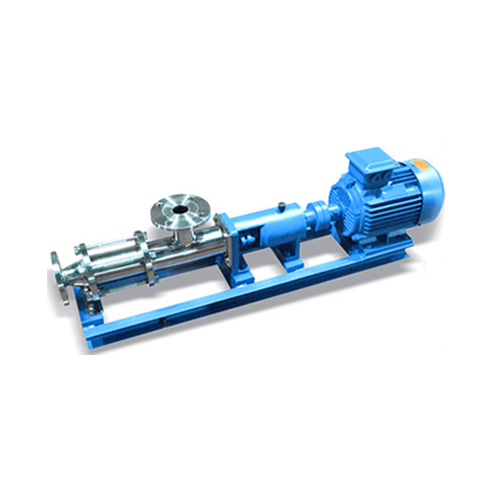
This matters for shear-sensitive products. Emulsions can break. Yogurt cultures can lose their texture. Pharmaceutical suspensions can separate. The progressive cavity mechanism avoids these problems because it doesn’t subject the fluid to violent acceleration or turbulence. Our Stainless Steel Single Screw Pump reaches flow rates up to 150 m³/h and pressures to 6.4 MPa while maintaining this gentle handling characteristic.
Another advantage shows up in metering applications. Flow rate stays consistent regardless of discharge pressure changes, which gives you reliable dosing without constant adjustment. When a process requires exact quantities delivered repeatedly, this pressure-independent behavior proves valuable.
Sanitary Construction That Meets Regulatory Scrutiny
Clean design in stainless steel screw pumps goes beyond surface polish, though surface finish certainly matters. Internal geometries need to eliminate dead spaces where product can accumulate and bacteria can establish colonies. Every transition, every corner, every joint becomes a potential contamination point if not designed correctly.
The pumps we build feature surfaces polished to sanitary standards and geometries that allow complete drainage. Clean-in-place and sterilize-in-place compatibility means the pump stays in the line during cleaning cycles rather than requiring disassembly. This saves time and reduces the risk of contamination during reassembly.
Material selection between SUS304 and SUS316 depends on the cleaning chemicals used and the products being pumped. Both grades handle standard CIP solutions well, but SUS316L offers better resistance to chloride-containing cleaners and more aggressive sanitizing agents.
Certification Requirements for Food and Pharmaceutical Pumps
Regulatory frameworks for stainless steel screw pumps in sensitive industries overlap but have distinct requirements. FDA compliance covers material safety for food contact surfaces. The 3-A Sanitary Standards program addresses design and fabrication details specific to dairy and food processing equipment.
Pharmaceutical applications typically require GMP compliance, which encompasses broader quality system requirements beyond the pump itself. EHEDG certification from the European Hygienic Engineering & Design Group represents perhaps the most stringent hygienic design evaluation available. Meeting these standards requires attention to details that might seem minor but matter enormously for contamination prevention.
Chemical Processing Demands Different Priorities
Chemical transfer applications shift the focus from biological contamination to chemical attack. Corrosion resistance becomes the primary concern, and material compatibility extends beyond the pump body to include every wetted component.
SUS316L stainless steel handles a broader range of corrosive chemicals than SUS304, particularly those containing chlorides or operating at elevated temperatures. The low carbon content in 316L reduces susceptibility to intergranular corrosion after welding, which matters for pump components that undergo thermal processing during manufacture.
Elastomer selection for stators and seals requires careful matching to the pumped fluid. A stator material that works perfectly with one chemical might swell, harden, or dissolve in another. We spend considerable time on material compatibility analysis before recommending configurations for chemical service.
| Stainless Steel Grade | Common Applications | Key Benefit |
|---|---|---|
| SUS304 | Food, Dairy, Mild Chemicals | General Corrosion Resistance |
| SUS316L | Pharmaceuticals, Aggressive Chemicals | Enhanced Corrosion Resistance, Low Carbon |
Getting More From Your Pump Investment
Performance optimization for stainless steel screw pumps involves geometry, drive systems, and maintenance practices working together. Rotor-stator fit affects both efficiency and wear rate. Too tight creates excessive friction and heat. Too loose allows slip that reduces volumetric efficiency.
Variable frequency drives offer precise speed control that translates directly to flow control. For metering applications, this eliminates the need for throttling valves or bypass loops that waste energy. The pump delivers exactly what the process needs, no more and no less.
Maintenance schedules should reflect actual operating conditions rather than arbitrary calendar intervals. Abrasive fluids wear stators faster than clean fluids. High temperatures accelerate elastomer aging. Tracking these factors and adjusting maintenance timing accordingly keeps pumps running reliably while avoiding unnecessary parts replacement.
Managing Viscous and Abrasive Chemical Streams
Progressive cavity pumps handle high-viscosity chemicals effectively because the positive displacement principle doesn’t depend on fluid momentum. The sealed cavities move fluid regardless of how thick or sluggish it might be. Flow rate stays consistent whether you’re pumping water-thin solvents or heavy polymer solutions.
Abrasive service requires material upgrades. Hard chrome plating on rotors resists wear from suspended particles. Specialized elastomers for stators provide better abrasion resistance than standard materials. These upgrades add cost but extend service intervals significantly in demanding applications.
Maintenance Realities and Expected Service Life
Stator wear represents the most common maintenance item for stainless steel screw pumps in sanitary service. The elastomer stator gradually wears against the metal rotor, eventually allowing slip that reduces efficiency. Replacement intervals vary widely depending on the pumped fluid, typically ranging from several months in abrasive service to several years with clean fluids.
Mechanical seal inspection should happen regularly, with replacement at the first sign of leakage. Seal failure in sanitary applications creates contamination risk, so proactive replacement makes sense even when seals appear functional.
Overall pump lifespan often exceeds a decade with proper maintenance. The stainless steel body and rotor last essentially indefinitely under normal conditions. Wear parts like stators, seals, and bearings are designed for replacement.
Working With Shanghai Yimai
Shanghai Yimai Industrial Co., Ltd. builds stainless steel screw pumps for applications where performance and hygiene cannot be compromised. Our engineering team understands the specific demands of food, pharmaceutical, and chemical processing. We configure pumps to match your process requirements rather than offering only standard catalog selections.
If you’re facing a challenging fluid transfer problem or planning a new installation, we’d welcome the conversation. Reach us at overseas1@yimaipump.com or call +86 13482295009.
Frequently Asked Questions About Stainless Steel Screw Pumps
How do stainless steel screw pumps protect sensitive products during transfer?
The progressive cavity mechanism moves fluid through sealed chambers rather than subjecting it to impeller action or high-velocity flow paths. This low-shear approach preserves emulsions, suspensions, and other shear-sensitive materials. Sanitary construction with polished surfaces and CIP/SIP compatibility prevents contamination that would compromise product quality in food-grade pump applications.
Why choose progressive cavity pumps for thick fluids?
Progressive cavity pumps maintain consistent flow regardless of fluid viscosity because they physically displace fluid rather than relying on centrifugal force. The sealed cavity design prevents slip even with extremely thick materials. Flow rate remains stable as discharge pressure varies, providing reliable metering pump accuracy for processes requiring precise viscous fluid handling.
Can these pumps handle fluids containing abrasive particles?
Stainless steel screw pumps configured for abrasive chemical transfer use wear-resistant stator elastomers and hard chrome-plated rotors. These material upgrades significantly extend service life in abrasive applications. The positive displacement principle also helps because fluid velocity through the pump remains relatively low, reducing the erosive impact of suspended particles.