VFD Booster Water Systems: Optimizing Pressure and Energy Efficiency
Water pressure problems show up in predictable ways. Taps that dribble during peak hours. Irrigation systems that can’t reach the far end of a field. Process lines that stall when multiple stations draw water simultaneously. I’ve seen facilities throw money at bigger pumps when the real issue was how the existing pumps were being controlled. VFD booster water systems address this directly by matching pump output to actual demand, moment by moment. The energy savings follow naturally from that precision, but the operational stability is what most facility managers notice first.
What Variable Frequency Drives Actually Do in Water Pumping
Variable Frequency Drives control AC motor speed by adjusting the frequency and voltage of the power supply. Traditional pump setups typically throttle output with valves or cycle pumps on and off to manage pressure. Both approaches waste energy. Throttling is like driving with one foot on the gas and one on the brake. Cycling creates mechanical stress and pressure spikes.
A VFD takes a different approach. Inside the unit, a rectifier converts incoming AC power to DC. A DC link smooths that power. An inverter then converts it back to AC at whatever frequency and voltage the motor needs at that moment. The pump runs at exactly the speed required to meet current demand. Nothing more, nothing less.
This matters because pump power consumption follows the cube law. Cut speed by 20%, and power consumption drops by roughly 50%. The math is unforgiving in the other direction too. Running a pump at full speed when you only need half the flow wastes enormous amounts of electricity.
How VFD Booster Water Systems Maintain Constant Pressure
A VFD booster water system combines VFD technology with pressure sensors and a controller. The sensors monitor system pressure continuously. When pressure drops below the setpoint, the controller signals the VFD to increase motor speed. When pressure rises above the setpoint, the VFD slows the motor down.
This happens in real time. The system responds to a toilet flushing, a sprinkler zone activating, or a production line starting up. Pressure stays within a narrow band instead of swinging between high and low extremes.
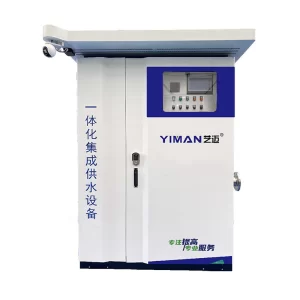
The practical result is consistent water delivery regardless of demand fluctuations. Our Intelligent Digital Driven VFD Booster System handles flow ranges from 5 to over 900 m³/h with heads between 15 and 200 m. That range covers everything from small commercial buildings to substantial industrial operations.
How does a VFD improve water pressure consistency?
A VFD maintains pressure consistency through continuous speed adjustment based on real-time demand. When someone opens a tap or a process valve, pressure starts to drop. The VFD detects this through the pressure sensor and increases pump speed before the drop becomes noticeable. The reverse happens when demand decreases. This eliminates the pressure surges and drops that characterize fixed-speed systems with on/off control.
The Energy Math Behind VFD Booster Water Systems
The cube law relationship between pump speed and power consumption creates substantial savings opportunities. A pump running at 80% speed uses only about 51% of the power it would consume at full speed. At 60% speed, power consumption drops to roughly 22%.
Most water systems don’t run at peak demand continuously. A building might hit maximum water usage for a few hours in the morning and evening. An irrigation system might run at full capacity during hot afternoons but need much less at night. Industrial processes often have variable water requirements throughout production cycles.
Fixed-speed pumps ignore these variations. They run at full power whenever they’re on, regardless of actual need. VFD booster water systems capture savings during every period of reduced demand.
Our VFD Controlled Booster System achieves pressure adjustment accuracy of ≤0.01 MPa. That precision prevents the overpressure conditions that waste energy and stress piping systems.
How does a VFD contribute to energy savings in water pumping applications?
The cube law is the key mechanism. Power consumption scales with the cube of pump speed, so small speed reductions yield large energy savings. A VFD matches pump speed to actual water demand rather than running at full capacity regardless of need. During periods of low demand, which represent a significant portion of most operating cycles, the energy savings compound. Facilities typically see 30-50% reductions in pumping energy costs after VFD installation.
Operational Benefits That Extend Beyond Energy Savings
Energy efficiency gets the most attention, but VFD booster water systems deliver other benefits that affect long-term operating costs.
Mechanical wear decreases significantly. Fixed-speed pumps with on/off control experience high starting currents and mechanical shock with every cycle. A pump that cycles 50 times per day accumulates wear much faster than one that runs continuously at variable speed. VFDs provide soft starts that gradually ramp motor speed up and down, reducing stress on bearings, seals, and couplings.
Water hammer becomes a non-issue. The sudden pressure surges from abrupt pump starts or valve closures can damage pipes, fittings, and connected equipment. VFDs eliminate these surges through gradual speed changes.
Noise levels drop. The smooth operation of a VFD-controlled pump produces less vibration and acoustic noise than the stop-start cycling of traditional systems.
Modern VFD systems include diagnostic capabilities that flag developing problems before they cause failures. Monitoring motor current, temperature, and vibration patterns allows maintenance teams to address issues proactively rather than responding to breakdowns.
Where VFD Booster Water Systems Make the Most Difference
The technology applies across sectors, but some applications see particularly strong returns.
High-rise residential buildings face inherent pressure challenges. Water must reach upper floors against gravity while lower floors need protection from excessive pressure. VFD booster water systems maintain appropriate pressure throughout the building regardless of how many units are drawing water simultaneously.
Hotels and hospitals have demanding requirements for consistent water supply. Guest satisfaction and patient care both suffer when water pressure fluctuates. These facilities also operate around the clock with varying demand patterns that VFD systems handle efficiently.
Industrial applications range from process water systems to cleaning operations to HVAC. Manufacturing facilities often have widely varying water demands depending on which production lines are active. VFD booster water systems adapt to these changes without manual intervention.
Agricultural irrigation benefits from precise pressure control across large distribution networks. Maintaining consistent pressure at distant sprinkler heads or drip emitters improves crop yields and water efficiency.
When selecting a system, the key specifications include required flow rate, total head, number of pumps needed for redundancy, and specific application demands. Our Intelligent Digital Drived VFD Booster System addresses these requirements across a wide range of installations.
| Feature | VFD Booster System | Traditional Fixed-Speed System |
|---|---|---|
| Pressure Control | Constant, demand-driven | Fluctuating, on/off cycling |
| Energy Efficiency | High (up to 50% savings) | Low (constant full power) |
| Equipment Lifespan | Extended (reduced wear and tear) | Shorter (due to frequent starts/stops) |
| Noise Level | Low (smoother operation) | Higher (sudden changes in flow) |
| Water Hammer | Minimized | Common occurrence |
| Maintenance | Lower (less mechanical stress) | Higher (more frequent repairs) |
For more insights into optimizing water supply, explore our article on 《National Booster Water Supply Drainage Round Table Seminar by Yimai Industrial》. It provides valuable perspectives on industry best practices and emerging solutions for modern water management.
Frequently Asked Questions About VFD Booster Water Systems
What are the main advantages of using a VFD in a booster water system?
The primary advantages center on control precision and efficiency. VFD booster water systems maintain constant pressure regardless of demand fluctuations, which fixed-speed systems cannot achieve. Energy savings typically range from 30-50% because pumps run only as fast as needed. Equipment lasts longer because soft starts eliminate the mechanical stress of frequent cycling. Water hammer disappears because speed changes happen gradually. Noise decreases because smooth operation produces less vibration. These benefits combine to reduce both operating costs and maintenance requirements over the system’s lifetime.
What maintenance is required for VFD booster pump systems?
VFD maintenance focuses on the drive unit and the pumps themselves. For the VFD, regular inspection of electrical connections, cooling fans, and capacitors keeps the unit operating reliably. Dust accumulation can cause overheating, so keeping the enclosure clean matters in dusty environments. Standard pump maintenance applies as well, including bearing lubrication, seal inspection, and impeller checks. Most modern VFD booster water systems include diagnostic monitoring that flags abnormal conditions before they cause failures. Responding promptly to system alarms prevents minor issues from becoming major repairs.
Why choose VFD technology for industrial water supply over traditional methods?
Industrial water supply often involves widely varying demand patterns that traditional fixed-speed systems handle poorly. VFD booster water systems respond to these variations automatically, maintaining consistent pressure whether one process line is running or ten. The elimination of frequent pump cycling reduces peak electrical demand, which can lower utility costs beyond just energy consumption. Process stability improves because pressure fluctuations don’t affect production quality. The operational savings typically justify the higher initial investment within two to three years, with continued savings for the remaining equipment life.
Partner with Shanghai Yimai for Advanced Water Solutions
Shanghai Yimai Industrial Co., Ltd. specializes in VFD booster water systems engineered for industrial and commercial applications. Our experience with electrical motors, water pumps, and integrated water solutions translates into systems that perform reliably under real operating conditions. Contact us to discuss your specific requirements and explore how our solutions can address your water management challenges. Email: overseas1@yimaipump.com | Phone/WhatsApp: +86 13482295009